 April 2026 in “Zenodo (CERN European Organization for Nuclear Research)”
 The model improves understanding of androgen interactions by focusing on signal intensity and system capacity.
 April 2026 in “Zenodo (CERN European Organization for Nuclear Research)”
 The model improves understanding of androgen interactions by focusing on signal intensity and system capacity.
37 citations
,
February 2010 in “Psychoneuroendocrinology” Androgen self-administration might be controlled by membrane receptors, not nuclear ones.
 1 citations
,
April 2022 in “AACE clinical case reports”
1 citations
,
April 2022 in “AACE clinical case reports” A 36-year-old person with a female appearance but male chromosomes was diagnosed with a rare enzyme deficiency affecting sexual development.
 November 2023 in “Scientific reports”
 The research identified and described a gene important for hormone conversion in endangered catfish, which varies in activity during different reproductive stages and after hormone treatment.
 February 2025 in “Biomolecules”
 RORA boosts autophagy in hair follicle stem cells, potentially aiding hair growth.
November 2025 in “SKIN The Journal of Cutaneous Medicine” Ritlecitinib is effective long-term for treating alopecia areata in teens.
March 2026 in “World Rabbit Science” DKK4 can be used to improve wool quality in Zhexi Angora rabbits.
June 2025 in “British Journal of Dermatology” Ritlecitinib may cause serious side effects like blood clots in alopecia areata patients.

BMD-1141 effectively regrows hair in alopecia areata with less frequent dosing than current treatments.
 5 citations
,
August 2023 in “The World Journal of Men s Health”
5 citations
,
August 2023 in “The World Journal of Men s Health” Red ginseng oil improves urinary symptoms and some sexual functions in men safely.
 11 citations
,
March 2020 in “American Journal of Medical Genetics Part A”
11 citations
,
March 2020 in “American Journal of Medical Genetics Part A” A mutation in the EDNRA gene causes Oro-Oto-Cardiac syndrome, affecting face and heart development.
 1 citations
,
November 2023 in “Rice”
1 citations
,
November 2023 in “Rice” PRX102 is essential for rice root hair growth by helping transport substances to the tips.
 September 2023 in “Dermatology and therapy”
 Ritlecitinib effectively improves hair growth in alopecia areata patients, regardless of hair loss pattern.
ANE syndrome is caused by a mutation in the RBM28 protein that disrupts ribosome assembly.
 2 citations
,
November 2024 in “AAPS PharmSciTech”
2 citations
,
November 2024 in “AAPS PharmSciTech” Spanlastic formulations improve rivaroxaban's oral anticoagulation efficiency.
February 2025 in “Iranian journal of pharmaceutical research” February 2016 in “Annals of the Rheumatic Diseases” All four treatments for early rheumatoid arthritis had similar and mostly mild side effects.
4 citations
,
July 2024 in “Skin Research and Technology” 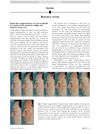 157 citations
,
December 2015 in “Journal of the American Academy of Dermatology”
157 citations
,
December 2015 in “Journal of the American Academy of Dermatology” A man with vitiligo and alopecia saw quick skin and hair improvement with ruxolitinib, but skin color gains were lost after stopping treatment.
 9 citations
,
January 2011 in “EXPERIMENTAL ANIMALS”
9 citations
,
January 2011 in “EXPERIMENTAL ANIMALS” A new rat strain with a specific gene mutation causes hair loss and kidney issues.
12 citations
,
October 2021 in “Journal of the Science of Food and Agriculture” Vitamin A improves fur quality in heat-stressed Rex rabbits.
November 2024 in “SKIN The Journal of Cutaneous Medicine” Ritlecitinib effectively reduces severe hair loss in alopecia areata over 24 months.
 33 citations
,
February 2016 in “Journal of Experimental Botany”
33 citations
,
February 2016 in “Journal of Experimental Botany” ROOT HAIR SPECIFIC 10 (RHS10) reduces the length of root hairs in Arabidopsis plants.
 February 2025 in “International Journal of Molecular Sciences”
 RORA plays a key role in controlling seasonal hair molting by affecting hair follicle cell activity.
34 citations
,
March 2007 in “Biochemical and Biophysical Research Communications” Thioredoxin reductase 1 does not affect glucocorticoid receptor activity in hair follicle cells.
 2 citations
,
February 2004 in “Biopolymers”
2 citations
,
February 2004 in “Biopolymers” 4-(4-Phenoxybenzoyl)benzoic acid derivatives can both increase and decrease certain types of reactive oxygen species, and may be relevant to hair loss.
2 citations
,
May 2020 in “JAAD case reports” Ruxolitinib can cause a delayed skin reaction on the nose.
January 2023 in “Reactions Weekly” March 2023 in “Reactions Weekly”