 8 citations
,
June 2016 in “Journal of Cutaneous Pathology”
8 citations
,
June 2016 in “Journal of Cutaneous Pathology” Two women were diagnosed with a rare melanoma that looked like hair loss but was actually a type of skin cancer.
 5 citations
,
July 2022 in “Journal of Clinical Medicine”
5 citations
,
July 2022 in “Journal of Clinical Medicine” Long COVID-19 patients with skin pain might have a nerve condition that responds to a medication called gabapentin.
5 citations
,
February 2022 in “Seminars in cell & developmental biology” Recent findings suggest that genetic factors, immune system issues, and skin cell defects might contribute to the development of hidradenitis suppurativa.
 5 citations
,
January 2017 in “Molecular Medicine Reports”
5 citations
,
January 2017 in “Molecular Medicine Reports” Human hair follicle cells can be turned into neural stem cell-like cells, which might help treat brain diseases.
 4 citations
,
June 2021 in “Dermatology”
4 citations
,
June 2021 in “Dermatology” Scientists created a 3D skin model to study a chronic skin disease and test treatments.
 3 citations
,
May 2023 in “Precision clinical medicine”
3 citations
,
May 2023 in “Precision clinical medicine” Researchers found four genes that could help diagnose severe alopecia areata early.
 2 citations
,
April 2018 in “Journal of Investigative Dermatology”
2 citations
,
April 2018 in “Journal of Investigative Dermatology” Frontal fibrosing alopecia shows increased inflammation and JAK-STAT pathway activity without reduced hair proteins.
1 citations
,
April 2015 in “InTech eBooks” RAGE is a potential target for melanoma treatment, but its effectiveness is uncertain due to variable expression levels.
March 2026 in “Journal of Investigative Dermatology” Genetic factors, especially PADI3 gene variants, contribute to CCCA in women of African descent.
January 2026 in “Current Issues in Molecular Biology” miR-5110 affects alpaca pigmentation by altering specific gene expressions.
November 2025 in “Journal of Investigative Dermatology” Genetic variants in specific genes cause central centrifugal cicatricial alopecia.
July 2025 in “Journal of Investigative Dermatology” Discoid lupus erythematosus involves immune activation and fibrosis around hair follicles, with shared pathways across humans, dogs, and mice, suggesting potential treatments for both humans and animals.
June 2025 in “Histopathology” Epithelial elements in superficial angiomyxomas are non-neoplastic growths mimicking embryogenesis.
 April 2025 in “Cellular and Molecular Biology”
 Human dermal stem/progenitor cells can divide and differentiate more than hair follicle dermal papilla cells.
 January 2025 in “BMC Genomics”
 Key genes and RNA networks regulate hair growth and follicle density in Rex rabbits.
 January 2025 in “bioRxiv (Cold Spring Harbor Laboratory)”
 Potential therapeutic targets for scarring hair loss are identified.
November 2024 in “Journal of Investigative Dermatology” Changes in hair follicle structure may help diagnose and monitor alopecia.
November 2024 in “Journal of Investigative Dermatology” Genetic changes in specific proteins contribute to hair loss in some women of African descent.
 November 2024 in “Experimental Dermatology”
 SKO-derived SKP-like cells may help with hair regeneration and skin restoration.
June 2024 in “Current Developments in Nutrition” Diet changes can improve skin health by altering the immune response and skin microbiome.
June 2023 in “Dermatopathology” A woman had a unique skin growth with hair follicle, oil glands, fat cells, spindle cells, and nerve fibers.
November 2022 in “Journal of Investigative Dermatology” NCSTN gene mutation causes abnormal skin cell differentiation and more inflammation, contributing to Hidradenitis Suppurativa.
 November 2022 in “The journal of investigative dermatology/Journal of investigative dermatology”
 Skin organoids with NCSTN mutation show changes in hair follicle development and higher inflammation, key features of Hidradenitis Suppurativa.
 March 2022 in “Research Square (Research Square)”
 4-aminopyridine, a FDA-approved drug, speeds up skin wound healing and tissue regeneration.
 September 2019 in “Journal of Investigative Dermatology”
 The 3D-SeboSkin model effectively simulates Hidradenitis suppurativa and is useful for future research.

Canine fetal hair follicle stem cells show pluripotency, with higher S100 protein expression at 40 days.
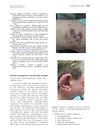
A 72-year-old man was diagnosed with a rare skin form of Rosai-Dorfman disease after years of misdiagnosis.
May 2005 in “Zhonghua chuangshang guke zazhi” Human hair keratin can help nerve regeneration and is a promising material for nerve repair.
January 2005 in “Zhonghua chuangshang guke zazhi” Human hair keratin is a promising material for nerve repair.
25 citations
,
January 2012 in “Proteome Science” Adipose stem cells show common protein changes as they grow, especially involving S100A6.