 60 citations
,
June 2019 in “Ageing Research Reviews”
60 citations
,
June 2019 in “Ageing Research Reviews” Fat from the body can help improve hair growth and scars when used in skin treatments.
Genetic factors might cause fibrosing alopecia linked to hair shaft abnormalities.
 87 citations
,
August 2017 in “Scientific Reports”
87 citations
,
August 2017 in “Scientific Reports” The nanofiber scaffolds improved skin wound healing by supporting cell growth and tissue repair.
18 citations
,
July 2012 in “Cell Biology International Reports” Human mesenchymal stem cells can become dermal papilla cells, aiding hair growth.
 June 2021 in “bioRxiv (Cold Spring Harbor Laboratory)”
 The gene Tfap2b is essential for creating a type of stem cell in zebrafish that can become different pigment cells.
 31 citations
,
April 2010 in “British journal of dermatology/British journal of dermatology, Supplement”
31 citations
,
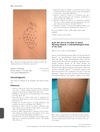
April 2010 in “British journal of dermatology/British journal of dermatology, Supplement” Frontal fibrosing alopecia can cause sudden hair loss on limbs, similar to scalp hair loss.
July 2024 in “LA Referencia (Red Federada de Repositorios Institucionales de Publicaciones Científicas)” Adipose tissue and eccrine gland displacement are common in certain alopecias but don't help differentiate between them.
10 citations
,
September 2021 in “The FASEB Journal” ACKR2 helps prevent skin scarring and hair loss by controlling inflammation.
 3 citations
,
April 2019 in “The journal of investigative dermatology/Journal of investigative dermatology”
3 citations
,
April 2019 in “The journal of investigative dermatology/Journal of investigative dermatology” ILC1 cells contribute to hair loss in alopecia areata.
5 citations
,
October 2020 in “Bioengineering & translational medicine” Researchers used a laser to create advanced skin models with hair-like structures.
23 citations
,
May 2023 in “Cell Proliferation” TGF-β and FGF pathways are crucial for skin development and regeneration.
8 citations
,
November 2019 in “Tissue Engineering Part A” Functionalized collagen scaffolds applied prenatally greatly improve skin regeneration.
3 citations
,
May 2025 in “Lasers in Surgery and Medicine” Microneedle radiofrequency helps skin repair and rejuvenate by activating fibroblasts and remodeling the skin's structure.
April 2025 in “Indian Journal of Dermatology” A rare, benign facial tumor called fibrofolliculoma was successfully treated with surgery.
5 citations
,
December 2016 in “Microscopy Research and Technique” EPI-NCSCs from hair follicles may help treat brain development issues in mice.
January 1990 in “The Nishinihon Journal of Dermatology” Follicular structures help differentiate keratoacanthoma from squamous cell carcinoma.
333 citations
,
March 2000 in “Proceedings of the National Academy of Sciences” Overexpressing GLI-1 in mice skin can cause tumors like human basal cell carcinomas.
 21 citations
,
February 2017 in “PLoS ONE”
21 citations
,
February 2017 in “PLoS ONE” RhoA helps skin stem cells grow, aiding wound healing.
 45 citations
,
May 2018 in “Stem Cell Research & Therapy”
45 citations
,
May 2018 in “Stem Cell Research & Therapy” Using patients' own fat-derived cells to treat alopecia areata significantly improved hair growth and was safe.
64 citations
,
April 1992 in “Differentiation” Sciellin is a protein that helps form protective layers in skin, hair, and nails.
83 citations
,
October 2016 in “Stem Cells and Development” Epidermal growth factor helps hair stem cells grow by activating specific cell pathways.
 29 citations
,
March 2020 in “Stem Cell Research & Therapy”
29 citations
,
March 2020 in “Stem Cell Research & Therapy” Fat stem cells from diabetic mice can help heal skin wounds in other diabetic mice.
 April 2023 in “The journal of investigative dermatology/Journal of investigative dermatology”
 Damaged hair follicle stem cells may leave the skin to help maintain youthfulness.
Keratinocytes can reduce the survival of certain melanoma cells, suggesting new therapy paths.
 April 2023 in “Research Square (Research Square)”
 A specific RNA helps increase the growth of skin cells in Liaoning cashmere goats by working with a protein to boost a growth-related gene.
April 2021 in “Journal of Investigative Dermatology” Early-stage skin substitutes improve wound healing and skin structure.
August 2025 in “Cosmetics” Cosmeceuticals like sunscreens may trigger frontal fibrosing alopecia, but more research is needed.
January 2026 in “International Journal of Molecular Sciences” S100a4 is key for hair growth in cashmere goats.
 1 citations
,
May 2023 in “PubMed”
1 citations
,
May 2023 in “PubMed” A certain type of skin cell, marked by EGFR, produces a lot of IGF1 and helps hair follicles grow back faster.
22 citations
,
April 2022 in “Stem cell research & therapy” Hair follicle-derived extracellular vesicles may help heal chronic wounds as effectively as those from adipose tissue.