 March 2021 in “Institutional Repositories DataBase (IRDB)”
 Heparin-functionalized nanofabrics help heal wounds effectively and safely without scars in 14 days.

PlacMA hydrogels from human placenta are versatile and useful for cell culture and tissue engineering.

Keratin hydrogels from human hair show promise for tissue engineering and regenerative medicine.
 August 2013 in “Nature Reviews Drug Discovery”
 New treatments for cancer and skin disorders show promise in disrupting harmful cell interactions and promoting hair growth.
 August 2013 in “Nature Reviews Drug Discovery”
 New cancer treatments show promise in reducing tumor growth and improving skin regeneration in mice.
 August 2013 in “Nature Reviews Drug Discovery”
 A protein called FGF9 helps regenerate hair follicles in mice after skin damage, and increasing FGF9 could potentially help human hair growth.
 667 citations
,
May 2008 in “Genes & Development”
667 citations
,
May 2008 in “Genes & Development” Histone demethylases can change gene expression and may be linked to diseases like cancer.
 270 citations
,
March 2012 in “Dermatologic Surgery”
270 citations
,
March 2012 in “Dermatologic Surgery” Platelet-rich plasma can potentially promote hair growth by stimulating cell growth and increasing certain proteins.
 239 citations
,
December 2013 in “Scientific Reports”
239 citations
,
December 2013 in “Scientific Reports” A new method quickly creates controllable cell clusters for tissue engineering and drug testing.
 232 citations
,
October 2015 in “International journal of molecular sciences”
232 citations
,
October 2015 in “International journal of molecular sciences” Stem cells are crucial for skin repair and new treatments for chronic wounds.
 150 citations
,
June 2014 in “Biomaterials”
150 citations
,
June 2014 in “Biomaterials” Peptide hydrogels heal burn wounds faster and better than standard dressings.
 144 citations
,
August 2019 in “Cells”
144 citations
,
August 2019 in “Cells” The WNT signaling pathway is important in many diseases and targeting it could offer new treatments.
 138 citations
,
June 2019 in “Stem Cells and Development”
138 citations
,
June 2019 in “Stem Cells and Development” Periodontal ligament stem cells show promise for regrowing tissues but require more research for safe, effective use.
 119 citations
,
January 2014 in “Indian Journal of Dermatology, Venereology and Leprology”
119 citations
,
January 2014 in “Indian Journal of Dermatology, Venereology and Leprology” Platelet-rich plasma might help with hair growth and skin conditions, but more research is needed to prove its effectiveness and safety.
 118 citations
,
May 2015 in “European journal of pharmaceutics and biopharmaceutics”
118 citations
,
May 2015 in “European journal of pharmaceutics and biopharmaceutics” The hydrogel with a 1:3 ratio of hydroxyethyl cellulose to hyaluronic acid is effective for delivering drugs through the skin to treat acne.
 93 citations
,
November 2018 in “Carbohydrate Polymers”
93 citations
,
November 2018 in “Carbohydrate Polymers” New nanocomposites with copper show promise for healing burn wounds and regenerating skin.
 91 citations
,
July 2010 in “Tissue Engineering Part A”
91 citations
,
July 2010 in “Tissue Engineering Part A” Low-oxygen conditions and ECM degradation products increase the healing abilities of perivascular stem cells.
 88 citations
,
January 2019 in “Journal of Tissue Engineering and Regenerative Medicine”
88 citations
,
January 2019 in “Journal of Tissue Engineering and Regenerative Medicine” Conditioned media from mesenchymal stem cell cultures could be a more effective alternative for regenerative therapies, but more research is needed.
 86 citations
,
March 2018 in “ACS Biomaterials Science & Engineering”
86 citations
,
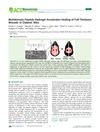
March 2018 in “ACS Biomaterials Science & Engineering” MDP hydrogel heals wounds faster and better than other treatments in diabetic mice.
 70 citations
,
February 2021 in “International Journal of Molecular Sciences”
70 citations
,
February 2021 in “International Journal of Molecular Sciences” Fat-derived stem cells, platelet-rich plasma, and biomaterials show promise for healing chronic skin wounds and improving soft tissue with few side effects.
 61 citations
,
November 2020 in “Molecules”
61 citations
,
November 2020 in “Molecules” Conductive hydrogels show promise for medical uses like healing wounds and tissue regeneration but need improvements in safety and stability.
 59 citations
,
June 2023 in “Nature Aging”
59 citations
,
June 2023 in “Nature Aging” Blocking IL-17 signaling may reduce skin inflammation and delay aging.
 57 citations
,
December 2021 in “Nature Communications”
57 citations
,
December 2021 in “Nature Communications” Non-canonical Wnt signaling helps intestinal stem cells move to injury sites for tissue repair.
 57 citations
,
June 2021 in “Polymers”
57 citations
,
June 2021 in “Polymers” Photothermal hydrogels are promising for infection control and tissue repair, and combining them with other treatments could improve results and lower costs.
 48 citations
,
September 2017 in “Frontiers in Bioscience”
48 citations
,
September 2017 in “Frontiers in Bioscience” Nanoparticles show promise for better wound healing, but more research is needed to ensure safety and effectiveness.
 47 citations
,
March 2017 in “Materials Science and Engineering: C”
47 citations
,
March 2017 in “Materials Science and Engineering: C” Human amniotic membrane helps heal skin wounds faster and with less scarring.
 40 citations
,
June 2013 in “Biomaterials”
40 citations
,
June 2013 in “Biomaterials” Scientists created 3D hair-like structures that could help study hair growth and test treatments.
 40 citations
,
January 2009 in “Skin Pharmacology and Physiology”
40 citations
,
January 2009 in “Skin Pharmacology and Physiology” Fetal cells could improve skin repair with minimal scarring and are a potential ready-to-use solution for tissue engineering.
 39 citations
,
August 2022 in “Cell Death and Disease”
39 citations
,
August 2022 in “Cell Death and Disease” DA-MeHA hydrogel effectively aids stem cell-based skin regeneration.
 36 citations
,
May 2016 in “Biomaterials”
36 citations
,
May 2016 in “Biomaterials” Endo-HSE helps grow hair-like structures from human skin cells in the lab.