 150 citations
,
April 2008 in “Journal of The American Academy of Dermatology”
150 citations
,
April 2008 in “Journal of The American Academy of Dermatology” Scalp dermoscopy is good for diagnosing a type of hair loss and helps choose the best spots for biopsy.
 14 citations
,
January 2014 in “Journal of Cutaneous and Aesthetic Surgery”
14 citations
,
January 2014 in “Journal of Cutaneous and Aesthetic Surgery” Scalp Roller therapy helped improve hair growth in patients with hard-to-treat alopecia areata.
 8 citations
,
July 2014 in “Anais Brasileiros de Dermatologia”
8 citations
,
July 2014 in “Anais Brasileiros de Dermatologia” A man's scalp condition was misidentified as hair loss dots but was actually a common follicular disorder.
 1 citations
,
May 2019 in “Journal of The American Academy of Dermatology”
1 citations
,
May 2019 in “Journal of The American Academy of Dermatology” Mobile app ImageMeter calculates scalp area faster and reliably for alopecia treatment.
36 citations
,
December 2021 in “The journal of allergy and clinical immunology/Journal of allergy and clinical immunology/The journal of allergy and clinical immunology” Two drugs, ritlecitinib and brepocitinib, improved scalp hair loss condition markers.
 36 citations
,
January 2015 in “Dermatology”
36 citations
,
January 2015 in “Dermatology” Bimatoprost was found to be safer and more effective than mometasone furoate for treating scalp hair loss.
 7 citations
,
July 2019 in “International journal of research in dermatology”
7 citations
,
July 2019 in “International journal of research in dermatology” Intralesional triamcinolone acetonide is more effective than platelet-rich plasma for treating scalp alopecia areata.
6 citations
,
November 2020 in “Clinical Cosmetic and Investigational Dermatology” Both concentrations of triamcinolone acetonide are effective for hair regrowth in patchy alopecia areata, but 5 mg/mL is recommended to reduce side effects.
3 citations
,
November 2020 in “Dermatologic Therapy” Start with 2.5 mg/mL triamcinolone acetonide for scalp alopecia areata and increase if needed.
 1 citations
,
February 2020 in “International Journal of Research in Dermatology”
1 citations
,
February 2020 in “International Journal of Research in Dermatology” Scalp alopecia areata mostly affects young adult males, often starts suddenly, and usually presents as single, patchy lesions.
 July 2023 in “Clinical dermatology review”
 Intralesional triamcinolone acetonide is better than PRP for treating scalp alopecia areata, leading to faster and more complete hair regrowth.
 July 2022 in “Al-Mağallaẗ al-ʻirāqiyyaẗ li-l-ṣaydalaẗ”
 Azelaic acid cream can effectively treat scalp hair loss.
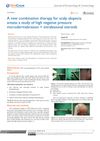 February 2018 in “Journal of dermatology & cosmetology”
 Combining microdermabrasion with steroid injections improves hair regrowth in scalp alopecia areata.
 November 2025 in “Archives of Dermatological Research”
 Using a higher concentration of triamcinolone acetonide leads to faster hair regrowth in scalp patchy alopecia areata.
 October 2025 in “International Journal of Molecular Sciences”
 Early intervention in patch-type alopecia may prevent progression to more severe forms by targeting immune pathways and preserving keratin.
PRP therapy significantly regrows hair and satisfies patients without side effects.
 July 2022 in “المجلة العراقية للصيدلة”
 Azelaic acid 20% cream works well for treating scalp alopecia areata and can be an alternative to clobetasol ointment.
 52 citations
,
December 2000 in “Archives of Dermatological Research”
52 citations
,
December 2000 in “Archives of Dermatological Research” Scalp skin barrier affects hair loss; personalized treatments needed.
 17 citations
,
October 2003 in “Brazilian Journal of Medical and Biological Research”
17 citations
,
October 2003 in “Brazilian Journal of Medical and Biological Research” The gene SDR5A1 is found in scalp hair of both hirsute and normal individuals, but it does not explain differences in hair growth.
 5 citations
,
January 2014 in “Hospital pharmacy”
5 citations
,
January 2014 in “Hospital pharmacy” Using a strong allergy medicine too often on the scalp can cause swelling and inflammation.
 2 citations
,
December 2019 in “Leprosy Review”
2 citations
,
December 2019 in “Leprosy Review” A woman's hair loss and skin discoloration were found to be caused by a rare case of leprosy on the scalp, not alopecia-vitiligo overlap.
1 citations
,
November 2022 in “Journal of pharmaceutical negative results” Alopecia areata is an autoimmune condition causing patchy hair loss, with treatments focusing on immune system regulation and hair regrowth.
 June 2024 in “Dermatology and Therapy”
 Baricitinib improves quality of life and reduces anxiety and depression in severe alopecia areata patients with hair regrowth.
January 2014 in “International Journal of Dermatology and Venereology” A man with hair loss and a scalp lump was diagnosed with a diffuse neurofibroma but chose not to have surgery.

Scalp tinea versicolor can mimic alopecia areata but is treatable with antifungal medication.
 August 2024 in “Journal of the American Academy of Dermatology”
 Baricitinib effectively promotes hair regrowth in both scalp and nonscalp areas for alopecia areata universalis patients.
86 citations
,
January 2020 in “British Journal of Dermatology” The AA-IGA scale reliably measures treatment success in alopecia areata by considering both clinician and patient views.
 52 citations
,
March 2010 in “British Journal of Dermatology”
52 citations
,
March 2010 in “British Journal of Dermatology” Alopecia areata shows a unique type 1 interferon signature, suggesting potential treatment by targeting this pathway.
48 citations
,
April 2019 in “PloS one” Alopecia areata patients have more Propionibacterium acnes and less Staphylococcus epidermidis on their scalps.
 15 citations
,
October 2022 in “Allergy”
15 citations
,
October 2022 in “Allergy” Dupilumab treatment reduces Th2-related markers and helps hair growth in alopecia areata, showing Th2's role in the condition.