17 citations
,
July 2019 in “Lupus Science & Medicine” Plucked hair follicles can help diagnose scalp lupus.
12 citations
,
January 2019 in “International Journal of Trichology” Trichoscopy is useful for detecting and monitoring androgenetic alopecia.
 8 citations
,
January 2015 in “International journal of trichology”
8 citations
,
January 2015 in “International journal of trichology” A woman's total hair loss was linked to a Borrelia infection and was reversed with appropriate treatment.
 6 citations
,
January 2012 in “Journal of Biomedicine and Biotechnology”
6 citations
,
January 2012 in “Journal of Biomedicine and Biotechnology” Ustekinumab might work for severe psoriasis, but more research is needed to be sure.
 July 2025 in “YAKUGAKU ZASSHI”
 Understanding skin microbes and sebum can help manage atopic dermatitis and hair loss.
August 2023 in “Farmacja Polska” Hair loss significantly lowers quality of life for cancer patients.
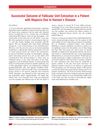 January 2021 in “Journal of Cutaneous and Aesthetic Surgery”
 Follicular unit extraction successfully restored hair growth in a leprosy patient without disease relapse.
January 2026 in “Dermatologic Therapy” Improving sleep, diet, and scalp care may reduce hair loss severity.
December 2023 in “International Journal of Dermatology” Accurate diagnosis of alopecia areata incognito requires trichoscopy and histopathology.
 February 2026 in “International Journal of Web of Multidisciplinary Studies”
 Restoring microbial balance and using exosome therapies may help treat hair disorders like alopecia and acne.
 25 citations
,
October 2017 in “Clinics in Dermatology”
25 citations
,
October 2017 in “Clinics in Dermatology” Older adults commonly experience hair loss and nail disorders due to aging and health changes, affecting their quality of life.
 7 citations
,
November 2011 in “Skin Research and Technology”
7 citations
,
November 2011 in “Skin Research and Technology” The study found a specific pattern of uneven melanin distribution on balding scalps that could help understand skin diseases caused by light exposure.
 1 citations
,
September 2017 in “Journal of Pathology of Nepal”
1 citations
,
September 2017 in “Journal of Pathology of Nepal” Testing hair roots with a special dye is a simple, non-invasive way to check disease progress in pemphigus vulgaris patients.
September 2025 in “Toxins” Botulinum toxins show promise in treating various conditions, but more research is needed for hair and scalp disorders.

Transfer learning with three neural network architectures accurately classifies hair diseases.
 January 2018 in “Springer eBooks”
 Different races and genders have unique skin and hair issues, requiring specialized care and more research for effective treatment.
December 2022 in “Pakistan Armed Forces Medical Journal” Androgenetic alopecia may increase the severity of COVID-19.
3D-ultrasound can non-invasively detect and predict alopecia areata phases and outcomes.
August 2024 in “Journal of the National Medical Association” ChatGPT is more accurate at diagnosing hair disorders in lighter skin tones than darker ones.
 November 2023 in “International Journal of Trichology”
 Trichoscopic features help diagnose and assess female pattern hair loss severity, with inflammation playing a key role.

Hair loss in SLE patients is mostly due to chronic telogen effluvium and is linked to moderate disease activity.
January 2013 in “Journal of Practical Dermatology” Hair loss, especially alopecia areata, is linked to poor sleep and emotional stress.
 60 citations
,
January 2014 in “Anais Brasileiros De Dermatologia”
60 citations
,
January 2014 in “Anais Brasileiros De Dermatologia” Nanotechnology in dermatology shows promise for better drug delivery and treatment effectiveness but requires more safety research.
 23 citations
,
November 2018 in “Journal of the European Academy of Dermatology and Venereology”
23 citations
,
November 2018 in “Journal of the European Academy of Dermatology and Venereology” The study concluded that severity of Frontal fibrosing alopecia is not linked to how long someone has it, can start before menopause, and eyebrow loss may be an early sign.
13 citations
,
July 2015 in “Archives of dermatological research” N1-methylspermidine helps hair growth and reduces inflammation in hair follicles.
 11 citations
,
February 2021 in “Biomedicines”
11 citations
,
February 2021 in “Biomedicines” Bacteria in our hair can affect its health and growth, and studying these bacteria could help us understand hair diseases better.
 8 citations
,
January 2013 in “Annals of Dermatology”
8 citations
,
January 2013 in “Annals of Dermatology” Korean women dye their gray hair more than men, and it doesn't cause scalp diseases.
 3 citations
,
February 2008 in “Basic and clinical dermatology”
3 citations
,
February 2008 in “Basic and clinical dermatology” Telogen Effluvium is a hair loss condition where treatment involves identifying and managing its triggers.
2 citations
,
September 2025 in “JDDG Journal der Deutschen Dermatologischen Gesellschaft” AI can accurately diagnose and assess alopecia areata using scalp images.
2 citations
,
July 2024 in “Journal of Clinical Medicine” Telemedicine is effective for managing alopecia areata follow-ups.