 54 citations
,
March 1987 in “Journal of The American Academy of Dermatology”
54 citations
,
March 1987 in “Journal of The American Academy of Dermatology” 3% topical minoxidil effectively treats extensive alopecia areata with few side effects.
 33 citations
,
December 2013 in “Journal of cutaneous pathology”
33 citations
,
December 2013 in “Journal of cutaneous pathology” A fungal infection can look like a different scalp condition in teens, leading to wrong treatment until proper tests are done.
28 citations
,
July 2015 in “Dermatologic therapy” The combined therapy was effective and safe for children with severe alopecia areata.
25 citations
,
January 2024 in “Journal of Lipids” Cubosomes improve drug delivery for skin and eye diseases by enhancing adhesion, retention, and release.
 20 citations
,
January 2013 in “Annals of Dermatology”
20 citations
,
January 2013 in “Annals of Dermatology” Topical minoxidil successfully treated temporal triangular alopecia.
17 citations
,
October 2009 in “Dermatology” Ultraviolet light helped hair growth more effectively than triamcinolone acetonide.
 16 citations
,
August 2003 in “Journal of The American Academy of Dermatology”
16 citations
,
August 2003 in “Journal of The American Academy of Dermatology” Nitrogen mustard was not very effective for hair regrowth in alopecia areata and has potential skin cancer risk.
 15 citations
,
January 2000 in “Dermatology”
15 citations
,
January 2000 in “Dermatology” Minoxidil use may cause skin pigmentation loss.
 14 citations
,
June 2019 in “BMC infectious diseases”
14 citations
,
June 2019 in “BMC infectious diseases” A rare fungal infection on a child's scalp was successfully treated with antifungal medication.
 12 citations
,
August 2000 in “Fertility and Sterility”
12 citations
,
August 2000 in “Fertility and Sterility” Topical finasteride doesn't reduce DHT levels, hinting at an endocrine role in hair loss.
11 citations
,
January 2012 in “PubMed” Bimatoprost can help grow eyebrow hair.
9 citations
,
July 1961 in “Journal of Investigative Dermatology” Cutaneous calcinosis can be induced in young animals using certain compounds, but only in specific areas and with high mortality.
8 citations
,
January 2019 in “JAAD Case Reports” EPDS can cause recurring scalp sores and hair loss if not treated.
8 citations
,
May 1989 in “Annals of Saudi Medicine” Tinea capitis is common in the Eastern Province of Saudi Arabia and can be effectively treated.
6 citations
,
January 2014 in “PubMed” The man's scalp condition improved significantly with daily use of 0.1% mometasone furoate cream.
5 citations
,
July 2024 in “International Journal of Women’s Dermatology” Scalp allergic reactions are often missed, needing specific tests and avoiding certain hair products for proper treatment.
 5 citations
,
July 2020 in “JAMA Dermatology”
5 citations
,
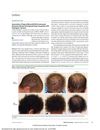
July 2020 in “JAMA Dermatology” Minoxidil solution applied twice daily improved hair growth in patients with Woolly Hair/Hypotrichosis due to LIPH gene issues, with mild side effects.
 4 citations
,
July 2005 in “International Journal of Dermatology”
4 citations
,
July 2005 in “International Journal of Dermatology” Topical PUVA and tacrolimus ointment can effectively and safely treat infant alopecia universalis.
2 citations
,
May 2016 in “Journal of Clinical Oncology” Topical calcitriol may reduce hair loss from chemotherapy at higher doses.
1 citations
,
September 2023 in “Skin Appendage Disorders” Chronic burn scars may lead to scalp skin issues, so doctors should consider this when diagnosing.
1 citations
,
January 2004 in “Linchuang pifuke zazhi” Topical cyclosporin-A is recommended for severe alopecia areata.
1 citations
,
January 1994 in “Drug Development and Industrial Pharmacy” Topical radioprotectors can reduce radiation-induced hair loss.
Chitosan shows promise for skin and scalp treatments but needs more research.
May 2026 in “Therapeutic Delivery” Applying dutasteride on a damp scalp improves its delivery to hair follicles.
January 2026 in “Updates in clinical dermatology” Various products and techniques can help hide hair loss on the scalp and eyebrows.
June 2025 in “Scholars Journal of Medical Case Reports” Early minipulse corticosteroid therapy can effectively treat scalp discoid lupus in children.
January 2012 in “Human health handbooks” Shampoos with specific ingredients are effective and safe for treating scalp psoriasis.
Shampoos with specific ingredients are effective and safe for treating scalp psoriasis.
 May 2026 in “Zenodo (CERN European Organization for Nuclear Research)”
 The new minoxidil nanogel may be a better treatment for hair loss.
 August 2025 in “Journal of the American Academy of Dermatology”
 The reported treatment depths were likely incorrect and could risk patient safety.