1 citations
,
April 2025 in “Clinical Cosmetic and Investigational Dermatology” A rare skin lesion in a 64-year-old woman was successfully treated with a laser, showing minimal redness and no return after one month.
April 2026 in “Veterinary Medicine and Science” Adrenal tumors in hamsters are rare and hard to diagnose, highlighting the need for better diagnostic tools.
 November 2025 in “Jurnal Pendidikan Indonesia”
 All stray cats in the area have ectoparasite infestations.
 2 citations
,
July 2015 in “Case Reports in Dermatology”
2 citations
,
July 2015 in “Case Reports in Dermatology” DDS treatment for LABD can cause severe side effects like anemia and hair loss, requiring careful monitoring.
 13 citations
,
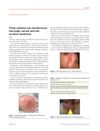
October 2015 in “Journal of the European Academy of Dermatology and Venereology”
13 citations
,
October 2015 in “Journal of the European Academy of Dermatology and Venereology” The document concludes that early recognition and appropriate treatment of red scalp, red ear, and red scrotum syndromes can lead to remission.
13 citations
,
July 1978 in “Journal of comparative pathology” Acanthospermum hispidum is toxic to mice, causing death and damage to internal organs.
CCC1 is essential for ion balance and proper plant cell function.
 August 2024 in “Biomedical Journal of Scientific & Technical Research”
 Jute leaves may help reduce DHT levels, potentially aiding in conditions like hair loss and prostate issues.
February 2025 in “Buletin Veteriner Udayana” Oral ivermectin effectively treated a cat's mite infections, improving its condition.
July 2025 in “Veterinary Parasitology Regional Studies and Reports” NexGard® and Frontline Combo® are both 100% effective at eliminating lice in dogs.
April 2017 in “bioRxiv (Cold Spring Harbor Laboratory)” The dfRootChip revealed how Arabidopsis roots adapt and grow in uneven conditions.
57 citations
,
July 2000 in “Toxicology Letters” K6/ODC transgenic mice are effective for quickly identifying cancer-causing chemicals.
April 2025 in “Indian Journal of Paediatric Dermatology” Zinc supplements improved the girl's skin and hair condition.
 August 2025 in “Preprints.org”
 Timely diagnosis and treatment are crucial for managing skin infections in wildlife.
6 citations
,
October 2001 in “British Journal of Ophthalmology” Intralesional cidofovir may be a viable treatment for conjunctival lesions in Melkersson-Rosenthal syndrome without systemic toxicity.
 2 citations
,
July 2011 in “AFRICAN JOURNAL OF BIOTECHNOLOGY”
2 citations
,
July 2011 in “AFRICAN JOURNAL OF BIOTECHNOLOGY” Seven genetic variations in sheep's DSG4 gene are linked and affect wool traits.
11 citations
,
April 1991 in “Journal of Veterinary Diagnostic Investigation” Shorthorn calves in Missouri experienced photosensitization, causing skin issues and liver damage, but they eventually recovered.
 12 citations
,
February 2012 in “New England journal of medicine/The New England journal of medicine”
12 citations
,
February 2012 in “New England journal of medicine/The New England journal of medicine” A 72-year-old man had severe fatigue, weight loss, and frequent loose stools.
July 2026 in “Journal of the American Academy of Dermatology” 2 citations
,
January 2023 in “Frontiers in Veterinary Science” Buffalo flies and Stephanofilaria nematodes cause severe skin lesions in beef cattle, and treatment should target both.
June 2020 in “Zenodo (CERN European Organization for Nuclear Research)” Reptiles on the Absheron Peninsula accumulate toxic elements in their tissues but survive due to tissue resilience.
A new method allows detailed, continuous imaging of crustacean leg regeneration without harming the cells.
January 2018 in “VCU Scholars Compass (Virginia Commonwealth University)” Desmosomes are crucial for skin and heart development, and JNK may help regulate them.
 November 2022 in “Journal of Investigative Dermatology”
 Aging in one type of stem cell can cause aging-like changes in various organs.
83 citations
,
February 1977 in “PubMed” Increasing light exposure in winter can make mares ovulate and cycle earlier.
 13 citations
,
July 2019 in “Toxicology research”
13 citations
,
July 2019 in “Toxicology research” Ethanamizuril is safe for rats at 20 mg/kg feed, but higher doses cause hair loss, organ changes, and liver, kidney, and lung damage.
 March 2022 in “International Journal of Current Science Research and Review”
 Chronic ketosis in cows causes appetite changes, anemia, skin issues, increased pulse, and biochemical imbalances.
 25 citations
,
February 2013 in “The journal of investigative dermatology/Journal of investigative dermatology”
25 citations
,
February 2013 in “The journal of investigative dermatology/Journal of investigative dermatology” Blocking SCD1 in the skin with XEN103 shrinks sebaceous glands in mice.
7 citations
,
January 2009 in “DOAJ (DOAJ: Directory of Open Access Journals)” D-004 did not harm sperm cells in mice.