Smilax aristolochiifolia is less abundant due to environmental changes, but still used in traditional medicine.

Silk sericin dressing with collagen heals wounds faster and improves scar quality better than Bactigras.

Encapsulating hair loss drugs in cyclodextrins improves their solubility and reduces scalp irritation.

Guaraná extract effectively reduces oiliness in skin and hair without harming skin health.
 October 2020 in “Veterinary Dermatology”
 New treatments and diagnostic methods for various animal skin conditions showed promising results.
 August 2020 in “Universidad Peruana de Ciencias Aplicadas (UPC)”
 Platelet-rich plasma (PRP) effectively improves acne scars.
January 2020 in “Proyecto de investigación:” Longer anogenital distance may indicate a higher chance of having polycystic ovary syndrome, and measuring this distance along with hormone levels could improve diagnosis.
 January 2020 in “Asian journal of applied science and technology”
 Good nutrition is crucial for health and preventing disease, and supplements can help prevent nutrient deficiencies.

The document is a detailed guide on skin conditions and treatments for dermatologists.
 February 2019 in “Institutional Repositories DataBase (IRDB)”
 January 2019 in “Advances in Environmental Biology”
 Propionibacterium acnes contributes to acne and antibiotic resistance, needing new treatments.
An 11-year-old female Pinscher with Pemphigus Foliaceus was successfully diagnosed and treated.
 January 2018 in “Springer eBooks”
 Athletes need effective management of skin disorders for their performance and well-being.
 January 2018 in “Springer eBooks”
 The document says that early treatment of Acne Vulgaris is important to prevent scarring and that adult onset acne is common in women, often due to hormonal imbalances.
 January 2018 in “Springer eBooks”
 Gender affects hair and scalp characteristics, with differences in hormone responses, graying patterns, and trace metals.
 August 2017 in “Indian journal of history of science”
 The manuscript "Strīvilāsa" offers ancient Ayurvedic knowledge on women's health, beauty treatments, and reproductive care.
 March 2017 in “Fundamental & Clinical Pharmacology”
 The model and estimator can predict drug exposure in kidney transplant patients well.
 January 2017 in “Springer eBooks”
 The document explains various skin conditions and their treatments.
 January 2017 in “Research Portal (King's College London)”
 Mantel's family life affected her view of femininity and worsened her endometriosis.
 September 2016 in “Más dermatología”
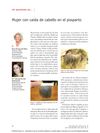
 New factors in female hair loss include genetics, hormones, stress, and inflammation; future treatments should also focus on these areas and consider the patient's emotional well-being.
 September 2016 in “Más dermatología”
 Postpartum hair loss usually stops within 4-6 months.
 April 2016 in “Medical Acupuncture”
 The document concludes that hair loss in women is treated with medications, therapies, and surgery in Western medicine, and with acupuncture and herbs in Chinese medicine, but hereditary hair loss is hard to reverse.
 January 2016 in “Elsevier eBooks”
 The conclusion is that grasping how cells determine their roles through evolution is key, with expected progress from new research models and genome editing.
Forensic hair analysis for drugs is now more reliable and accurate.
 December 2015 in “Revista Chilena de Dermatología”
 El Síndrome de Ovario Poliquístico causa problemas de piel como acné y es importante reconocerlo temprano para tratarlo.
 August 2015 in “Postgraduate obstetrics & gynecology”
 Women with PCOS often have insulin resistance, abnormal lipid levels, and a higher risk of diabetes and heart disease; lifestyle changes and medication like metformin can help manage these risks.
 August 2015 in “Postgraduate obstetrics & gynecology”
 Women with PCOS often have metabolic issues like insulin resistance and a higher risk of diabetes and abnormal lipid levels.
 January 2015 in “Endocrine updates”
 Bariatric surgery patients need careful before and after surgery care for safety and long-term health.
 November 2014 in “John Wiley & Sons, Ltd eBooks”
 Eating high-glycemic and dairy foods can increase hormones that may cause acne and other health issues.