 104 citations
,
January 2016 in “Food & Function”
104 citations
,
January 2016 in “Food & Function” Olive oil compounds may help prevent cancer in animals, but human results are mixed.
9 citations
,
December 2021 in “Molecules” Certain compounds in three Polynesian plants may help hair growth.
 9 citations
,
July 2021 in “Journal of Natural Medicines”
9 citations
,
July 2021 in “Journal of Natural Medicines” Over 150 new molecules with biological activities were found in traditional herbal medicines, some with potential for new drug development.
3 citations
,
February 2025 in “Metabolites” The research found enzymes in Stephania epigaea that help make cepharanthine.
 112 citations
,
May 2019 in “Pharmacological Research”
112 citations
,
May 2019 in “Pharmacological Research” Lignans and neolignans from plants may help protect against various health issues, including cancer and heart disease.
 10 citations
,
August 2024 in “Clinical Cosmetic and Investigational Dermatology”
10 citations
,
August 2024 in “Clinical Cosmetic and Investigational Dermatology” Natural ingredients may help reduce skin aging by protecting cells and boosting collagen.
 8 citations
,
December 2021 in “International Journal of Family Studies, Food Science and Nutrition Health”
8 citations
,
December 2021 in “International Journal of Family Studies, Food Science and Nutrition Health” Extra virgin olive oil may boost the immune system and help fight infections like COVID-19.
 April 2026 in “Frontiers in Pharmacology”
 Erzhi Pill shows promise for health issues but needs better quality control and clearer usage guidelines.
 February 2026 in “Chinese Medicine”
 Natural products might help treat hair greying.
Olive leaves extract may help treat benign prostatic hyperplasia (BPH).
 July 2024 in “International Journal of Pharmaceutical Sciences and Medicine”
 Nyctanthes arbor-tristis is effective for treating many health issues.
 April 2018 in “Journal of Ayurvedic and herbal medicine”
 Computational methods can speed up and improve the development and safety of herbal drugs.
 6 citations
,
February 2020 in “Journal of Natural Products”
6 citations
,
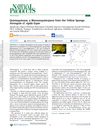
February 2020 in “Journal of Natural Products” A new compound from a sponge strongly inhibits an enzyme linked to male-pattern hair loss without being toxic at low levels.
 32 citations
,
January 2021 in “Molecules”
32 citations
,
January 2021 in “Molecules” Some Middle Eastern plants may help treat diabetes and could be alternatives to current drugs, but more research is needed.
 14 citations
,
January 2019 in “Journal of Natural Medicines”
14 citations
,
January 2019 in “Journal of Natural Medicines” Chaga mushrooms contain compounds that may promote hair growth better than common treatments.
 14 citations
,
December 2013 in “Molecules”
14 citations
,
December 2013 in “Molecules” Two compounds from Asiasarum heterotropoides roots show potential as lung cancer treatments without harming normal cells.
 13 citations
,
September 2024 in “Frontiers in Pharmacology”
13 citations
,
September 2024 in “Frontiers in Pharmacology” Morroniside has many health benefits, including protection against diabetes complications, bone and brain diseases, heart and skin issues, and it supports hair growth and reduces inflammation.
 3 citations
,
April 2018 in “Holzforschung”
3 citations
,
April 2018 in “Holzforschung” Scientists found a new natural compound and other known compounds in Cercidiphyllum japonicum twigs, which might be useful for medicine.
 1 citations
,
August 2023 in “Frontiers in immunology”
1 citations
,
August 2023 in “Frontiers in immunology” Traditional Chinese medicinal foods may help manage long-term post-COVID symptoms.
 June 2025 in “Basrah Researches Sciences”
 Medicinal plants might help with post-COVID-19 issues, but more research is needed.
2 citations
,
March 2005 in “Journal of the American Academy of Dermatology” Equol may help with antiaging and skin health by boosting collagen and blocking certain hormones.
3 citations
,
August 2010 in “Letters in Drug Design & Discovery”  January 2024 in “Journal of Applied Pharmaceutical Science”
 Procyanidin B2 and leucopelargonidin from Saraca asoca may help treat PCOS by balancing hormones.
Cepharanthine and tetrandrine show promise as COVID-19 drugs.
 8 citations
,
July 2019 in “Pure and Applied Chemistry”
8 citations
,
July 2019 in “Pure and Applied Chemistry” Some natural compounds from Iris plants can block enzymes related to certain disorders, with a few affecting both targeted enzymes.
26 citations
,
October 1997 in “Planta Medica” Certain compounds from Stephania cepharantha help hair cell growth.
October 2016 in “Letters in Drug Design & Discovery”  1 citations
,
July 2022 in “Plant Cell, Tissue and Organ Culture (PCTOC)”
1 citations
,
July 2022 in “Plant Cell, Tissue and Organ Culture (PCTOC)” The study found that in Eclipta prostrata roots, coumestans come from acetate and shikimate pathways, and phenylpropanoid is made only through the shikimate pathway.
 196 citations
,
May 2001 in “The journal of investigative dermatology/Journal of investigative dermatology”
196 citations
,
May 2001 in “The journal of investigative dermatology/Journal of investigative dermatology” Sebocytes play a key role in controlling androgen levels in human skin.
June 1996 in “Journal of Dermatological Science”