 April 2023 in “Tikrit Journal of Pharmaceutical Sciences”
 Deferasirox effectively reduces iron overload in ß-thalassemia patients but may cause some manageable side effects.
 3 citations
,
January 2019 in “International Journal of Trichology”
3 citations
,
January 2019 in “International Journal of Trichology” The balance of thiol-disulfide in women with hair loss is affected but not damaged.
January 2011 in “Nuclear Techniques” Lead levels in hair increased due to environmental exposure, while iron, copper, and zinc levels stayed stable.
33 citations
,
April 2003 in “Oncogene” August 2012 in “Open Repository and Bibliography (University of Liège)” A castrated dog developed hair loss and prostate issues from long-term exposure to estrogen cream.
21 citations
,
January 1999 in “Molecular and Cellular Biochemistry” Niacin deficiency makes rats more sensitive to cancer-causing chemicals.
May 2022 in “Endocrine practice” High-dose biotin can cause false thyroid test results; stop taking biotin two days before testing to avoid errors.
Copper deficiency lowers blood and liver copper levels in rats, but not in hair or bones.
2 citations
,
January 1977 in “PubMed”  14 citations
,
March 2022 in “Clinical Endocrinology”
14 citations
,
March 2022 in “Clinical Endocrinology” The document concludes that a systematic approach is crucial to identify causes of androgen excess in women beyond the most common cause, Polycystic ovary syndrome (PCOS).
3 citations
,
October 2024 in “The Journal of Clinical Endocrinology & Metabolism” Potential androgen excess signs vary by demographics and health, needing inclusive evaluation.
January 1987 in “Toxicological sciences” SMR-2 and SMR-6 are much more toxic than retinoic acid, causing severe symptoms and organ damage in mice.
The woman's skin and health issues were due to a severe zinc deficiency.
 June 2022 in “Rheumatology research”
 Lupus can be a rare cause of high calcium levels in the blood.
 March 2002 in “Clin-Alert”
 In 2002, various drugs caused serious side effects, including vitamin B12 deficiency, heart issues, blindness, hypersexuality, allergic reactions, blood clotting problems, pupil dilation, capillary leak syndrome, muscle breakdown, hepatitis, skin reactions, and lupus.
14 citations
,
December 2017 in “Journal of Intensive Care” Lithium poisoning can cause severe health complications and requires careful monitoring.
 1 citations
,
November 2007 in “Humana Press eBooks”
1 citations
,
November 2007 in “Humana Press eBooks” Most cases of high male hormone levels in women are due to polycystic ovary syndrome.
 February 2018 in “Egyptian Journal of Radiation Sciences and Applications”
 Patients with Discoid Lupus Erythematosus have lower vitamin D and antioxidant levels and higher oxidative stress.
July 2025 in “Ecotoxicology and Environmental Safety” Higher levels of molybdenum and lead in hair are linked to increased cholesterol and dyslipidemia risk.
25 citations
,
April 1972 in “American Journal of Clinical Nutrition” Hair chromium levels show past nutritional status, not environmental exposure.
11 citations
,
September 1999 in “Biological Trace Element Research” Mineral deficiencies in pregnant women can be improved with proper supplementation.
5 citations
,
March 1992 in “PubMed” Arsenic levels in rat hair reflect arsenic intake and accumulation in the body.
14 citations
,
January 2014 in “Dermatology Research and Practice” Many infants in Northern Ethiopia have zinc deficiency.
26 citations
,
January 2014 in “ALTEX” Pesticides can cause reproductive and adrenal health issues.
September 2024 in “African Journal of Biomedical Research” Heavy metals in cosmetics can harm health, causing issues like cancer and hair loss.
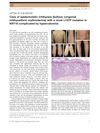 October 2011 in “Journal of dermatology”
 A man with a rare skin condition and a new gene mutation developed high calcium levels due to his treatment.
2 citations
,
January 2016 in “SANGYO EISEIGAKU ZASSHI” Nurses are exposed to chemotherapy drugs, risking health issues like hair loss, so protective gear and monitoring are needed.
 7 citations
,
January 2017 in “Journal of Clinical Biochemistry and Nutrition”
7 citations
,
January 2017 in “Journal of Clinical Biochemistry and Nutrition” Higher vitamin D levels are linked to higher iron levels in Korean women without metabolic syndrome, but not in those with it.
 June 2026 in “Scholarly review .”
 Endocrine-disrupting chemicals cause irreversible harm to children's development, increasing disease risk.
22 citations
,
November 2002 in “Clinical journal of oncology nursing” Arsenic trioxide effectively treats relapsed acute promyelocytic leukemia with manageable side effects.