24 citations
,
January 2001 in “International Journal of Cancer” Permanent hair dye use may increase bladder cancer risk, especially in female smokers with certain genetic traits.
 18 citations
,
January 2008 in “Sen'i Gakkaishi”
18 citations
,
January 2008 in “Sen'i Gakkaishi” Thioglycolic acid and L-cysteine change hair structure differently during perms, affecting hair strength and curling efficiency.
 April 2025 in “International Journal of Cosmetic Science”
 A new hair perming method avoids damage and lasts longer than traditional methods.
January 2002 in “China Surfactant Detergent & Cosmetics” Shampoo D is best for fixing perm-damaged hair.
 August 2021 in “Han'gug miyong haghoeji/Journal of the Korean society of cosmetology”
 Using natural polyphenol cross-linkers like tannic acid and green tea extract in perm treatments improves curling and protects hair.
 9 citations
,
November 2000 in “Proceedings of SPIE, the International Society for Optical Engineering/Proceedings of SPIE”
9 citations
,
November 2000 in “Proceedings of SPIE, the International Society for Optical Engineering/Proceedings of SPIE” Dyeing hair can help target and destroy hair follicles selectively.
 2 citations
,
January 2017 in “Journal of Biotechnology Research Center”
2 citations
,
January 2017 in “Journal of Biotechnology Research Center” Hair dyes affect DNA analysis results, with the prepFiler kit working best for hair with follicles.
August 2022 in “Zenodo (CERN European Organization for Nuclear Research)” The herbal hair dye effectively provides a natural reddish-brown color without synthetic chemicals.
A new method was developed to gently isolate hair pigment while keeping its structure intact.
 1 citations
,
March 2017 in “Archives of Plastic Surgery”
1 citations
,
March 2017 in “Archives of Plastic Surgery” A new method using gentian violet dye makes it easier to see and work with white hair in hair transplant surgeries.
July 2024 in “Journal of Investigative Dermatology” A peptide in shampoo can promote hair growth and improve hair condition.
7 citations
,
January 1995 Silicone pretreatment protects hair from damage and reduces color fading without interfering with bleaching or dyeing.

Hair restoration can be permanent.
 1 citations
,
December 2021 in “Annals of phytomedicine”
1 citations
,
December 2021 in “Annals of phytomedicine” The herbal hair dye with a 1:2 henna to indigo ratio works well, is safe, and eco-friendly.
January 2013 in “프로그램북(구 초록집)” Hair perms or treatments seem safe to use up to 3 to 4 times during pregnancy.
A natural hair dye from cuttlefish ink and chitosan effectively colors hair black without harmful chemicals.
 July 2018 in “Journal of The American Academy of Dermatology”
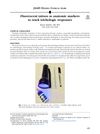
 Fluorescent tattoos are a good way to mark the scalp for hair treatments because they're accurate, invisible in normal light, and have low risk.
May 2023 in “Sokoto journal of medical laboratory science” Commercial hair dyes can harm the skin and liver.

Plant-based dyes are a safe, effective, and eco-friendly alternative to synthetic dyes.
January 2026 in “Molecules” A new perming method is less damaging to hair and works as well as traditional methods.
6 citations
,
January 2016 in “Indian Journal of Dermatology Venereology and Leprology” Most hair dyes can cause allergic reactions, so test before use.
 June 2026 in “Zenodo (CERN European Organization for Nuclear Research)”
 Herbal hair dye is safer and effective compared to synthetic dyes.
 June 2026 in “Zenodo (CERN European Organization for Nuclear Research)”
 Herbal hair dye is safer and effective compared to synthetic dyes.
 March 2025 in “International Journal of Advanced Research in Science Communication and Technology”
 Herbal hair dyes are safer and eco-friendly alternatives to synthetic dyes, offering natural color and hair benefits.
December 2012 in “SWU eJournals System (Srinakharinwirot University)” Chemical hair removal can cause skin irritation and other issues, but natural alternatives are being explored.
 May 2026 in “Zenodo (CERN European Organization for Nuclear Research)”
 The herbal hair dye is a safe, effective, and natural alternative to chemical dyes.
 1 citations
,
January 2023 in “Indian Journal of Animal Research”
1 citations
,
January 2023 in “Indian Journal of Animal Research” A new method effectively stains hair samples for study without losing hair sections.
 March 2026 in “INTERANTIONAL JOURNAL OF SCIENTIFIC RESEARCH IN ENGINEERING AND MANAGEMENT”
 Herbal hair dyes are safer and eco-friendly compared to synthetic dyes.
 April 2026 in “Zenodo (CERN European Organization for Nuclear Research)”
 Natural plant-based hair dyes are safer and eco-friendly alternatives to synthetic dyes.
3 citations
,
August 2008 in “PubMed” Repeated digital perming with sodium thioglycolate lotion significantly damages hair protein and structure.