 8 citations
,
January 1989 in “Annual Reports in Medicinal Chemistry”
8 citations
,
January 1989 in “Annual Reports in Medicinal Chemistry” Hair loss from alopecia areata and androgenetic alopecia can be treated, but more effective and safer treatments are needed.
 1 citations
,
November 1989 in “PubMed”
1 citations
,
November 1989 in “PubMed” Male-pattern baldness is a natural process with unclear causes, and while Minoxidil can help, the results often aren't satisfactory.
 March 2023 in “Benha Journal of Applied Sciences”
 Medications for male pattern hair loss are safe and work well.
1 citations
,
March 2000 in “PubMed” A 16-year-old boy's alopecia areata progressed unusually to resemble male pattern baldness.
 3 citations
,
February 2022 in “Cureus”
3 citations
,
February 2022 in “Cureus” Frontal fibrosing alopecia can sometimes look like syphilitic hair loss.
 November 2024 in “Journal of Investigative Dermatology”
 Minoxidil rejuvenates hair follicles and reduces aging signs in male pattern baldness.
 January 2025 in “International Journal of Dermatology Sciences”
 Androgenetic alopecia is the most common type of non-scarring hair loss, especially in young males, and early diagnosis and treatment are important.
 January 2022 in “Consultant”
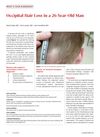
 The man's occipital hair loss was due to temporal triangular alopecia, not alopecia areata.
 September 2016 in “Journal of Dermatology and Dermatologic Surgery”
 A woman's severe hair loss was caused by scalp psoriasis, not the initially thought condition, and treatment improved her psoriasis but couldn't restore her lost hair.
 100 citations
,
April 2010 in “Expert Opinion on Pharmacotherapy”
100 citations
,
April 2010 in “Expert Opinion on Pharmacotherapy” Hair loss in men treated best with early medication or transplant, new treatments researched.
 March 2012 in “Journal of The American Academy of Dermatology”
 Temporal triangular alopecia usually starts in early childhood and treatment with Minoxidil has limited effectiveness.
 September 1997 in “Journal of The European Academy of Dermatology and Venereology”
 Hormonal differences affect male pattern baldness.
September 1997 in “JEADV. Journal of the European Academy of Dermatology and Venereology/Journal of the European Academy of Dermatology and Venereology” Common hair loss can be diagnosed with a physical exam and sometimes a hair test or skin biopsy, and treated with medication or surgery, with ongoing treatment needed to keep results.
January 2005 in “Digest of the World Core Medical Journals” Oral zinc gluconate and topical steroids significantly improved a rare scalp condition in three elderly patients.
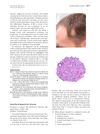
The man has Temporal Triangular Alopecia, a stable, non-scarring hair loss condition best treated with hair transplantation.
 February 2015 in “Current problems in dermatology”
 The document provides a comprehensive guide for dermatologists to diagnose and treat hair loss.
 April 2024 in “International Journal of Research Publication and Reviews”
 Alopecia areata causes hair loss with varied treatment responses and frequent relapses.
 February 2023 in “Journal of vaccines and immunology”
 Alopecia areata causes sudden hair loss, often on the scalp, and can be severe, especially with early onset or related health issues.
 February 2021 in “Cureus”
 A woman's hair loss was initially misdiagnosed as scarring hair loss but was actually a treatable autoimmune hair loss.
2 citations
,
December 2023 in “International Journal of Dermatology” A unique type of hair loss mimics another condition but has minimal inflammation and specific immune cells present.
 5 citations
,
March 2015 in “Clinical and Experimental Dermatology”
5 citations
,
March 2015 in “Clinical and Experimental Dermatology” Chemotherapy caused a woman's permanent hair loss and early menopause.
 January 2020 in “Medpulse International Journal of General Medicine/Medpulse International Journal of Medicine”
 Premature graying of hair is often linked with other health issues, but treatment with biotin, zinc, and calcium pantothenate is not very effective.
 June 2023 in “British journal of dermatology/British journal of dermatology, Supplement”
 A woman's rare hair loss condition improved on its own, suggesting this type might recover like common cases.
 July 2025 in “Dermatology Practical & Conceptual”
 A 2-year-old boy has a rare hair disorder causing brittle hair and hair loss, which may improve with age.
 July 2018 in “Elsevier eBooks”
 Frontal Fibrosing Alopecia is a type of hair loss affecting mostly older women, with no agreed best treatment.
1 citations
,
February 1938 in “Archives of Dermatology” The woman's hair loss might be due to a chronic infection.
 1 citations
,
December 2013 in “Journal of Evolution of Medical and Dental Sciences”
1 citations
,
December 2013 in “Journal of Evolution of Medical and Dental Sciences” Alopecia areata causes patchy hair loss due to unknown factors, affecting all ages and genders.
January 2022 in “Clinical Cases in Dermatology” A woman has a permanent hair loss condition treated with steroids and new medicines, but hair might not regrow.
 1 citations
,
October 2008 in “Expert Review of Dermatology”
1 citations
,
October 2008 in “Expert Review of Dermatology” Frontal Fibrosing Alopecia is a slowly progressing hair loss condition, likely underdiagnosed, with ineffective treatments, needing more research to understand it fully.
November 2012 in “Annales de Dermatologie et de Vénéréologie” Frontal fibrosing alopecia can occur in children, not just postmenopausal women.