 76 citations
,
March 2005 in “Journal of Molecular Medicine”
76 citations
,
March 2005 in “Journal of Molecular Medicine” Certain mice without specific receptors or mast cells don't lose hair from stress.
 46 citations
,
July 2007 in “Journal of comparative neurology”
46 citations
,
July 2007 in “Journal of comparative neurology” Manatee whiskers are specially adapted for touch in water.
 3 citations
,
August 2018 in “Deleted Journal”
3 citations
,
August 2018 in “Deleted Journal” Guasha changed rat skin appearance and blood vessels temporarily without affecting certain nerve proteins or fiber structure.

Whiskers can form without sensory nerves or Foxd1, thanks to Meis2 in mesenchymal cells.
A new imaging method helps see and study touch nerve endings in mouse skin.

Meis2 is essential for whisker development, independent of nerve involvement.
4 citations
,
January 2016 in “Methods in molecular biology” HAP stem cells can repair nerves, grow hair follicle nerves, and become heart muscle cells, making them useful for regenerative medicine.
TRPV4 channels in the skin may enhance the effects of acupuncture.
7 citations
,
October 1992 in “PubMed” Sinus hair follicles in mammals have different nerve fiber types with species-specific patterns, especially in cats.
27 citations
,
August 2003 in “Anais Brasileiros de Dermatologia” Neuropeptides affect skin inflammation, repair, and hair growth, with potential for therapy.
 1 citations
,
October 2022 in “Annual review of cell and developmental biology”
1 citations
,
October 2022 in “Annual review of cell and developmental biology” The nervous system helps control stem cell behavior and immune responses, affecting tissue repair and maintenance.
 1 citations
,
April 2022 in “Journal of The American Academy of Dermatology”
1 citations
,
April 2022 in “Journal of The American Academy of Dermatology” Hair loss in men (androgenetic alopecia) is significantly linked to decreased scalp sensitivity, but not temperature sensitivity. More research is needed to confirm this. Comparing this hair loss to leprosy is unsupported and stigmatizing.
September 2016 in “Journal of dermatological science” HAP stem cells can repair nerves and spinal cords by becoming Schwann cells.
 142 citations
,
September 2020 in “Journal of neurophysiology”
142 citations
,
September 2020 in “Journal of neurophysiology” Young adults have about 230,000 tactile nerve fibers, decreasing 5-8% per decade with age.
88 citations
,
April 2012 in “Journal of Investigative Dermatology” Blocking TRPV3 may help treat itch in dry skin conditions.

Meis2 is essential for touch sensation and proper nerve connection to touch receptors in certain skin areas of mice.
110 citations
,
January 1983 in “Brain Research Reviews” Monkey lips have dense sensory nerves similar to those in other skin areas, explaining their sensitivity.

Meis2 is essential for touch sensation and nerve function in mice.

The transcription factor Meis2 is essential for touch sensation and proper nerve development in touch receptors.
 66 citations
,
July 2007 in “Journal of Molecular Medicine”
66 citations
,
July 2007 in “Journal of Molecular Medicine” Stress increases certain chemicals in the skin and nerves, which might worsen skin conditions.
 71 citations
,
February 2020 in “Journal of Translational Medicine”
71 citations
,
February 2020 in “Journal of Translational Medicine” Progress has been made in skin and nerve regeneration, but more research is needed to improve methods and ensure safety.
October 2014 in “Archivio Istituzionale della Ricerca (Universita Degli Studi Di Milano)” A new type of nerve cell involved in itch perception was discovered.
 14 citations
,
October 2018 in “Brain Research Bulletin”
14 citations
,
October 2018 in “Brain Research Bulletin” Exosomes help nerve fibers grow by affecting specific cell signaling pathways.
 16 citations
,
December 2006 in “Expert Review of Dermatology”
16 citations
,
December 2006 in “Expert Review of Dermatology” Hair follicles are essential for skin health, aiding in hair growth, wound healing, and immune function.
7 citations
,
September 2013 in “Tissue engineering. Part A” Hair follicle stem cells can become motor neurons and reduce muscle loss after nerve injury.
 40 citations
,
January 2016 in “Elsevier eBooks”
40 citations
,
January 2016 in “Elsevier eBooks” The skin is the largest organ, protecting the body, regulating temperature, and producing hormones.
 1 citations
,
January 2012 in “Elsevier eBooks”
1 citations
,
January 2012 in “Elsevier eBooks” The document concludes that the skin is a complex organ providing protection, sensation, and healing, with challenges in treating conditions like itchiness.
 April 2024 in “Materials today bio”
 The CuCS/Cur wound dressing helps regenerate nerves and heal deep skin burns by rebuilding hair follicles.
 31 citations
,
November 2016 in “Cell Reports”
31 citations
,
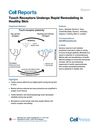
November 2016 in “Cell Reports” Touch sensitivity in mouse skin decreases during hair growth due to changes in touch receptors.
 4 citations
,
November 2014
4 citations
,
November 2014 The skin protects the body, regulates temperature, senses touch, and makes vitamin D.