 3 citations
,
December 2021 in “Frontiers in endocrinology”
3 citations
,
December 2021 in “Frontiers in endocrinology” A new mutation in the DCAF17 gene was found in a Chinese family, causing Woodhouse-Sakati syndrome and diabetes.
 3 citations
,
April 2016 in “International Journal of Dermatology”
3 citations
,
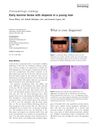
April 2016 in “International Journal of Dermatology” A young man was diagnosed with trichoepitheliomas, causing thick skin and hair loss.
 January 2024 in “Wiadomości Lekarskie”
 Glioma treatment may improve with new therapies and technologies.
 August 2007 in “Journal of Investigative Dermatology”
 The meeting discussed vitamin D3's role in fighting tuberculosis, potential treatments for skin conditions like psoriasis, and hair follicle regeneration as a possible solution for hair loss.
 May 2024 in “Scientific Reports”
 Androgen receptors in the mouse brain may explain cognitive and mood changes in prostate cancer treatment.
 71 citations
,
February 2020 in “Journal of Translational Medicine”
71 citations
,
February 2020 in “Journal of Translational Medicine” Progress has been made in skin and nerve regeneration, but more research is needed to improve methods and ensure safety.
 69 citations
,
June 2017 in “Experimental Biology and Medicine”
69 citations
,
June 2017 in “Experimental Biology and Medicine” Advanced human skin models improve drug development and could replace animal testing.
 4 citations
,
November 2014
4 citations
,
November 2014 The skin protects the body, regulates temperature, senses touch, and makes vitamin D.
 2 citations
,
January 2019
2 citations
,
January 2019 The document concludes that autoimmune skin disorders are treated with corticosteroids and immunosuppressive drugs.
 December 2025 in “Journal of Food Innovation, Nutrition, and Environmental Sciences”
 Solar drying preserves chlorophyll and phytochemicals in Chaya leaves better than sun drying.

Continuous research and innovative strategies are essential for sustainable development.

CRPS I is complex, linked to immune and nerve issues, and needs comprehensive treatment.
 January 2024 in “Wiadomości Lekarskie”
 AI and robotics are improving treatment and monitoring of neurodegenerative disorders like Parkinson's.
 January 2024 in “Wiadomości Lekarskie”
 Shifting attention can reduce physical pain.
January 2024 in “Wiadomości Lekarskie” National data helps improve palliative care by highlighting and addressing inequalities.
 January 2024 in “Wiadomości Lekarskie”
 Robotic surgery's benefits over traditional methods are unclear and need more research.
 277 citations
,
July 2011 in “Journal of the Dermatology Nurses’ Association”
277 citations
,
July 2011 in “Journal of the Dermatology Nurses’ Association” The skin's layers protect, sense, and regulate the body's internal balance, but can be prone to cancer.

The conference emphasized innovative solutions for global challenges, including disaster architecture, education, health, and economic impacts.
81 citations
,
September 2009 in “Birth defects research” Different body areas in mice produce different hair types due to interactions between skin layers.
12 citations
,
March 2022 in “Development” Mechanical forces are crucial in shaping our sensory organs during development.
21 citations
,
March 2021 in “Frontiers in Neurology” The posterior cerebellum helps maintain balance by adapting to sensory inputs and self-motion.
February 2026 in “Advanced Sensor Research” Advanced technologies can improve understanding and monitoring of skin-brain interactions.
112 citations
,
February 2001 in “Journal of Investigative Dermatology” Neuropeptides affect hair growth, with some speeding it up and others slowing it down.

Onabotulinum toxin A may help treat trichotillomania and promote hair growth.

Skin stem cells in hair follicles are important for touch sensation.
5 citations
,
August 2023 in “Skin Research and Technology” Hairy skin feels prickling more intensely than smooth skin.
March 2024 in “International journal of molecular sciences” taVNS reduces vitiligo symptoms in mice.
63 citations
,
February 2010 in “Journal of Neurophysiology” Microstimulation of certain facial and mouth nerves can evoke specific sensations, while deeper nerves may require multiple stimulations to affect perception.
32 citations
,
February 2019 in “eLife” BMP signaling is essential for the development of touch domes.

Hair follicle stem cells are crucial for touch sensation and proper nerve structure in mice.