37 citations
,
December 2021 in “Cells” Alopecia areata severity and treatment response are linked to specific cytokine levels.
 April 2024 in “Bioscience trends”
 Higher levels of certain DNAs in blood may indicate hair follicle damage in alopecia areata patients.
 January 2024 in “Journal of Biosciences and Medicines”
 Combining Ginkgo biloba and butylphthalide improves cognitive recovery and reduces inflammation after a stroke.
 14 citations
,
January 2020 in “Advances in Dermatology and Allergology”
14 citations
,
January 2020 in “Advances in Dermatology and Allergology” Higher interleukin-15 levels are linked to more severe alopecia areata, but not to age or gender.
1 citations
,
June 2025 in “Frontiers in Immunology” Higher IgE levels may play a role in alopecia areata, especially in males, children, and severe cases.
 March 2025 in “Journal of Cutaneous and Aesthetic Surgery”
 The cytokine and peptide serum was most effective in reducing hair loss and improving hair growth.
6 citations
,
October 2021 in “Biomedical Research and Therapy” Alopecia areata patients have higher levels of IL-6 and TNF-α.
 December 2025 in “Cureus”
 Higher IL-17A and IL-23 levels are linked to alopecia areata severity and could help in tracking and treating the disease.
September 2025 in “Diseases” Higher levels of certain proteins in the blood are linked to more severe patchy alopecia areata.
Atopy and altered T cell functions contribute to Alopecia Areata.
19 citations
,
July 2024 in “Journal of Cellular and Molecular Medicine” Astaxanthin may reduce inflammation in women with PCOS, but doesn't significantly improve symptoms.
December 2025 in “AL-QADISIYAH MEDICAL JOURNAL” Higher IL-17 and IL-23 levels may worsen alopecia areata.
January 2008 in “Anhui nongye kexue” Mongolia sheep hair follicles grew well in a serum-free medium for 19 days.
 April 2018 in “Journal of Investigative Dermatology”
 Both Th1 and Th2 immune responses are increased in alopecia areata, with Th2 response more strongly linked to how severe the disease is.
5 citations
,
June 2024 in “Experimental Dermatology” High beta-hydroxybutyrate levels may worsen hair loss in alopecia areata.
 14 citations
,
March 2002 in “The journal of investigative dermatology/Journal of investigative dermatology”
14 citations
,
March 2002 in “The journal of investigative dermatology/Journal of investigative dermatology” Patients with severe alopecia areata have higher levels of MIF, which decrease after successful treatment.
1 citations
,
January 2018 in “Journal of Society of Cosmetic Chemists of Japan” Plant extracts can help prevent hair weakening by reducing scalp inflammation.
 April 2019 in “Journal of Investigative Dermatology”
 Eating grape powder may reduce the severity of skin allergy symptoms.
 2 citations
,
August 2015 in “Journal of dermatology”
2 citations
,
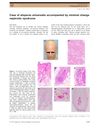
August 2015 in “Journal of dermatology” A possible link exists between minimal change nephrotic syndrome and complete hair loss.
 December 2025 in “Naunyn-Schmiedeberg s Archives of Pharmacology”
 Agomelatine may help reduce benign prostatic hyperplasia by blocking certain inflammatory pathways.

Menopause-related skin changes may increase fungal infections and inflammation.
 March 2025 in “Journal of Cosmetic Dermatology”
 Thermus thermophilus extract improves hair growth and scalp health in men with hair loss.
April 2024 in “Molecules/Molecules online/Molecules annual” Paris polyphylla saponins may effectively treat acne due to their antibacterial and anti-inflammatory properties.
22 citations
,
September 2019 in “Trends in Immunology” Acne is a temporary skin imbalance during puberty that often resolves on its own.
March 2026 in “International Journal of Dermatology” Changes in scalp microbes may contribute to hair loss, suggesting new treatment options.
 32 citations
,
March 2021 in “Journal of cosmetic dermatology (Print)”
32 citations
,
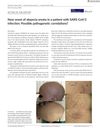
March 2021 in “Journal of cosmetic dermatology (Print)” COVID-19 infection may trigger alopecia areata in some patients.
 January 2023 in “Journal of Cosmetics, Dermatological Sciences and Applications”
 The hair growth serum Trichosera® was effective in increasing hair regrowth and density and reducing hair fall without significant side effects.
3 citations
,
September 2024 in “Experimental Dermatology” IL-18 levels are higher in hidradenitis suppurativa patients and may indicate disease severity.
March 2025 in “The Egyptian Journal of Medical Microbiology” Inflammation is linked to hair loss.
6 citations
,
April 1993 in “Journal of Dermatological Science” Certain substances can strongly inhibit DNA synthesis in hair cells.