280 citations
,
May 2005 in “Andrology” Testosterone treatment for older men can have short-term benefits, but long-term risks are unclear, requiring careful evaluation and monitoring.
 4 citations
,
November 2021 in “Pharmaceuticals”
4 citations
,
November 2021 in “Pharmaceuticals” Paeonia lactiflora and Poria cocos extracts can potentially increase hair growth and reduce hair loss symptoms by lowering testosterone and inflammation levels.
1 citations
,
December 2022 in “Bioactive Materials” The microneedle patch with quercetin, zinc, and copper effectively promotes hair regrowth for androgenic alopecia.
 July 2023 in “JAAD International”
 Two drugs, finasteride and minoxidil, are approved for hair loss treatment, but new therapies are being developed.
 April 2023 in “Dermatologica Sinica”
 Sex hormones affect hair growth and loss, and treatments for related hair diseases include various medications, hair transplantation, and light therapy.
 August 2023 in “Journal of Cosmetic Dermatology”
 Exosomes from hair papilla cells and the Chinese medicine Liao Tuo Fang can potentially promote hair growth and could be used to develop hair growth drugs.

Androgenetic alopecia is not linked to higher risks of hypertension or hyperaldosteronism.
 1 citations
,
January 2014 in “Springer eBooks”
1 citations
,
January 2014 in “Springer eBooks” Adult acne is more common in women, often linked to hormones, and can be harder to treat.
6 citations
,
August 2021 in “Clinical Epidemiology” Men using 5-alpha reductase inhibitors for prostate issues may have a slightly higher risk of blood clots.
41 citations
,
March 2016 in “The Journal of Clinical Endocrinology & Metabolism” In STSD patients, the body compensates for low androgen levels by increasing another enzyme's activity.
 7 citations
,
July 2022 in “Pharmaceuticals”
7 citations
,
July 2022 in “Pharmaceuticals” Pumpkin Seed Oil in niosomes may help treat hair loss and improve hair growth.
 April 2024 in “Nigerian Postgraduate Medical Journal”
 Androgenetic alopecia is a common hair loss condition influenced by various factors and linked to psychosocial and cardiovascular issues.
 43 citations
,
August 2016 in “Scientific Reports”
43 citations
,
August 2016 in “Scientific Reports” Cinnamomi cortex may help treat prostate enlargement by reducing related proteins.
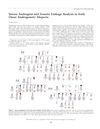 32 citations
,
August 1999 in “Journal of Investigative Dermatology”
32 citations
,
August 1999 in “Journal of Investigative Dermatology” Early onset hair loss linked to genetics and androgen levels.
 31 citations
,
January 2017 in “Advances in Experimental Medicine and Biology”
31 citations
,
January 2017 in “Advances in Experimental Medicine and Biology” Low testosterone and 5α-reductase inhibitors can harm men's metabolic and sexual health; testosterone therapy may help, but discussing 5α-RIs' side effects is important.
 October 2025 in “International Journal of Social health”
 Finasteride lowers PSA levels and prostate size, requiring adjusted PSA interpretation for accurate cancer screening.
 11 citations
,
May 2010 in “Journal of Medicinal Chemistry”
11 citations
,
May 2010 in “Journal of Medicinal Chemistry” A new compound was created in 2010 that can control oil production when applied to the skin, and its effects are completely reversible after two weeks.
 26 citations
,
August 2014 in “PubMed”
26 citations
,
August 2014 in “PubMed” Testosterone improves mood and thinking skills; finasteride has no effect.
 34 citations
,
February 1993 in “Journal of steroid biochemistry and molecular biology/The Journal of steroid biochemistry and molecular biology”
34 citations
,
February 1993 in “Journal of steroid biochemistry and molecular biology/The Journal of steroid biochemistry and molecular biology” Certain 4-azasteroids are effective at blocking the enzyme that processes testosterone in human skin and could help treat acne, excessive hair growth, and male pattern baldness.
 29 citations
,
July 2013 in “The Journal of Sexual Medicine”
29 citations
,
July 2013 in “The Journal of Sexual Medicine” Testing for CAG repeat polymorphism in the androgen receptor gene is not currently recommended for managing hypogonadism.
 12 citations
,
March 2017 in “Journal of obstetrics and gynaecology Canada”
12 citations
,
March 2017 in “Journal of obstetrics and gynaecology Canada” Testosterone therapy can modestly improve sexual function in menopausal women but should be used cautiously and is not recommended for routine measurement in sexual dysfunction or hirsutism.
 7 citations
,
September 2020 in “Journal of Cosmetic Dermatology”
7 citations
,
September 2020 in “Journal of Cosmetic Dermatology” Serum biomarkers like insulin-like growth factor-1 and vitamin D may help diagnose androgenetic alopecia.
 6 citations
,
November 1997 in “International Journal of Dermatology”
6 citations
,
November 1997 in “International Journal of Dermatology” Women with acne and irregular periods had higher active testosterone levels, which could suggest the usefulness of antiandrogen treatment.
 5 citations
,
June 2004 in “The Journal of The British Menopause Society”
5 citations
,
June 2004 in “The Journal of The British Menopause Society” Testosterone therapy can improve sexual satisfaction and mood in surgically menopausal women when used with estrogen, but its long-term safety and effects on naturally menopausal and premenopausal women are unclear.
 4 citations
,
September 2020 in “Andrologia”
4 citations
,
September 2020 in “Andrologia” Oregano extract helps fix testis and sperm damage caused by finasteride.
 72 citations
,
October 1998 in “Baillière's clinical endocrinology and metabolism”
72 citations
,
October 1998 in “Baillière's clinical endocrinology and metabolism” Long-term testosterone therapy can cause hormone suppression, affect prostate and heart health, and alter physical characteristics, but does not increase prostate cancer risk and needs more research for full risk assessment.
 18 citations
,
October 2017 in “Drug Design Development and Therapy”
18 citations
,
October 2017 in “Drug Design Development and Therapy” DA-9401 helps protect rat testis from finasteride damage.
 18 citations
,
May 2002 in “BJUI”
18 citations
,
May 2002 in “BJUI” Finasteride doesn't change rat testicle weight or sperm production.
 83 citations
,
April 1992 in “Clinical Endocrinology”
83 citations
,
April 1992 in “Clinical Endocrinology” Having enough iron improves the effectiveness of a specific hair loss treatment in women.
 22 citations
,
October 2001 in “Biochemical Pharmacology”
22 citations
,
October 2001 in “Biochemical Pharmacology” GI198745 is more potent and longer-lasting than finasteride, potentially better for treating hair loss.