 May 2026 in “Organoid Research”
 Hydrogel-based methods improve skin organoid development for medical and research applications.

Mechanical surface cues can control macrophage behavior for better immunotherapy and tissue healing.
 April 2026 in “Lebda Medical Journal”
 Hair and body shampoos differ in properties to meet specific needs for hair and skin.

STS01 1% effectively promotes hair regrowth with minimal side effects.
 March 2026 in “Research Square”
 Polymer dot nanozymes and exosomes, with laser stimulation, speed up wound healing.
 February 2026 in “Bioimpacts”
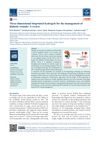
 3D bioprinted hydrogels could improve diabetic wound healing but face challenges like limited blood supply and scalability.

The new microneedle system improves hair growth in alopecia treatment.
![Asl Us Soos [Glycyrrhiza Glabra (Linn)]: An Evidence-Based Review on Its Phytopharmacological, Therapeutic Potential and Gastroduodenal Ulcer Activity](/images/assets/6967bbcb-3ed8-4b8e-a417-ed1c34019505/small/62125.jpg) January 2026 in “International Journal of Unani and Integrative Medicine”
January 2026 in “International Journal of Unani and Integrative Medicine” Licorice can effectively treat stomach ulcers and may work as well as or better than some standard drugs.

Autologous platelet concentrates help heal and regenerate dental tissues.
 November 2025 in “Quality in Sport”
 Collagen supplements improve skin, hair, and nails, especially with vitamin C and minerals.

A new microneedle patch helps repair spinal cord injuries by reducing scarring and promoting nerve growth.
 November 2025 in “Communications Materials”
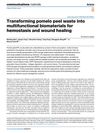
 Pomelo peel can be turned into materials that help stop bleeding and heal wounds better than commercial dressings.

New-onset fibromyalgia after COVID-19 is poorly understood, needing better definitions and studies.
 October 2025 in “Editora Pasteur eBooks”
 Peptides improve skin health and treatments for hair loss and pregnancy-related skin issues are evolving.
 October 2025 in “Dermatology and Therapy”
 Bariatric surgery can improve some skin issues but may worsen others due to nutritional deficiencies.
 September 2025 in “Medical Materials Research”
 Microneedles offer a painless, precise, and versatile method for drug delivery and disease treatment.
 July 2025 in “Bulgarian Portal for Open Science”
 Granulation and epithelialization are crucial for healing large skin wounds.

Polarized microscopy helps identify hair irregularities in genetic disorders.
 November 2024 in “International Journal of Research and Review”
 Nanotechnology improves cosmetics by enhancing ingredient delivery and effectiveness.
 October 2024 in “Open Repository of the University of Porto (University of Porto)”
 Pharmacists play a crucial role in personalized care and medication management.
 February 2024 in “Research Square (Research Square)”
 Strat-M® membrane can effectively replace mouse skin for testing collagen peptide delivery.
 February 2024 in “Digital Library of Theses and Dissertations (Universidade de São Paulo)”
 Argan, avocado, and coconut oils are absorbed into hair, improving hydration and protection.
 October 2023 in “Animal production science”
 Vitamin A deficiency changes cattle hair structure, while pregnancy may improve it, suggesting hair can indicate cattle health.
 October 2023 in “Plant Archives/Plant archives”
 Hibiscus rosa-sinensis is effective and safe for use in herbal soaps and hair oils, promoting skin and hair health.
 July 2023 in “bioRxiv (Cold Spring Harbor Laboratory)”
 Chitosan slows root hair growth and causes a buildup of callose at low concentrations, but at high concentrations, it only inhibits growth without callose buildup.
 May 2023 in “Current Medicinal Chemistry”
 Microneedle patches improve drug delivery for skin treatments and cosmetic enhancements.
 March 2023 in “bioRxiv (Cold Spring Harbor Laboratory)”
 Scientists can now create skin with hair by reprogramming cells in wounds.
 January 2023 in “Nanomedicine & nanotechnology open access”
 Microneedling is a promising, simple, and cost-effective treatment for hair loss that works well with other therapies.
 August 2022 in “bioRxiv (Cold Spring Harbor Laboratory)”
 Mouse touch-sensitive nerve cells adjust their connections based on competition with other similar cells.
 May 2022 in “Голова и шея.”
 Laser exposure at 445±40 nm safely increased tissue temperature without exceeding safety limits.