2 citations
,
December 2021 in “Journal of Drugs in Dermatology” Early diagnosis and treatment of alopecia in children are crucial for managing physical and psychological impacts.
 2 citations
,
June 2011 in “Expert Review of Dermatology”
2 citations
,
June 2011 in “Expert Review of Dermatology” Female pattern hair loss involves thinning hair on crown and frontal scalp, diagnosed by hair ratio, and treated with minoxidil, antiandrogens, or hair transplantation.
1 citations
,
October 2025 in “International Journal of Dermatology” Ritlecitinib improves emotional well-being and activity levels in alopecia areata patients.
1 citations
,
May 2025 in “Australasian Journal of Dermatology” Caregivers of teens with alopecia areata face significant mental and work-related challenges.
1 citations
,
August 2024 in “British Journal of Dermatology” Ritlecitinib effectively promotes hair regrowth in alopecia areata patients, even with extensive hair loss.
 1 citations
,
February 2023 in “Clinical and Experimental Dermatology”
1 citations
,
February 2023 in “Clinical and Experimental Dermatology” The tool to measure life quality for women with alopecia is reliable and accurate.
 1 citations
,
June 2021 in “Journal of Cosmetic Dermatology”
1 citations
,
June 2021 in “Journal of Cosmetic Dermatology” Enzyme booster SULT1A1 greatly enhances hair regrowth with minoxidil.
 1 citations
,
November 2019 in “International Journal of Dermatology”
1 citations
,
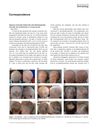
November 2019 in “International Journal of Dermatology” A 6-year-old girl with alopecia universalis regrew most of her hair after treatment with simvastatin/ezetimibe, minoxidil, and prednisolone.
 1 citations
,
September 2016 in “British Journal of Dermatology”
1 citations
,
September 2016 in “British Journal of Dermatology” Women with aging signs and heart issues have higher hair loss risk, which may predict shorter lifespan and affect attractiveness.
 1 citations
,
November 2001 in “British Journal of Dermatology”
1 citations
,
November 2001 in “British Journal of Dermatology” Oral cyclosporin doesn't stop hair loss.
June 2026 in “Clinical and Experimental Dermatology” Standardized assessment tools for androgenetic alopecia are needed.
May 2026 in “Australasian Journal of Dermatology” Alopecia areata affects 1.2% to 2.3% of Australians, with many unaware of treatment options.
March 2026 in “Clinical and Experimental Dermatology” Facial hair loss and psychosocial issues are crucial in deciding treatment for alopecia areata.
January 2026 in “Updates in clinical dermatology”  September 2025 in “Australasian Journal of Dermatology”
 New medications could improve treatment for severe alopecia areata in Australia.
August 2025 in “Australasian Journal of Dermatology” Experts created guidelines for who in Australia can get subsidized JAK inhibitor therapy for alopecia areata.
July 2025 in “Clinical and Experimental Dermatology” Hair loss (telogen effluvium) happens before male pattern baldness.
June 2025 in “Clinical and Experimental Dermatology” A 76-year-old man's grey hair turned back to its original color after radiotherapy.
 December 2024 in “Australasian Journal of Dermatology”
 Topical finasteride can cause breast enlargement and tenderness in men.
 June 2024 in “Australasian Journal of Dermatology”
 A 13-year-old boy with a rare scalp condition improved significantly with isotretinoin, minoxidil, oral steroids, and antiseptic shampoo.
 January 2024 in “Clinical and Experimental Dermatology”
 Baricitinib helps treat severe hair loss in people over 65.
 September 2023 in “British Journal of Dermatology”
 Hair regrowth from severe alopecia areata treatment with baricitinib can vary, with faster results in those with shorter hair loss duration.
 July 2023 in “Australasian Journal of Dermatology”
 The analysis found that alopecia areata, a hair loss condition, is not very common in Australia, affecting about 0.13% of people, with new cases most often seen in males aged 19 to 34 years.
 September 2022 in “Journal of Investigative Dermatology”
 Patient-reported outcomes better reflect the quality of life impact of alopecia areata than traditional severity scores.
January 2022 in “Clinical Cases in Dermatology” An 11-year-old girl with severe hair loss was successfully treated with a new combination therapy.
September 2016 in “British journal of dermatology/British journal of dermatology, Supplement”  April 2016 in “Journal of Investigative Dermatology”
 Phenylephrine may help prevent hair loss from pulling on the hair roots.
 July 2012 in “British Journal of Dermatology”
 Women generally want more hair volume, which becomes a concern around menopause due to hair loss.
January 2023 in “Clinical and Experimental Dermatology” Oral minoxidil may help improve fragile hair.
 June 2005 in “British Journal of Dermatology”
 Women find hair loss more distressing than men and often underestimate it, needing more public awareness and professional support.