 13 citations
,
January 2022 in “Stem cell reviews and reports”
13 citations
,
January 2022 in “Stem cell reviews and reports” Mouse stem cells from hair follicles can improve wound healing and reduce scarring.
 13 citations
,
May 2005 in “Seminars in Plastic Surgery”
13 citations
,
May 2005 in “Seminars in Plastic Surgery” Follicular Cell Implantation might become a new treatment for hair loss and could lead to advances in organ regeneration.
 12 citations
,
November 2003 in “Journal of the American Academy of Dermatology”
12 citations
,
November 2003 in “Journal of the American Academy of Dermatology” Topical diphencyprone helped regrow hair in mice and rats with a condition similar to human hair loss.
 10 citations
,
July 2017 in “Archives of Plastic Surgery”
10 citations
,
July 2017 in “Archives of Plastic Surgery” Hair thickness decreases from the upper to lower areas of the back of the head, affecting hair transplant results.
 8 citations
,
May 2021 in “Bioengineering & translational medicine”
8 citations
,
May 2021 in “Bioengineering & translational medicine” Hair growth environment recreated with challenges; stem cells make successful skin organoids.
 8 citations
,
January 2015 in “Clinical and Experimental Dermatology”
8 citations
,
January 2015 in “Clinical and Experimental Dermatology” A new model for hair regeneration in mice was created in 2015, which is faster and less invasive than the old method, producing normal hairs in about 21 days.
 8 citations
,
January 2007 in “International Society of Hair Restoration Surgery”
8 citations
,
January 2007 in “International Society of Hair Restoration Surgery” The forelock approach in hair transplants improves natural appearance by focusing hair density in one area.
 5 citations
,
March 1985 in “Head & Neck Surgery”
5 citations
,
March 1985 in “Head & Neck Surgery” Combining scalp reduction and hair transplants improves coverage and appearance for male baldness.
 4 citations
,
August 2018 in “Facial Plastic Surgery Clinics of North America”
4 citations
,
August 2018 in “Facial Plastic Surgery Clinics of North America” Platelet-Rich Plasma (PRP), a protein-rich extract from a patient's blood, shows promise in improving hair density, thickness, and quality, but the best method of use and number of treatments needed for noticeable results are still unclear.
 4 citations
,
July 2010 in “Journal of Plastic Reconstructive and Aesthetic Surgery”
4 citations
,
July 2010 in “Journal of Plastic Reconstructive and Aesthetic Surgery” A man developed a rare cancer on his scalp after a hair transplant possibly due to sun damage, laser effects, and inflammation.
 3 citations
,
August 2020 in “Journal of Cosmetic Dermatology”
3 citations
,
August 2020 in “Journal of Cosmetic Dermatology” Topical nitroglycerin spray effectively prevents scalp necrosis in hair transplant patients.
 3 citations
,
April 2016 in “Wound Repair and Regeneration”
3 citations
,
April 2016 in “Wound Repair and Regeneration” Researchers successfully transplanted hair follicles in mice, which survived well and helped in wound healing.
 2 citations
,
January 2015 in “Hair therapy & transplantation”
2 citations
,
January 2015 in “Hair therapy & transplantation” Both sutures and staplers are equally effective for hair transplant donor area closure, but staplers are faster and easier to use.
 1 citations
,
October 2023 in “bioRxiv (Cold Spring Harbor Laboratory)”
1 citations
,
October 2023 in “bioRxiv (Cold Spring Harbor Laboratory)” Printing human stem cells and a special matrix during surgery can help grow new skin and hair-like structures in rats.
 1 citations
,
July 2023 in “Advances in therapy”
1 citations
,
July 2023 in “Advances in therapy” Hair transplantation is safe and effective for children with scar-related hair loss.
 1 citations
,
January 2019 in “Springer eBooks”
1 citations
,
January 2019 in “Springer eBooks” Hidradenitis Suppurativa is a chronic skin condition best treated early with surgery for better outcomes and less recurrence.
 1 citations
,
January 2017 in “International Journal of Dermoscopy”
1 citations
,
January 2017 in “International Journal of Dermoscopy” A dermatoscope is important for evaluating hair transplants and managing patient expectations.
 1 citations
,
January 1967 in “The BMJ”
1 citations
,
January 1967 in “The BMJ” The document concludes that while some hair and scalp disorders can be treated, hair loss from destroyed follicles is permanent, and damaged hair can only regrow naturally.
 June 2026 in “Frontiers in Bioengineering and Biotechnology”
 Hair follicle systems are being engineered to better mimic natural hair follicles for studying hair disorders and testing treatments.
 June 2026 in “Research Square”
 THBS4 helps hair grow by activating hair follicle stem cells.

Understanding hair follicle signaling can improve hair disorder treatments.
 January 2026 in “Avicenna Bulletin”
 Aligning hair implants with natural growth patterns improves hair transplant results.
 September 2025 in “Journal of Dermatology Research Reviews & Reports”
 Rigenera® effectively improves hair condition in Androgenetic Alopecia, and HairMetrix® tracks progress well.
 January 2024 in “Wiadomości Lekarskie”
 Autologous fat grafting for facial regeneration is widely used but lacks evidence on the best methods.
 January 2023 in “International Journal of Pharmaceutical Research and Development”
 Nanotechnology therapies can help improve quality of life for those with hair loss.

Human hair keratins can be turned into useful 3D biomedical scaffolds through a freeze-thaw process.
 June 2020 in “Applied sciences”
 A new semi-automatic hair implanter could make hair transplants easier, more successful, and more accessible.
 April 2018 in “The journal of investigative dermatology/Journal of investigative dermatology”
 The model can effectively test gene functions and drug responses in human skin.
 June 2017 in “International Journal of Periodontics & Restorative Dentistry”
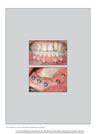
 Using skin grafts from behind the ear for oral surgery in two patients with jaw injuries led to successful healing and good results.
 June 1999 in “Proceedings of SPIE”
 The CO₂ laser is better for hair transplantation because it causes less damage than the Ho:YAG laser.