21 citations
,
March 2002 in “PubMed” High-dose steroid pulse therapy effectively regrows hair in severe multifocal alopecia areata.
2 citations
,
May 2022 in “The journal of immunology/The Journal of immunology” BST2 protein and certain T cells increase in early alopecia areata.
2 citations
,
December 2017 in “The journal of investigative dermatology. Symposium proceedings/The Journal of investigative dermatology symposium proceedings” The conclusion is that a new method could improve the identification of autoimmune targets in alopecia areata, despite some limitations.
 December 2023 in “European journal of dermatology/EJD. European journal of dermatology”
 More effective treatments are needed for severe alopecia areata.
 August 2025 in “American Journal of Clinical Dermatology”
 Clinicians should use evidence-based tools and consider mental health when assessing alopecia areata to guide treatment.
 6 citations
,
March 2019 in “The American Journal of Dermatopathology”
6 citations
,
March 2019 in “The American Journal of Dermatopathology” Amyloid deposits linked to a type of protein may cause a unique pattern of hair loss by disrupting hair growth cycles.
 June 2023 in “Medeniyet medical journal”
 People with alopecia areata have similar retinal structures but thicker choroidal regions compared to those without the condition.
5 citations
,
July 2025 in “Scientific Reports” Alopecia areata affects women and young adults most, with low SDI regions seeing the highest increase, and new treatments like JAK inhibitors are being explored.
 April 2016 in “Journal of The American Academy of Dermatology”
 The study found that severe alopecia areata affects any age, treatments often give temporary results, and some factors predict worse outcomes.
16 citations
,
March 2017 in “Oncotarget” SOCS3 treatment can prevent hair loss by stopping harmful immune responses.
6 citations
,
September 2017 in “Journal of Ayurvedic and Herbal Medicine” Ayurvedic treatment effectively managed hair loss from alopecia areata without side effects.
Alopecia areata is reversible because hair follicles can regenerate due to stem cells.
May 2025 in “International Journal of Dermatology”  46 citations
,
January 1996 in “Journal of The American Academy of Dermatology”
46 citations
,
January 1996 in “Journal of The American Academy of Dermatology” People with late-stage HIV-1 often experience a specific type of hair loss linked to multiple factors, including nutritional issues and immune responses.
 61 citations
,
January 2015 in “Indian Journal of Plastic Surgery”
61 citations
,
January 2015 in “Indian Journal of Plastic Surgery” Platelet-rich plasma treatment could potentially be an effective way to treat chronic alopecia areata with minimal side effects.
3 citations
,
April 2023 in “Dermatologica Sinica” PRP treatment may help with alopecia areata, especially in newer cases.
 2 citations
,
December 2022 in “Journal of the American Academy of Dermatology”
2 citations
,
December 2022 in “Journal of the American Academy of Dermatology” Hispanic/Latinx patients with alopecia areata often have it before age 40, with females and certain health conditions like rheumatoid arthritis more commonly affected.
2 citations
,
June 2025 in “Journal of Investigative Dermatology” CD8+ T cells re-expressing CD45RA may predict treatment resistance in severe alopecia areata.
January 2002 in “Journal of the Korean Medical Association” Recent research has provided important insights into hair growth and hair loss treatments.
 January 2018 in “Elsevier eBooks”
 The document concludes that alopecia has significant social and psychological effects, leading to a market for hair loss treatments.
 January 2021 in “International journal of dermatology, venereology and leprosy sciences”
 Trichoscopy shows black dots, yellow dots, and empty follicles are common in Alopecia Areata, with broken and exclamation mark hair as typical patterns.
September 2025 in “Figshare” Alopecia areata involves complex immune responses, suggesting broader treatments could help.
1 citations
,
November 2025 in “Journal of Health Psychology” Alopecia Areata patients experience higher social appearance anxiety due to visible hair loss.
 144 citations
,
July 2015 in “Clinical, Cosmetic and Investigational Dermatology”
144 citations
,
July 2015 in “Clinical, Cosmetic and Investigational Dermatology” Alopecia areata is a common autoimmune disease affecting about 2% of people, causing significant disability and often associated with mental health issues and other autoimmune conditions.
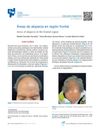 January 2025 in “Revista del Centro Dermatológico Pascua”
 Early diagnosis and treatment can help manage fibrosing alopecia in older women.

Certain immune markers and vitamin levels could help diagnose alopecia areata.
February 2026 in “International Journal of Homoeopathic Sciences” Homeopathy helped regrow hair and stabilize alopecia areata.
 15 citations
,
January 2020 in “Experimental Dermatology”
15 citations
,
January 2020 in “Experimental Dermatology” The document concludes that understanding and treatments for alopecia areata have significantly advanced, now recognizing it as an autoimmune disorder.
9 citations
,
July 1993 in “Archives of dermatology” Pityriasis amiantacea is a scalp condition with thick, greasy scales and sometimes hair loss.
March 2023 in “Medica Hospitalia: Journal of Clinical Medicine” PRP is a safe and effective treatment for hair growth in alopecia areata.