15 citations
,
July 2000 in “The journal of investigative dermatology/Journal of investigative dermatology” Fluorescence can effectively measure acne treatment progress.
 19 citations
,
January 2007 in “Journal of medical investigation”
19 citations
,
January 2007 in “Journal of medical investigation” GFP transgenic mice help study cell origins in skin grafts.
 April 2018 in “Journal of Investigative Dermatology”
 BLZ-100 is safe for use in skin cancer surgery and may help identify cancerous tissue.
2 citations
,
November 2025 in “Pharmaceutics” Moderately lipophilic dyes penetrate skin deeply, while highly hydrophobic or lipophilic dyes stay on the surface.
5 citations
,
October 2020 in “Veterinary record case reports” Fluorescent light energy may help treat skin infections in dogs with calcinosis cutis.
8 citations
,
September 2011 in “Scanning” Multiphoton microscopy effectively images mouse skin layers and structures.
 23 citations
,
September 2015 in “PLOS ONE”
23 citations
,
September 2015 in “PLOS ONE” Mesenchymal stem cells, especially injected into the skin, heal wounds faster and better than chitosan gel or other treatments.
36 citations
,
July 2004 in “Apmis” Fluorescent proteins in mouse models effectively visualize tumor blood vessel growth.
21 citations
,
July 2004 in “Apmis” Fluorescent proteins help visualize and understand tumor blood vessel growth.
 18 citations
,
September 2013 in “Technology”
18 citations
,
September 2013 in “Technology” The study introduced a new imaging technology to track skin healing and bone marrow cell activity over time.
5 citations
,
August 2014 in “Dermatologic surgery” Advanced fluorescence technology effectively treats skin discoloration from certain creams.
 67 citations
,
January 2012 in “Biological and Pharmaceutical Bulletin”
67 citations
,
January 2012 in “Biological and Pharmaceutical Bulletin” Nanoparticles don't penetrate intact skin but can enter through pores or damaged skin.
 4 citations
,
March 2013 in “InTech eBooks”
4 citations
,
March 2013 in “InTech eBooks” Confocal Laser Scanning Microscopy (CLSM) is a useful tool for studying how drugs interact with skin and diagnosing skin disorders, despite some limitations.
2 citations
,
June 2020 in “Journal of Investigative Dermatology” 3D imaging of skin biopsies offers better accuracy but is time-consuming and can't clear melanin.
54 citations
,
March 1991 in “Proceedings of the National Academy of Sciences” This model can replace animal testing for quick, cost-effective skin toxicity tests.
44 citations
,
July 2020 in “Stem Cell Research & Therapy” Epidermal stem cells show promise for skin repair and regeneration.
 19 citations
,
December 2013 in “European journal of pharmaceutics and biopharmaceutics”
19 citations
,
December 2013 in “European journal of pharmaceutics and biopharmaceutics” Encapsulated Garcinia mangostana extract in cream penetrates skin better than other forms.
5 citations
,
November 2005 Confocal Laser Scanning Microscopy is effective for tracking compounds in the skin.
 June 2020 in “Journal of Investigative Dermatology”
 The technique effectively shows how human skin and hair cells form into ball-like structures.
May 2020 in “Research Square (Research Square)” The study identified key genes that align with the cashmere growth cycle in goats, which could help improve cashmere production timing.
February 2019 in “bioRxiv (Cold Spring Harbor Laboratory)” Cashmere goat hair growth follows a cycle with distinct growth, regression, and resting periods, influenced by specific genes.
 August 2018 in “Journal of Investigative Dermatology”
 The conclusion is that using light-sheet fluorescence microscopy with a special solution can effectively create detailed 3D images of human skin for dermatological research.
 July 2018 in “Journal of The American Academy of Dermatology”
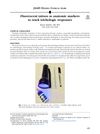
 Fluorescent tattoos are a good way to mark the scalp for hair treatments because they're accurate, invisible in normal light, and have low risk.
4 citations
,
August 2015 in “Journal of Cosmetic Dermatology” Sunscreens with UVA blockers effectively reduce skin fluorescence for several hours.
 September 2019 in “Journal of Investigative Dermatology”
 Mouse skin fibroblasts vary in function and adaptability based on their environment.
90 citations
,
November 2014 in “Journal of Biomedical Optics” Silver nanoparticles can penetrate porcine skin up to about 15.6 μm, possibly through hair follicles.
 May 2022 in “Indian Journal of Animal Research”
 Melatonin receptor genes likely play an important role in the development of goose feather follicles.
 January 2026 in “Inflammation and Regeneration”
 Two-photon microscopy improves skin imaging but faces safety and cost challenges for clinical use.
 April 2017 in “Journal of Investigative Dermatology”
 Researchers improved a method to study individual cells in newborn mouse skin and found a way to assess the severity of a skin condition in humans.
January 2017 in “Durham e-Theses (Durham University)” Chemical stressors damage hair structure but the skin's outer layer protects living cells.