November 2025 in “Dermato” The skin microbiome is crucial for skin health and new treatments like probiotics can improve skin conditions.

Periplaneta americana extract promotes hair growth and is safe for treating hair loss.
April 2024 in “International journal of molecular sciences” Light-based treatment, Photobiomodulation, shows promise for non-invasive skin therapy with few side effects.
 October 2023 in “International Journal of Cosmetic Science”
 WS Biotin, a new form of D-Biotin, improves water solubility and shows potential for hair and skin care without being toxic at low levels.
7 citations
,
January 2020 in “The journal of investigative dermatology/Journal of investigative dermatology” NIPP1 is important for healthy skin and could help treat skin inflammation.
81 citations
,
February 2014 in “EMBO molecular medicine” Activating Nrf2 in skin cells causes skin disease similar to chloracne in mice.

Kombucha tea extract may protect skin from damage in hot and humid conditions.
 March 2025 in “FEBS Journal”
 Epiprofin suppresses parathyroid hormone gene activity, helping regulate calcium levels and could be a treatment target for hyperparathyroidism.
 9 citations
,
March 2013 in “ISRN Stem Cells (Online)”
9 citations
,
March 2013 in “ISRN Stem Cells (Online)” Skin stem cells were turned into heart cells using a chemical, suggesting a new way to treat heart attacks.
 February 2019 in “bioRxiv (Cold Spring Harbor Laboratory)”
 The gene Prss53 affects hair shape and bone development in rabbits.
 April 2017 in “Journal of Investigative Dermatology”
 Cholecystokinin may help reduce skin inflammation in psoriasis.
 9 citations
,
February 2022 in “Nature communications”
9 citations
,
February 2022 in “Nature communications” Rare changes in the KRT82 gene are linked to a higher risk of Alopecia Areata.
9 citations
,
June 2020 in “European Radiology Experimental” 15-Gy x-ray irradiation temporarily alters rat calvaria skin without causing significant inflammation or fibrosis.
5 citations
,
February 2023 in “Genes” Certain miRNAs may influence cashmere fiber traits in goats by affecting hair follicle activities.
1 citations
,
March 2023 in “Pharmaceutics” PBMCsec can help reduce and improve thick skin scars.
November 2025 in “Pharmacological Research” Plant-derived nanoparticles from Polygoni Multiflori Radix promote hair growth better than Minoxidil by affecting androgen pathways.

The GG genotype of the KRT71 gene leads to longer wool in Gansu alpine fine-wool sheep.
 53 citations
,
September 1999 in “The journal of cell biology/The Journal of cell biology”
53 citations
,
September 1999 in “The journal of cell biology/The Journal of cell biology” K16 can partially replace K14 but causes hair loss and skin issues.
46 citations
,
August 2012 in “Experimental Dermatology” Engineered skin can grow chimeric hair follicles only with mouse dermal papilla cells.
8 citations
,
July 2017 in “The journal of investigative dermatology/Journal of investigative dermatology” Certain microRNAs might help identify and understand Frontal Fibrosing Alopecia.
August 2025 in “BMC Research Notes” iPSC lines from different tissues share a common miRNA profile, supporting their pluripotent nature.
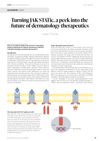 August 2024 in “New Zealand Medical Student Journal”
 JAK inhibitors show promise for treating skin diseases effectively and safely.
December 2025 in “Journal of Inflammation Research” Improving education, training, and access to affordable treatments is crucial for better managing inflammatory skin diseases in Latin America.
 45 citations
,
July 2009 in “Journal of Investigative Dermatology”
45 citations
,
July 2009 in “Journal of Investigative Dermatology” The S100A4 protein is more common in psoriatic skin and could be a target for treating psoriasis.
September 2017 in “Journal of Investigative Dermatology” Activating the hexosamine pathway can improve skin health and increase hair follicle stem cells.
 116 citations
,
February 2017 in “Journal of the American Academy of Dermatology”
116 citations
,
February 2017 in “Journal of the American Academy of Dermatology” JAK inhibitors help with skin conditions but need more research on dosing and safety.
59 citations
,
September 2011 in “Lasers in Medical Science” The 800-nm laser boosts skin collagen production, improving skin structure.
14 citations
,
September 2006 in “Experimental Dermatology” Interleukin‐1 α reduces androgen receptor levels and increases certain cytokines in human scalp cells.
December 2025 in “Advanced Healthcare Materials” The Spherical Skin Model improves drug and cosmetic testing by accurately mimicking human skin for efficient compound screening.
 35 citations
,
November 2020 in “Experimental Dermatology”
35 citations
,
November 2020 in “Experimental Dermatology” Different types of skin cells are organized in a special way in large wounds to help with healing and hair growth.