1 citations
,
January 2022 in “Clinical Cases in Dermatology” A rare scalp condition was successfully treated with specific medications after 9 months.
 1 citations
,
January 2014 in “Health Renaissance”
1 citations
,
January 2014 in “Health Renaissance” Pseudopelade of Brocq is hard to diagnose and treat, with limited effective options.
March 2026 in “Journal of Burn Care & Research” Folliculitis and pseudofolliculitis barbae are common but often overlooked issues in burn survivors, needing better awareness and treatment strategies.
 June 2023 in “JAAD Case Reports”
 A man had a rare skin cancer that looked like a bald spot.
Scalp reconstruction uses different methods to restore hair and skin, depending on the defect size.

Growing hair follicles from cultured cells could potentially treat baldness, but more research is needed.
 December 2012 in “Journal of dermatological science”
 Hair follicles help attract immune cells to minor skin injuries.
 July 2007 in “Clinical Risk”
 A woman got severe scalp burns from a salon's improper hair bleaching treatment.
 July 2007 in “Clinical Risk”
 The claimant sued for negligence after a hair treatment caused harm and distress, and the defendant responded after legal action started.
 January 2017 in “Dermatology Review”
 Skin issues from chronic graft-versus-host disease greatly affect daily life, needing teamwork between blood and skin doctors.
 November 2016 in “Hair transplant forum international”
 Hair transplant surgery should only be done by licensed professionals, as many states don't allow unlicensed personnel to perform it.
 April 2005 in “AORN Journal”
 The book is a detailed guide on dermatologic surgery techniques, recommended for both new and experienced doctors.
 November 2025 in “Bioengineering”
 The new method may improve skin grafts and hair growth.
 October 2025 in “International Journal of Medical Science and Clinical Research Studies”
 Modern techniques improve scalp reconstruction after trauma.
 September 2023 in “Clinical, cosmetic and investigational dermatology”
 A new surgical method using special sutures significantly reduced wound size and prevented disease return in patients with a scarring scalp condition.

Local flaps are effective for covering small to large scalp and forehead defects with good cosmetic results.
 January 2022 in “Plastic and Aesthetic Research”
 Choose the simplest, most fitting scalp reconstruction method for each patient's unique needs.
 September 2019 in “Journal of Investigative Dermatology”
 Researchers successfully used nude mice to study human hair growth, which could help with future hair research.

Melanocyte transplantation can safely restore skin color, especially in stable vitiligo, but must be chosen carefully based on the disease phase.
Hair transplantation showed the most promise for repigmenting white hair, especially for eyebrows and eyelashes.
 July 2012 in “Dermatologic Surgery”
 The author believes artificial dermis might not be the best first option for hair transplant surgeons when other surgical choices exist for scalp reconstruction.
 January 2007 in “Universiti Putra Malaysia Institutional Repository (Universiti Putra Malaysia)”
 Keratin-gelatin film improves wound healing in dogs and cats.

The treatment successfully integrated hair follicles into a dermal template, showing new hair growth and blood vessel formation.

Surgical repigmentation can permanently restore color to white hair in vitiligo patients.
 September 2006 in “Dermatologic Surgery”
 Some aggressive scalp cancers are hard to treat and can be deadly, even when removed with specialized surgery.
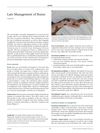 June 2002 in “Surgery (oxford)”
 The document says that treating burns late focuses on improving function, appearance, and helping patients return to normal life, using both non-surgical and surgical methods.
 May 1993 in “Medical Clinics of North America”
 Surgical hair replacement is a viable option for male pattern baldness when done with proper planning and realistic expectations.
November 2025 in “SHILAP Revista de lepidopterología” Animal and mathematical models help understand and develop treatments for alopecia areata.

Transplanting cultured skin sheets improved acne scars in four patients.
January 2025 in “International Journal of Dermatology” Better diagnostic tools and treatment guidelines are needed for segmental vitiligo and related pigment issues.