 15 citations
,
July 2013 in “Cell Reports”
15 citations
,
July 2013 in “Cell Reports” Indian Hedgehog helps control skin cell growth and protects against aggressive skin cancer.
 15 citations
,
January 2012 in “Journal of Veterinary Science”
15 citations
,
January 2012 in “Journal of Veterinary Science” Different dog breeds have varying skin thickness and protein expression in their skin.
 11 citations
,
February 2022 in “Scientific Reports”
11 citations
,
February 2022 in “Scientific Reports” CD26+ fibroblasts improve skin healing and integration better than CD26− fibroblasts.
 10 citations
,
March 2022 in “Communications biology”
10 citations
,
March 2022 in “Communications biology” A new non-invasive method can analyze skin mRNA to understand skin diseases better.
 7 citations
,
December 2004 in “Medicine”
7 citations
,
December 2004 in “Medicine” Knowing how skin works and its diseases helps doctors diagnose and treat skin conditions better.
 6 citations
,
September 2024 in “Metabolism and Target Organ Damage”
6 citations
,
September 2024 in “Metabolism and Target Organ Damage” Skin enzymes convert topical drugs into active forms, affecting drug effectiveness and safety.
 3 citations
,
August 2021 in “Cutis”
3 citations
,
August 2021 in “Cutis” Some alternative medicine treatments might work for skin conditions, but their effectiveness and safety differ a lot.
 2 citations
,
April 2021 in “bioRxiv (Cold Spring Harbor Laboratory)”
2 citations
,
April 2021 in “bioRxiv (Cold Spring Harbor Laboratory)” The conclusion is that analyzing RNA from skin oils is a promising way to understand skin diseases.
 1 citations
,
October 2025 in “International Journal of Nanomedicine”
1 citations
,
October 2025 in “International Journal of Nanomedicine” Exosomes could revolutionize skin disease treatment and healing.
 1 citations
,
January 2018 in “Stem cell biology and regenerative medicine”
1 citations
,
January 2018 in “Stem cell biology and regenerative medicine” DNA methylation is essential for skin and hair follicle development, and could be a target for treating skin diseases.
 1 citations
,
September 2015 in “Elsevier eBooks”
1 citations
,
September 2015 in “Elsevier eBooks” SOX2 is crucial for skin cell function and hair growth, and it plays a role in skin cancer and wound healing.
 1 citations
,
January 2015 in “Journal of nutrition & health”
1 citations
,
January 2015 in “Journal of nutrition & health” Fish oil improves skin health in people with diabetes and high cholesterol.
 July 2026 in “Frontiers in Immunology”
 Targeting protein lactylation may improve skin disease treatments.
 March 2026 in “Nature Communications”
 Genetic factors, skin barrier, immune function, and obesity influence risk of fungal skin infections.
 February 2026 in “American Journal of Clinical Dermatology”
 Radiotherapy can cause skin fibrosis, which is often overlooked and needs better treatment and evaluation.
 February 2026 in “Frontiers in Immunology”
 Human amniotic stem cells can safely treat psoriasis-like skin in mice.
 November 2025 in “Frontiers in Immunology”
 Immune cells are crucial for normal skin development and their dysfunction can cause skin disorders.
 October 2025 in “Frontiers in Immunology”
 Platelet-rich plasma might help treat eczema by reducing inflammation and repairing the skin.

Menopause-related skin changes may increase fungal infections and inflammation.

Higher TGF-β signaling may increase skin cancer risk in organ transplant recipients.
 April 2017 in “Journal of Investigative Dermatology”
 The protein CTCF is essential for skin development, maintaining hair follicles, and preventing inflammation.
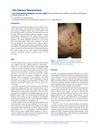 October 2016 in “Elsevier eBooks”
 Common noncancerous skin diseases have various treatments, including topical applications, light therapy, surgery, and medications, with psychological support being important.

Skin stem cells are crucial for maintaining and repairing skin, with potential for treating skin disorders and improving wound healing.
 43 citations
,
February 2019 in “International immunology”
43 citations
,
February 2019 in “International immunology” Special immune cells called Regulatory T cells help control skin inflammation and repair in various skin diseases.
 27 citations
,
August 2006 in “Laboratory Investigation”
27 citations
,
August 2006 in “Laboratory Investigation” SCF and ET-1 together significantly increase skin pigmentation and melanin production.
 26 citations
,
May 2014 in “BioEssays”
26 citations
,
May 2014 in “BioEssays” Using neurohormones to control keratin can lead to new skin disease treatments.
 1 citations
,
January 2021
1 citations
,
January 2021 CD4+ skin cells may be precursors to basal cell carcinoma.
 January 2018 in “Stem cell biology and regenerative medicine”
 ATP-dependent chromatin remodeling is crucial for skin development and stem cell function.
 405 citations
,
May 2007 in “Journal of The American Academy of Dermatology”
405 citations
,
May 2007 in “Journal of The American Academy of Dermatology” Obesity affects skin health, causing conditions like acanthosis nigricans and may require different treatment approaches.
 25 citations
,
March 2012 in “Journal of Dermatological Science”
25 citations
,
March 2012 in “Journal of Dermatological Science” Genetic variants linked to ten skin diseases were found, showing both immune and non-immune factors play a role.