69 citations
,
May 1997 in “Veterinary Pathology” The angora mouse mutation causes long hair and hair defects due to a gene deletion.
 65 citations
,
February 2017 in “Pflügers Archiv - European Journal of Physiology”
65 citations
,
February 2017 in “Pflügers Archiv - European Journal of Physiology” Macrophages are vital for skin healing, hair growth, salt balance, and cancer defense.
60 citations
,
February 1992 in “British Journal of Dermatology” Serum from alopecia patients does not stop hair growth in grafted skin on mice.
59 citations
,
September 2011 in “Lasers in Medical Science” The 800-nm laser boosts skin collagen production, improving skin structure.
57 citations
,
December 2012 in “Journal of Biomedical Optics” Confocal microscopy is useful for studying how nanoparticles interact with skin.
54 citations
,
December 2011 in “American Journal Of Pathology” A Gsdma3 mutation causes hair loss due to stem cell damage from skin inflammation.
54 citations
,
May 2001 in “Journal of Investigative Dermatology” Excessive putrescine causes hair loss in transgenic mice by disrupting hair follicle development.
49 citations
,
January 2017 in “Journal of Materials Chemistry B” The hydrogel helps heal skin injuries by promoting blood vessel and hair growth.
 43 citations
,
February 2019 in “International immunology”
43 citations
,
February 2019 in “International immunology” Special immune cells called Regulatory T cells help control skin inflammation and repair in various skin diseases.
 40 citations
,
December 2012 in “PLoS ONE”
40 citations
,
December 2012 in “PLoS ONE” Removing Ctip2 in skin cells causes skin inflammation similar to atopic dermatitis.
 37 citations
,
February 2019 in “Experimental Dermatology”
37 citations
,
February 2019 in “Experimental Dermatology” Spiny mice are better at regenerating hair after injury than laboratory mice and could help us understand how to improve human skin repair.
37 citations
,
June 2004 in “Human molecular genetics online/Human molecular genetics” The HCR gene contributes to psoriasis risk.
 36 citations
,
September 1999 in “Toxicologic pathology”
36 citations
,
September 1999 in “Toxicologic pathology” Stronger corticosteroids cause more skin damage in hairless dogs, similar to effects in humans.
 32 citations
,
March 2021 in “Journal of endocrinological investigation”
32 citations
,
March 2021 in “Journal of endocrinological investigation” Thyroid hormones are important for skin health and changes in them can affect conditions like hair loss and eczema.
32 citations
,
December 2019 in “The Journal of clinical investigation/The journal of clinical investigation” A protein called IL-36γ causes skin side effects from certain cancer treatments when combined with a common skin bacteria.
 31 citations
,
November 2016 in “Cell Reports”
31 citations
,
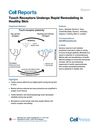
November 2016 in “Cell Reports” Touch sensitivity in mouse skin decreases during hair growth due to changes in touch receptors.
27 citations
,
May 2024 in “Clinical and Translational Medicine” Melanocyte stem cells are vital for skin and hair color and have potential in treating skin disorders and cancer.
22 citations
,
September 2022 in “Medicina” Using two types of lasers together improves skin tone and collagen remodeling.
 21 citations
,
November 2010 in “Journal of molecular medicine”
21 citations
,
November 2010 in “Journal of molecular medicine” FoxN1 gene is essential for proper thymus structure and preventing hair loss.
13 citations
,
September 2014 in “BMC Complementary and Alternative Medicine” Tanshinone IIA helps protect skin tissue from low oxygen damage by boosting certain cell markers.
 9 citations
,
July 2018 in “European journal of dermatology/EJD. European journal of dermatology”
9 citations
,
July 2018 in “European journal of dermatology/EJD. European journal of dermatology” Disrupted sleep patterns can harm skin and hair cell renewal, but melatonin might help.
 9 citations
,
May 2010 in “Journal of Investigative Dermatology”
9 citations
,
May 2010 in “Journal of Investigative Dermatology” Human sebaceous glands can grow back in skin grafts on mice and work like normal human glands.
7 citations
,
January 2002 in “PubMed” Prolonged UVB exposure causes significant skin changes and damage in rats.
6 citations
,
May 2016 in “Experimental Dermatology” The type of tumor suppressor gene lost affects the behavior of skin cancer.
 5 citations
,
September 2010 in “Cancer Prevention Research”
5 citations
,
September 2010 in “Cancer Prevention Research” The research suggests new treatments for skin cancer could target specific cell growth pathways.
 3 citations
,
September 2022 in “The journal of investigative dermatology/Journal of investigative dermatology”
3 citations
,
September 2022 in “The journal of investigative dermatology/Journal of investigative dermatology” Keratin 75 is important for fast wound healing and works with SOX2 and the LINC complex to help skin cells move and repair damage.
 3 citations
,
October 1979 in “Laboratory animals”
3 citations
,
October 1979 in “Laboratory animals” Hairless rats are good for testing anti-inflammatory drugs, similar to haired rats, without needing to remove fur.
2 citations
,
November 2022 in “bioRxiv (Cold Spring Harbor Laboratory)” Mutant stem cells adapt their metabolism differently to outcompete normal cells in the skin.
 2 citations
,
November 2021 in “Frontiers in Medicine”
2 citations
,
November 2021 in “Frontiers in Medicine” New skin imaging, teledermatology, and AI could become key in future dermatology care.
 2 citations
,
January 2017 in “AIMS cell and tissue engineering”
2 citations
,
January 2017 in “AIMS cell and tissue engineering” Mesenchymal stem cells show promise for treating various skin conditions and may help regenerate hair.