 10 citations
,
March 2022 in “Communications biology”
10 citations
,
March 2022 in “Communications biology” A new non-invasive method can analyze skin mRNA to understand skin diseases better.
 9 citations
,
September 2017 in “Nanoscale Research Letters”
9 citations
,
September 2017 in “Nanoscale Research Letters” Graphene oxide helps deliver a skin healing agent over time, improving skin and hair follicle regeneration.
 6 citations
,
March 1999 in “Journal of pediatric health care”
6 citations
,
March 1999 in “Journal of pediatric health care” The document emphasizes the need for primary care providers to understand and care for African American children's hair and skin to boost their self-esteem.
 5 citations
,
May 2020 in “Life science alliance”
5 citations
,
May 2020 in “Life science alliance” Removing integrin α3β1 from hair stem cells lowers skin tumor growth by affecting CCN2 protein levels.
 4 citations
,
October 2014 in “Journal of Integrative Agriculture”
4 citations
,
October 2014 in “Journal of Integrative Agriculture” Researchers found 24 genes that change significantly and affect cashmere growth in goats; this could help increase cashmere production.
 2 citations
,
April 2021 in “bioRxiv (Cold Spring Harbor Laboratory)”
2 citations
,
April 2021 in “bioRxiv (Cold Spring Harbor Laboratory)” The conclusion is that analyzing RNA from skin oils is a promising way to understand skin diseases.
 April 2026 in “Experimental & Molecular Medicine”
 Mouse and human skin development share similar fibroblast timelines.
 March 2026 in “Nature Communications”
 Genetic factors, skin barrier, immune function, and obesity influence risk of fungal skin infections.
 January 2026 in “Nanoscale Advances”
 Microneedles combined with light therapy can improve skin disease diagnosis and treatment.
 April 2024 in “Lasers in medical science”
 Near-infrared LED light improves skin rejuvenation and hair growth better than white LED light.
 October 2023 in “bioRxiv (Cold Spring Harbor Laboratory)”
 Early regulatory T cells are crucial for normal skin pigmentation.
 October 2023 in “bioRxiv (Cold Spring Harbor Laboratory)”
 Immune cells are essential for early hair and skin development and healing.
 April 2021 in “Journal of Investigative Dermatology”
 Bacteria can help skin regenerate through a process called IL-1β signaling.
 February 2026 in “American Journal of Clinical Dermatology”
 Radiotherapy can cause skin fibrosis, which is often overlooked and needs better treatment and evaluation.
 301 citations
,
February 2019 in “Nature Communications”
301 citations
,
February 2019 in “Nature Communications” The research found that different types of fibroblasts are involved in wound healing and that some blood cells can turn into fat cells during this process.
 20 citations
,
October 2021 in “PLoS ONE”
20 citations
,
October 2021 in “PLoS ONE” Newborn skin is uniquely prepared to adapt to new environments compared to adult skin.
 4 citations
,
March 2022 in “Cureus”
4 citations
,
March 2022 in “Cureus” Minced skin grafts speed up healing and improve scar quality at donor sites.
 3 citations
,
October 2024 in “Frontiers in Medicine”
3 citations
,
October 2024 in “Frontiers in Medicine” Sun-exposed skin shows different cell activity and gene expression, suggesting targets to prevent skin aging and cancer.
 January 2026 in “Frontiers in Drug Discovery”
 Transforming skin disease treatment requires new strategies, better drug models, and patient-focused research.
 February 2026 in “International Journal of Basic & Clinical Pharmacology”
 Cosmetovigilance and clinical pharmacists can enhance safety in cosmetic treatments, especially for those with diabetes.
 128 citations
,
August 2015 in “Cell Stem Cell”
128 citations
,
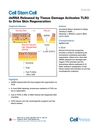
August 2015 in “Cell Stem Cell” Damage to skin releases dsRNA, which activates TLR3 and helps in skin and hair follicle regeneration.
 48 citations
,
February 2025 in “Nano-Micro Letters”
48 citations
,
February 2025 in “Nano-Micro Letters” Microneedles offer a promising, painless way to treat skin diseases but need improvements for better use.
 40 citations
,
April 2014 in “Genes & Development”
40 citations
,
April 2014 in “Genes & Development” Hormones during pregnancy and lactation keep skin stem cells inactive, preventing hair growth.
 13 citations
,
August 2017 in “Scientific reports”
13 citations
,
August 2017 in “Scientific reports” Researchers developed a cost-effective 66 K SNP chip for cashmere goats that is accurate and useful for genetic studies.
 84 citations
,
October 2014 in “PLoS Genetics”
84 citations
,
October 2014 in “PLoS Genetics” Wnt signaling is essential for forming the skin's spinous layer through a BMP-FGF pathway.
 59 citations
,
June 2023 in “Nature Aging”
59 citations
,
June 2023 in “Nature Aging” Blocking IL-17 signaling may reduce skin inflammation and delay aging.
 58 citations
,
June 2018 in “Scientific reports”
58 citations
,
June 2018 in “Scientific reports” Researchers found 15 new genetic links to skin traits in Japanese women.
 2 citations
,
December 2022 in “Scientific Data”
2 citations
,
December 2022 in “Scientific Data” The study maps how genes are regulated during mouse hair growth.
 January 2024 in “International Journal of Health Science”
 Hormonal implants have many side effects that often outweigh their benefits.
 January 2024 in “Frontiers in immunology”
 Histone modification is key in treating chronic inflammatory skin diseases.