 January 2025 in “International Journal of Dermatology Venereology and Leprosy Sciences”
 Obesity worsens skin health and losing weight can improve skin conditions.
 January 2024 in “Clinical dermatology open access journal”
 Hemp-derived cannabinoids can benefit skin and hair without causing a high.
 November 2022 in “Journal of Education, Health and Sport”
 The skin's bacteria might influence the development of a hair loss condition called alopecia areata.
 March 2022 in “Journal of Clinical Case Studies Reviews & Reports”
 COVID-19 can cause or worsen skin conditions and might show early signs of infection.
 March 2022 in “Journal of clinical case studies reviews & reports”
 COVID-19 can cause different skin issues, including rashes and hair loss.
 January 2022 in “bioRxiv (Cold Spring Harbor Laboratory)”
 Skin lesions in Carney complex are likely caused by a specific group of skin cells that promote pigment production due to a genetic mutation.
 January 2021 in “Middle East journal of applied sciences”
 Over 30% of livestock in New Valley Governorate, Egypt, had skin diseases, affecting their productivity and income.
 July 2018 in “Benha Journal of Applied Sciences”
 Higher levels of miR-203 may contribute to hair loss in alopecia areata.
 April 2017 in “Journal of Investigative Dermatology”
 PRC1 influences skin stem cell development by both turning genes on and off, affecting hair growth and skin cell types.
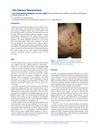 October 2016 in “Elsevier eBooks”
 Common noncancerous skin diseases have various treatments, including topical applications, light therapy, surgery, and medications, with psychological support being important.
 September 2015 in “International Journal of Dermatology”
 Skin diseases are common in HIV patients and could help detect HIV early in Ethiopia.
Skin changes throughout life, from development before birth to aging effects like wrinkles, influenced by both genetics and environment.
 September 2014 in “Journal der Deutschen Dermatologischen Gesellschaft”
 Diabetes can cause a variety of skin disorders, some of which may signal more serious health issues.
 January 1990 in “Springer eBooks”
 Some chemicals can permanently or temporarily remove color from skin and hair, which can be distressing and is not well-regulated in cosmetics.

Dermal stem cells help regenerate hair follicles and heal skin wounds.
 276 citations
,
December 2017 in “Journal of Dermatological Science”
276 citations
,
December 2017 in “Journal of Dermatological Science” The document concludes that mouse models are helpful but have limitations for skin wound healing research, and suggests using larger animals and genetically modified mice for better human application.
 151 citations
,
November 2018 in “International Journal of Pharmaceutics”
151 citations
,
November 2018 in “International Journal of Pharmaceutics” Nanoparticles improve drug delivery through the skin but more research is needed on their long-term effects and skin penetration challenges.
 137 citations
,
January 2000 in “Skin Pharmacology and Physiology”
137 citations
,
January 2000 in “Skin Pharmacology and Physiology” The document recommends using both clinical evaluation and various measurement methods to assess skin greasiness, considering factors like temperature and hormones.
 124 citations
,
June 2020 in “Cell Stem Cell”
124 citations
,
June 2020 in “Cell Stem Cell” Fat cells in the skin help start healing and form important repair cells after injury.
 106 citations
,
October 2016 in “Cell Stem Cell”
106 citations
,
October 2016 in “Cell Stem Cell” PDGFA/AKT signaling is important for the growth and maintenance of certain skin fat cells.
 44 citations
,
September 2019 in “The EMBO Journal”
44 citations
,
September 2019 in “The EMBO Journal” Lymphatic vessels are essential for hair follicle growth and skin regeneration.
 38 citations
,
June 2018 in “Archives of Toxicology”
38 citations
,
June 2018 in “Archives of Toxicology” Different species and human skin models vary in their skin enzyme activities, with pig skin and some models closely matching human skin, useful for safety assessments and understanding the skin's protective roles.
 24 citations
,
October 2017 in “Scientific reports”
24 citations
,
October 2017 in “Scientific reports” Changing light exposure can affect hair growth timing in goats, possibly due to a key gene, CSDC2.
 19 citations
,
January 2017 in “Stem Cells International”
19 citations
,
January 2017 in “Stem Cells International” Adipose-derived stem cells show promise in treating skin conditions like vitiligo, alopecia, and nonhealing wounds.
 3 citations
,
February 2024 in “arXiv (Cornell University)”
3 citations
,
February 2024 in “arXiv (Cornell University)” Google Search ads effectively gathered a diverse dermatology image dataset for research and AI development.
 1 citations
,
January 2017 in “Przegla̧d dermatologiczny”
1 citations
,
January 2017 in “Przegla̧d dermatologiczny” People with more than 11 skin tags, especially on the thigh, neck, or armpit, may have a higher chance of metabolic syndrome.
 July 2026 in “Organoid Research”
 A unified framework is needed to improve skin organoid construction for research and clinical use.
 December 2025 in “Nature Communications”
 Skin organoids can model tuberculosis infection and help test treatments.
 November 2025 in “Frontiers in Immunology”
 Immune cells are crucial for normal skin development and their dysfunction can cause skin disorders.
 July 2019 in “Acta Scientiae Veterinariae”
 Removing a testicular tumor in a dog reduced its aggressive behavior and skin problems.