 1 citations
,
March 2024 in “Signal transduction and targeted therapy”
1 citations
,
March 2024 in “Signal transduction and targeted therapy” NF-κB signaling is crucial in many diseases and can be targeted for new treatments.
 1 citations
,
May 2017 in “InTech eBooks”
1 citations
,
May 2017 in “InTech eBooks” Hair loss in Androgenetic alopecia (AGA) is due to altered cell sensitivity to hormones, not increased hormone levels. Hair growth periods shorten over time, causing hair to become thinner and shorter. This is linked to miscommunication between cell pathways in hair follicles. There's also a change in gene expression related to blood vessels and cell growth in balding hair follicles. The exact molecular causes of AGA are still unclear.
 1 citations
,
December 2015 in “Journal of the Medical Sciences (Berkala Ilmu Kedokteran)”
1 citations
,
December 2015 in “Journal of the Medical Sciences (Berkala Ilmu Kedokteran)” Transplanting melanocyte stem cells from hair follicles can effectively treat vitiligo.
 June 2026 in “Frontiers in Immunology”
 Understanding tissue remodeling can help create precise treatments for various organ issues.
 April 2026 in “Nature Communications”
 Aged corneal cells can revert to a stem-like state to help repair tissue.
 April 2026 in “Journal of Pharmaceutical Investigation”
 Nanotechnology could improve treatment for scars and atopic dermatitis by targeting skin issues more effectively.
 March 2026 in “Calcified Tissue International”
 The EDA pathway plays a key role in bone development by interacting with other signaling pathways.
 February 2026 in “Frontiers in Medical Technology”
 Keratinocyte stem cells are crucial for skin renewal and have potential in wound healing and tissue regeneration.

The study found that different genes are active in cashmere goats' hair growth stages, which can help improve cashmere production.
 January 2026 in “Journal of Biomedical Research”
 Small extracellular vesicles from stem and immune cells show promise for treating various diseases but face challenges in clinical use.

Removing SIX1 in fat cells reduces skin fibrosis.
 May 2022 in “Gastroenterology”
 Targeting NETs may help reduce fibrosis in Crohn's disease.
 January 2021 in “Journal of cosmetology & trichology”
 L-(+)-Tartaric Acid may help increase certain hair growth genes without harming cells.
 January 2019 in “Advances in stem cells and their niches”
 Skin health and repair depend on the signals between skin stem cells and their surrounding cells.
 January 2018 in “Stem cell biology and regenerative medicine”
 The conclusion is that the nuclear lamina and LINC complex in skin cells respond to mechanical signals, affecting gene expression and cell differentiation, which is important for skin health and can impact skin diseases.
 January 2018 in “Stem cell biology and regenerative medicine”
 The nucleus is key in controlling skin growth and repair by coordinating signals, gene regulators, and epigenetic changes.
 January 2017 in “Springer eBooks”
 The document concludes that scalp health is influenced by complex factors affecting sebaceous glands, including hormones, aging, and various substances.
 October 2007 in “Journal of Investigative Dermatology”
 The document suggests a bacteria plays a significant role in acne rosacea and that white hair can regain color after transplant, meriting more research on reversing grey hair.
 1250 citations
,
August 2021 in “Scientific Reports”
1250 citations
,
August 2021 in “Scientific Reports” COVID-19 leaves 80% of patients with long-term symptoms like fatigue and headaches.
 1066 citations
,
March 2010 in “Nature Reviews Molecular Cell Biology”
1066 citations
,
March 2010 in “Nature Reviews Molecular Cell Biology” MicroRNAs are crucial in controlling cell signaling, affecting cancer and tissue regeneration.
 1039 citations
,
February 2009 in “Nature Reviews Molecular Cell Biology”
1039 citations
,
February 2009 in “Nature Reviews Molecular Cell Biology” Skin stem cells are crucial for maintaining and repairing the skin and hair, using a complex mix of signals to do so.
 788 citations
,
February 2007 in “Nature”
788 citations
,
February 2007 in “Nature” The document concludes that skin stem cells are important for hair growth and wound healing, and could be used in regenerative medicine.
 499 citations
,
September 2011 in “Cell”
499 citations
,
September 2011 in “Cell” Fat-related cells are important for initiating hair growth.
 418 citations
,
September 2012 in “Nature”
418 citations
,
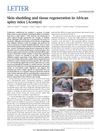
September 2012 in “Nature” African spiny mice can regenerate skin, hair, and cartilage, but not muscle, and their unique abilities could be useful for regenerative medicine.
 408 citations
,
January 2017 in “Science”
408 citations
,
January 2017 in “Science” Some wound-healing cells can turn into fat cells around new hair growth in mice.
 403 citations
,
December 2018 in “Cell stem cell”
403 citations
,
December 2018 in “Cell stem cell” Understanding phenotypic plasticity is crucial for developing effective cancer therapies.
 355 citations
,
August 2013 in “Acta Biomaterialia”
355 citations
,
August 2013 in “Acta Biomaterialia” The nanofibers with two growth factors improved wound healing by supporting structure, preventing infection, and aiding tissue growth.
 320 citations
,
December 2018 in “Frontiers in Immunology”
320 citations
,
December 2018 in “Frontiers in Immunology” Changing how mesenchymal stromal cells are grown can improve their healing abilities.
 271 citations
,
May 2019 in “Cells”
271 citations
,
May 2019 in “Cells” The secretome from mesenchymal stem cells is a promising treatment that may repair tissue and avoid side effects of stem cell transplantation.
 271 citations
,
September 2008 in “Nutrition reviews”
271 citations
,
September 2008 in “Nutrition reviews” Vitamin D receptor interacts with certain dietary components to help prevent diseases and regulate hair growth.