 28 citations
,
February 2014 in “Journal of Telemedicine and Telecare”
28 citations
,
February 2014 in “Journal of Telemedicine and Telecare” Smartphone-based teledermatology is effective for diagnosing skin diseases in the military with good accuracy.
 April 2016 in “Journal of The American Academy of Dermatology”
 Low-cost videomicroscopes might not be reliable for examining scalp disorders compared to standard methods.
 April 2016 in “Journal of The American Academy of Dermatology”
 Low-cost videomicroscopes may not be reliable for diagnosing scalp disorders, smartphones could be reasonable for teledermatology, and U.S. residency programs need more teledermatology training.
September 2023 in “Membranes” 3D-printed membranes with smart sensors can greatly improve tissue healing and have many medical applications.
 6 citations
,
April 2017 in “InTech eBooks”
6 citations
,
April 2017 in “InTech eBooks” New insights on headaches include genetics, smartphone impact, and botulinum toxin treatment.
 March 2021 in “The British Journal of Psychiatry”
 Countries with stricter cultures had fewer COVID-19 cases and deaths, paranoia is linked to false memories, psychosocial intervention works as well with or without antipsychotic drugs for young people with psychosis, smartphones can detect changes in behavior indicating illness relapse, and recruitment agents show regional and gender biases.
 May 2012 in “Scientific American”
 New app improves storm surge predictions; advances in baldness treatment show potential but require time.
 2 citations
,
May 2019 in “BioTechniques”
2 citations
,
May 2019 in “BioTechniques” Industry 4.0 is transforming labs with new tools, making research more efficient and environmentally friendly.
January 2026 in “AIMS Public Health” Digital health education may reduce stress, anxiety, and depression in PCOS patients.
December 2025 in “eScience” A wireless, battery-free system uses Wi-Fi signals to enhance wound healing and enable smart healthcare at home.
November 2025 in “Interdisciplinary materials” The new silk suture with silver and curcumin helps heal wounds faster and fights bacteria.
1 citations
,
October 2013 The framework helps develop medical apps on mobile devices to reduce reliance on desktop computers.
August 2023 in “Zenodo (CERN European Organization for Nuclear Research)” 2 citations
,
July 2012 in “BMJ” FFA can be mistaken for rosacea, requiring specific treatment for accurate diagnosis and management.
 July 2022 in “Bőrgyógyászati és Venerológiai Szemle”
 Technology, like mobile apps and AI, is improving skin condition diagnosis and treatment.
April 2023 in “Journal of Investigative Dermatology” The MDhair app accurately assesses hair loss severity with 94% accuracy.
 138 citations
,
July 2015 in “Clinical, Cosmetic and Investigational Dermatology”
138 citations
,
July 2015 in “Clinical, Cosmetic and Investigational Dermatology” Eating less sugar, milk, and saturated fats and more vegetables and fish may help treat and prevent acne.
 126 citations
,
April 2015 in “Clinical, cosmetic and investigational dermatology”
126 citations
,
April 2015 in “Clinical, cosmetic and investigational dermatology” Choosing the right patients, using proper techniques, and having thorough knowledge are key to preventing and managing dermal filler complications.
 42 citations
,
December 2014 in “Clinical, cosmetic and investigational dermatology”
42 citations
,
December 2014 in “Clinical, cosmetic and investigational dermatology” Nonablative radiofrequency treatments, especially microneedle and fractional types, can improve acne scars by 25%–75% after 3-4 sessions, with full results in 3 months and some side effects.
 30 citations
,
July 2017 in “Stem cells and cloning”
30 citations
,
July 2017 in “Stem cells and cloning” SVF-enhanced adipose transplantation shows potential as a hair loss treatment.
 22 citations
,
August 2017 in “Stem cells and cloning”
22 citations
,
August 2017 in “Stem cells and cloning” Stem cell technologies and regenerative medicine, including platelet-rich plasma, show promise for hair restoration in treating hair loss, but more research is needed.
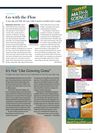 May 2012 in “Scientific American”
 Blocking a compound called prostaglandin D₂ might help treat hair loss.
 2 citations
,
March 2025 in “Archives of Dermatological Research”
2 citations
,
March 2025 in “Archives of Dermatological Research” HEV light can harm or help skin and scalp, so safe exposure guidelines are needed.
 26 citations
,
June 2014 in “Fertility and Sterility”
26 citations
,
June 2014 in “Fertility and Sterility” Teens with PCOS and a mom with PCOS have higher insulin resistance and lower adiponectin levels, which could signal early metabolic problems.
 25 citations
,
April 2018 in “Electromagnetic biology and medicine”
25 citations
,
April 2018 in “Electromagnetic biology and medicine” Mobile phone radiation may cause DNA damage in human ear hair follicle cells.
 24 citations
,
May 2013 in “Drug Design Development and Therapy”
24 citations
,
May 2013 in “Drug Design Development and Therapy” Multimodal minoxidil microemulsion is more effective in treating hair loss than minoxidil alone.
 1 citations
,
May 2019 in “Journal of The American Academy of Dermatology”
1 citations
,
May 2019 in “Journal of The American Academy of Dermatology” Mobile app ImageMeter calculates scalp area faster and reliably for alopecia treatment.
 1 citations
,
April 2017 in “Journal of Investigative Dermatology”
1 citations
,
April 2017 in “Journal of Investigative Dermatology” Using a teletriage system greatly increased access to skin care for uninsured Latino immigrants at a clinic.
 August 2025 in “Aesthetic Cosmetology and Medicine”
 Blue light can damage hair and scalp, leading to hair loss.
January 2020 in “International journal of scientific research” Dermoscopy shows that varying hair shaft thickness and single hair follicles are main signs of male pattern baldness, especially in the fronto-temporal region.