13 citations
,
March 1999 in “Biochemical Journal” Overexpressing SSAT in mice makes them highly sensitive to polyamine analogues, causing liver damage and high mortality.
February 2012 in “Proceedings of SPIE, the International Society for Optical Engineering/Proceedings of SPIE” A new imaging technique can observe stem cells in living mice without harming them.
 129 citations
,
November 2005 in “Internal Medicine Journal”
129 citations
,
November 2005 in “Internal Medicine Journal” Early detection and intensive treatment of diseases caused by Staphylococcus aureus toxins are crucial for reducing severe health effects.
 3 citations
,
January 2019 in “Česká a slovenská farmacie”
3 citations
,
January 2019 in “Česká a slovenská farmacie” Microneedles could make it easier and less painful to deliver more types of drugs through the skin.
 26 citations
,
August 2016 in “ACS Applied Materials & Interfaces”
26 citations
,
August 2016 in “ACS Applied Materials & Interfaces” A boronic acid copolymer quickly forms cell clusters, useful for tissue and tumor modeling.
9 citations
,
January 2025 in “Droplet” Precise cell manipulation technologies are advancing but still face challenges in improving accuracy for medical use.

Higher TGF-β signaling may increase skin cancer risk in organ transplant recipients.
 77 citations
,
January 1989 in “Clinical Infectious Diseases”
77 citations
,
January 1989 in “Clinical Infectious Diseases” Toxic Shock Syndrome progresses quickly, often involves multiple organs, and is linked to Staphylococcus aureus toxins, with treatment options available but diagnostic challenges remaining.
 June 2026 in “Drug Delivery and Translational Research”
 The solid microneedle booster improves hair regrowth and follicle enrichment when used with minoxidil.
 3 citations
,
February 2014 in “Atlas of the Oral and Maxillofacial Surgery Clinics”
3 citations
,
February 2014 in “Atlas of the Oral and Maxillofacial Surgery Clinics” New facelift techniques lead to less scarring and faster recovery, with high patient satisfaction after 4 years.
 April 2023 in “Journal of Investigative Dermatology”
 A new pain-measuring system using sensors and AI can effectively detect pain in mice, which may help assess pain in humans and develop treatments.
 July 1996 in “Hair transplant forum international”
 The Japanese Society of Hair Restoration Surgery's annual meeting shared new hair restoration techniques.
 26 citations
,
February 1998 in “Chemico-Biological Interactions”
26 citations
,
February 1998 in “Chemico-Biological Interactions” Scientists identified three genes important for processing certain brain chemicals, thyroid hormones, and medications.
 April 2018 in “Journal of Investigative Dermatology”
 The new protocol using Cellutome™ and RCM safely assesses wound healing in detail.
50 citations
,
December 2000 in “Journal of Pharmaceutical Sciences” Hair follicles significantly enhance electroosmotic transport during iontophoresis.
66 citations
,
March 2016 in “Nucleic Acids Research” Musashi-2 limits epithelial cell movement and affects cell growth.
July 2025 in “Journal of Investigative Dermatology” Tissue-engineered skin substitutes can model junctional epidermolysis bullosa and may help develop gene therapy.
3D models from confocal microscopy improve melanoma detection on sun-damaged skin.
14 citations
,
February 2003 in “Journal of the American Academy of Dermatology” Folliculotropic mycosis fungoides can affect the central nervous system in advanced stages.
 33 citations
,
September 1998 in “Dermatologic Surgery”
33 citations
,
September 1998 in “Dermatologic Surgery” Surgeons suggested a standard system for hair transplant methods to improve communication and results.
January 2016 in “Zurich Open Repository and Archive (University of Zurich)” Dietary L-serine supplementation can reduce symptoms of HSAN1 by lowering harmful 1-deoxySL levels.
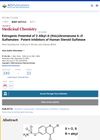 37 citations
,
September 2003 in “Journal of Medicinal Chemistry”
37 citations
,
September 2003 in “Journal of Medicinal Chemistry” A substance called Compound 2g can strongly block STS (a hormone-related enzyme) without affecting estrogen levels, making it potentially good for treating breast cancer.
15 citations
,
May 1987 in “Fundamental and applied toxicology” SMR-2 and SMR-6 are much more toxic than retinoic acid, causing severe side effects.
 8 citations
,
April 2019 in “ACS Biomaterials Science & Engineering”
8 citations
,
April 2019 in “ACS Biomaterials Science & Engineering” The new SIS-PEG sponge is a promising material for skin regeneration and hair growth.
 3 citations
,
October 2010 in “Dermatologic Surgery”
3 citations
,
October 2010 in “Dermatologic Surgery” The new surgical technique for vitiligo is effective, safe, and cost-efficient.
1 citations
,
January 2018 Sphingosine 1-phosphate and its receptor S1PR3 are key in controlling mechanical pain.
 June 2026 in “Frontiers in Oncology”
 GSDMA deficiency slows skin cancer growth.
 28 citations
,
October 1992 in “JEADV. Journal of the European Academy of Dermatology and Venereology/Journal of the European Academy of Dermatology and Venereology”
28 citations
,
October 1992 in “JEADV. Journal of the European Academy of Dermatology and Venereology/Journal of the European Academy of Dermatology and Venereology” SIP is a better method for measuring hair growth accurately.