Sensory neuron and Merkel cell changes in the skin happen independently during normal skin maintenance.
 3 citations
,
April 2010 in “Clinical Neuropharmacology”
3 citations
,
April 2010 in “Clinical Neuropharmacology” Finasteride helps treat eyelid spasms.
July 2011 in “Journal of Pediatric and Adolescent Gynecology” A 15-year-old girl has a skin condition causing blisters on her feet, likely inherited from her family.
6 citations
,
December 2015 in “Journal of Dermatological Case Reports” Intradermal testing can better detect corticosteroid allergies than patch testing.
 December 2025 in “Nature Communications”
 Club-like receptors detect light touch but not whisking.
 2 citations
,
January 2014 in “Elsevier eBooks”
2 citations
,
January 2014 in “Elsevier eBooks” The document concludes that reactivation of herpesviruses, especially HHV-6, is linked to severe symptoms and complications in drug-induced hypersensitivity syndrome.
 July 2023 in “bioRxiv (Cold Spring Harbor Laboratory)”
 Seeing trauma causes fear in mice by lowering their natural fear-reducing hormones.
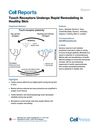 31 citations
,
November 2016 in “Cell Reports”
31 citations
,
November 2016 in “Cell Reports” Touch sensitivity in mouse skin decreases during hair growth due to changes in touch receptors.
Sensory neuron remodeling and Merkel-cell changes happen independently during skin maintenance.
23 citations
,
November 2024 in “Nature” IVIG and dupilumab effectively improved symptoms in a child with Netherton syndrome.
 April 2026 in “Frontiers in Cell and Developmental Biology”
 Hair follicles in mice help detect and respond to germs.
 1 citations
,
February 2009 in “Journal of The American Academy of Dermatology”
1 citations
,
February 2009 in “Journal of The American Academy of Dermatology” Children's Serum Sickness-Like Reaction is often linked to antibiotics, especially amoxicillin, and involves symptoms like rash, fever, and joint issues.
14 citations
,
December 2001 in “Journal of autoimmunity” Rats can develop an immune response to prion protein peptides, but it may cause severe skin issues in older rats.
Stress can cause hair loss and trigger autoimmunity by damaging hair follicle cells.
 October 2024 in “Annals of Allergy Asthma & Immunology”
 Anaphylaxis from cow's milk allergy can cause temporary hair loss in children.
 December 2025 in “Голова и шея.”
 The (bi)eyebrow approach is better for frontal sinus injuries, reducing scarring and complications.
18 citations
,
November 2007 in “Acta Veterinaria Hungarica” The ovine interdigital sinus has a complex structure with three layers and various skin-like features.
 3 citations
,
March 2019 in “Contact Dermatitis”
3 citations
,
March 2019 in “Contact Dermatitis” Using Indian marking nut sap for hair loss caused a skin rash on a woman's face.
June 2020 in “Comparative medicine” NSG mice had the most mites, and genetic factors affect immune response and susceptibility.
 4 citations
,
January 2021 in “Dermatology Review”
4 citations
,
January 2021 in “Dermatology Review” Demodex mites can cause eye problems like itching, dry eyes, and styes.
February 2023 in “Reactions Weekly” July 2023 in “Cosmoderma”  September 2017 in “Journal of Investigative Dermatology”
 The study found that sweat glands normally suppress immune responses, but this is disrupted in certain skin diseases, possibly contributing to their development.
 September 2025 in “OBM Genetics”
 Early diagnosis and comprehensive management improve life quality for Netherton syndrome patients.
October 1933 in “Experimental Biology and Medicine” Epinephrine injections can cause severe skin reactions like hair loss and necrosis.
 1 citations
,
June 2025 in “Journal of Allergy and Clinical Immunology Global”
1 citations
,
June 2025 in “Journal of Allergy and Clinical Immunology Global” A young boy with Netherton syndrome improved significantly using IVIG, dupilumab, and dietary changes.
1 citations
,
November 2003 in “SKINmed Dermatology for the Clinician” A 17-year-old with Netherton syndrome has dry, itchy skin, brittle hair, and high IgE levels, treated with antihistamines and emollients.
43 citations
,
April 1996 in “Journal of Investigative Dermatology” 1 citations
,
November 2024 in “eLife” Mesenchymal MEIS2 is essential for whisker development without needing sensory nerves.