 January 2026 in “Dermatology and Therapy”
 UVFD can help doctors better identify harmful skin lesions on the face, reducing unnecessary biopsies.
 July 2003 in “Journal of Cutaneous Medicine and Surgery”
 Treating psoriasis with UVB light three times a week is faster than twice a week, and certain medications and lifestyle factors affect psoriasis treatment outcomes.
 14 citations
,
January 2005 in “Pediatric Dermatology”
14 citations
,
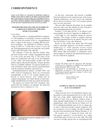
January 2005 in “Pediatric Dermatology” UVA1-light therapy successfully treated a child's skin condition, mycosis fungoides.
2 citations
,
April 2024 in “International Wound Journal” Combining UV therapy with PRP heals chronic wounds faster and reduces pain.
January 1985 in “Clinical research” Topical alpha-terthienyl with UVA may safely treat psoriasis without cancer risk.
37 citations
,
November 2011 in “Photodermatology Photoimmunology & Photomedicine” Narrowband UVB phototherapy alone is not very effective for treating alopecia areata.
8 citations
,
April 2016 in “Experimental dermatology” B6.Cg-Tyr c−2J Hr hr /J mice have a stronger delayed sunburn reaction and are good for UV research.
1 citations
,
April 2025 in “Frontiers in Medicine” New insights into skin damage from UV exposure suggest potential treatments, including targeting specific RNAs and combining therapies for better outcomes.
 7 citations
,
October 2006 in “Medical hypotheses”
7 citations
,
October 2006 in “Medical hypotheses” UV light might cause excessive hair growth by increasing PGE2 in the skin.
 January 2010 in “CNR Solar (Scientific Open-access Literature Archive and Repository) (Consiglio Nazionale delle Ricerche)”
 Metformin and clomiphene citrate together improve pregnancy chances and reduce miscarriages in women with PCOS.
14 citations
,
July 2015 in “International Journal of Molecular Sciences” S-Methylmethionine sulfonium can protect skin from UVB damage.
3 citations
,
August 2017 in “Dermatologic therapy” UVA-1 phototherapy might help treat alopecia areata.
18 citations
,
May 2014 in “International journal of pharmaceutics” Aging and sun damage do not increase the skin's absorption of certain sunscreens and drugs.
10 citations
,
May 2021 in “Clinical, cosmetic and investigational dermatology” UV exposure causes hair thinning, graying, and changes in hair growth cycles in mice.
 September 2025 in “International Journal of Cosmetic Science”
 Heat and UV exposure damage hair structure by altering keratins.
December 2009 in “Expert review of dermatology” Vitamin D may help protect against nonmelanoma skin cancer.
9 citations
,
June 2009 in “Cell Proliferation” Cream 1 protects skin nerve endings from UV damage.
 12 citations
,
January 2009 in “Journal of Oleo Science”
12 citations
,
January 2009 in “Journal of Oleo Science” Sterol surfactants can effectively dissolve UV ray absorbers.
37 citations
,
January 1979 in “Archives of Dermatology” PUVA treatment may have triggered lupus in a woman with psoriasis.
 5 citations
,
November 2017 in “Asian Journal of Beauty and Cosmetology”
5 citations
,
November 2017 in “Asian Journal of Beauty and Cosmetology” Sinapic acid may protect skin cells from UV damage and reduce inflammation, making it a promising anti-aging cosmetic ingredient.
47 citations
,
April 2012 in “Analytical and Bioanalytical Chemistry”  November 2011 in “Australasian Journal of Dermatology”
 Cellulite may be linked to low adiponectin, isotretinoin with UVB can treat psoriasis effectively, permanent alopecia post-chemotherapy resembles a unique hair loss, deodorants may cause fragrance allergies, desmoplastic melanoma is becoming more common, and intensive UVB treatment can give long-term psoriasis remission.
 April 2016 in “Proceedings of SPIE”
 UV-induced autofluorescence is effective for identifying different types of alopecia.
June 2016 in “한국디자인문화학회지” UVA damages all hair types, especially permanently waved and colored hair.
 27 citations
,
December 2014 in “Current problems in dermatology”
27 citations
,
December 2014 in “Current problems in dermatology” Photodynamic therapy is the preferred treatment for skin precancer due to its effectiveness and safety.
 4 citations
,
July 2005 in “International Journal of Dermatology”
4 citations
,
July 2005 in “International Journal of Dermatology” Topical PUVA and tacrolimus ointment can effectively and safely treat infant alopecia universalis.
 2 citations
,
February 2025 in “Dermatology and Therapy”
2 citations
,
February 2025 in “Dermatology and Therapy” UVF-dermoscopy is a useful tool for accurately diagnosing types of alopecia, especially in people with lighter skin.
74 citations
,
February 2018 in “Journal of the American Academy of Dermatology” January 2026 in “National Science Review” June 2006 in “Journal of the American Academy of Dermatology” Clear glass lets most UV rays through, so it's important to know how well different glasses block UV to protect yourself.