39 citations
,
June 2018 in “Burns” The spiny mouse can fully regenerate skin after burns, unlike the lab mouse.
January 2015 in “Chinese Veterinary Science” Recognizing ultrastructures of cashmere goat hair follicles helps identify and locate follicle layers.
June 2026 in “Case Reports in Dermatology” Dupilumab improved hair and skin in a woman with Netherton syndrome.
 89 citations
,
November 2014 in “International Journal of Nanomedicine”
89 citations
,
November 2014 in “International Journal of Nanomedicine” Using nanostructured lipid carriers to deliver spironolactone could improve treatment for hair loss.
 76 citations
,
June 2008 in “Journal of the American Academy of Dermatology”
76 citations
,
June 2008 in “Journal of the American Academy of Dermatology” The conclusion is that certain scalp tissue changes are characteristic of lichen planopilaris, with mucinous perifollicular fibroplasia being a new feature for diagnosis.
November 2025 in “Analytical Chemistry” A new method improves protein extraction from hair, helping identify potential biomarkers for fetal growth issues.
 September 2017 in “Journal of Investigative Dermatology”
 Hair follicle cells change their DNA packaging during growth cycles and when grown in the lab.
May 2020 in “International Journal of Dermatology and Venereology” Calcified epidermal cysts are rare, hard skin nodules that are best treated with surgical removal.
2 citations
,
June 1989 in “Archives of Dermatology” A black pore on a man's cheek was a hair follicle tumor and was removed.
September 2019 in “The journal of investigative dermatology/Journal of investigative dermatology” Certain proteins are significantly increased in the skin of people with hidradenitis suppurativa.
36 citations
,
November 1990 in “The Journal of Dermatology” Dermal papillae enhance hair follicle growth and structure.
 90 citations
,
January 1979 in “International review of cytology”
90 citations
,
January 1979 in “International review of cytology” Wool follicles are complex, involving interactions between different cell types and structures.
April 2013 in “The FASEB journal” Platycarya strobilacea extract significantly improves hair growth and follicle health.
September 2025 in “OPAL (Open@LaTrobe) (La Trobe University)” Different solvents affect minoxidil crystal shapes, improving flowability and revealing a unique butterfly-shaped crystal.
April 2022 in “Microbiology and Immunology” A specific DNA pattern in Malassezia restricta may be linked to hair loss in men.
 4 citations
,
December 2013 in “International Journal of Dermatology”
4 citations
,
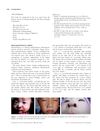
December 2013 in “International Journal of Dermatology” Three children with nasal fungal infections were successfully treated with potassium iodide and sometimes itraconazole.
February 2025 in “Proceedings of the National Academy of Sciences” Only Deomyinae rodents can regenerate complex tissues.
January 2026 in “Figshare” January 2026 in “Figshare” March 2020 in “Faculty Opinions – Post-Publication Peer Review of the Biomedical Literature” The dermal sheath's contraction is crucial for hair follicle regression and stem cell relocation.
 1 citations
,
April 2023 in “Science Advances”
1 citations
,
April 2023 in “Science Advances” High levels of ERK activity are key for tissue regeneration in spiny mice, and activating ERK can potentially redirect scar-forming healing towards regenerative healing in mammals.

Polarized microscopy helps identify hair irregularities in genetic disorders.

Dupilumab improved hair and skin in a woman with Netherton syndrome.
2 citations
,
August 1987 in “Analytical Biochemistry” A new method isolated previously undetected hair proteins rich in glycine and tyrosine.
20 citations
,
September 2004 in “Journal of Anatomy” The inner root sheath evolved to help hair grow safely through the skin in mammals.
33 citations
,
December 1982 in “Developmental Medicine & Child Neurology” Hair-shaft abnormalities can indicate neurological disorders, some of which are treatable.
 45 citations
,
November 2017 in “Biomaterials”
45 citations
,
November 2017 in “Biomaterials” Researchers found a new way to create hair-growing structures in the lab that can grow hair when put into mice.

Dupilumab improved hair and skin in a woman with Netherton syndrome.
4 citations
,
March 2024 in “Journal of Investigative Dermatology” SPRY1 deficiency in skin cells causes stem cells to move to the skin surface, leading to increased pigmentation.
 November 2022 in “The journal of investigative dermatology/Journal of investigative dermatology”
 A patient with a new PLEC gene mutation showed symptoms of both muscular dystrophy and myasthenia gravis, which improved with steroid treatment.