 July 2023 in “Clinical dermatology review”
 Intralesional triamcinolone acetonide is better than PRP for treating scalp alopecia areata, leading to faster and more complete hair regrowth.
 September 2018 in “Journal of Experimental & Biomedical Sciences”
 DK peptides can reduce hair loss by inhibiting the 5α-reductase enzyme and have antioxidant effects.
December 2021 in “International Journal of Research in Dermatology” PRP shows promise for treating hair loss but needs standardized methods to confirm its effectiveness.
March 2015 in “Faculty Opinions – Post-Publication Peer Review of the Biomedical Literature” 8 citations
,
June 2024 in “Pharmaceutics” PEA-ENL improves skin delivery and reduces inflammation without side effects.
 2 citations
,
June 2024 in “Frontiers in Plant Science”
2 citations
,
June 2024 in “Frontiers in Plant Science” LLPS is crucial for RALF signaling, aiding plant growth and stress resilience.
 20 citations
,
February 2019 in “Genes”
20 citations
,
February 2019 in “Genes” The study concludes that mutations in the AEBP1 gene can cause a form of Ehlers-Danlos syndrome and should be considered in diagnosis.
December 2021 in “Cosmetics”  37 citations
,
May 2007 in “International Journal of Pharmaceutics”
37 citations
,
May 2007 in “International Journal of Pharmaceutics” PPCM microspheres allow controlled finasteride release over 24 hours.
 29 citations
,
January 2010 in “Methods in Enzymology”
29 citations
,
January 2010 in “Methods in Enzymology” The document concludes that careful design of genetic fate mapping experiments is crucial for accurate cell lineage tracing in mice.
 1 citations
,
December 2023 in “npj biofilms and microbiomes”
1 citations
,
December 2023 in “npj biofilms and microbiomes” Single-cell engineered biotherapeutics show promise for skin treatment but need more research and trials.
October 2019 in “bioRxiv (Cold Spring Harbor Laboratory)” L-PRP and P-PRP reduced endometriosis in rats, but not significantly more than saline.
 15 citations
,
January 2020 in “RSC advances”
15 citations
,
January 2020 in “RSC advances” The new palladium catalyst is effective and reusable for making pharmaceutical ingredients.
Ablative CO2 laser resurfacing tightens skin by promoting collagen and new cell growth.
Ablative CO2 laser resurfacing tightens skin by destroying and regenerating skin layers.
 March 2026 in “Journal of Ovarian Research”
 PRP may help improve ovarian function, but more research is needed for consistent results.
4 citations
,
August 2024 in “International Journal of Molecular Sciences” EBGS reduces platelet adhesion, potentially helping prevent blood clots.

Polydopamine is promising for personalized medicine and biomedical technology due to its strong adhesion and biocompatibility.
 2 citations
,
October 2004 in “Organic Process Research & Development”
2 citations
,
October 2004 in “Organic Process Research & Development” The document reviews 20 U.S. patents from July and August 2004 about new drug forms, cancer treatments, aroma chemicals, statin drugs, and various chemical production methods.
September 2017 in “Dermatologic Surgery”  6 citations
,
January 2015 in “Biochemical Society Transactions”
6 citations
,
January 2015 in “Biochemical Society Transactions” The Ysc84/SH3yl1 protein family is important for cell movement and the process of taking in materials by interacting with actin and cell membranes.
IVL-DrugFluidic® can mass-produce high-quality, long-acting injectable drug microspheres, improving patient compliance and reducing side effects.
February 2023 in “Default Digital Object Group” 28 citations
,
February 2010 in “Experimental Dermatology” The frizzy mouse and hairless rat mutations are due to changes in the Prss8 gene.
 June 2026 in “Zenodo (CERN European Organization for Nuclear Research)”
 PRP therapy helps improve skin texture and elasticity.
1 citations
,
January 2017 in “Science” A new method was developed to create complex molecular knots using iron ions.
 April 2026 in “Diagnostics”
 PRP treatment improves chronic tendinopathy, and imaging biomarkers can track tendon changes.
 July 2022 in “The journal of investigative dermatology/Journal of investigative dermatology”
 A patient with a PLEC mutation has epidermolysis bullosa, muscular dystrophy, and myasthenia gravis, which improved with steroid treatment.
 1 citations
,
January 2023 in “Journal of Drugs in Dermatology”
1 citations
,
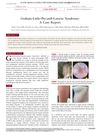
January 2023 in “Journal of Drugs in Dermatology” Early detection of Graham-Little-Piccardi-Lasseur syndrome is key for better management.
5 citations
,
April 2023 in “Bioengineering & Translational Medicine” STAR particles are safe, comfortable, and effective for enhancing drug delivery through the skin.