 December 2022 in “OBG Management”
 The conclusion is to diagnose PCOS with just hyperandrogenism and irregular periods, and treat with lifestyle changes and basic medications.
 November 2022 in “Journal of the Endocrine Society”
 An 8-year-old boy's early puberty was caused by a rare hormone-secreting brain tumor, which was successfully treated with surgery.
October 2022 in “Journal of the ASEAN Federation of Endocrine Societies” GnRH-a or orchiectomy is more effective than anti-androgens for managing hormone levels in transgender women.
 August 2022 in “MEDICINUS”
 A 22-year-old homosexual man was diagnosed with secondary syphilis, genital warts, and HIV, highlighting the high STI risk in men who have sex with men.
Polycystic ovary syndrome (PCOS) affects about 10% of women, is often linked to obesity and family history, and can cause irregular periods, fertility issues, and other symptoms. It's usually managed with lifestyle changes, weight loss, and medication.
January 2022 in “Dubai diabetes and endocrinology journal/Dubai diabetes & endocrinology journal” A 16-year-old girl with HAIR-AN syndrome was treated with lifestyle changes and medications to manage her condition.
 April 2021 in “Advances in Cosmetic Surgery”
 Hair restoration can be achieved through non-surgical treatments like minoxidil, antiandrogens, phototherapy, and PRP procedures, or through surgical methods like hair transplantation. Continued treatment is needed to maintain results, and full results are visible after 12-18 months.
The review found that PRP is the most effective treatment for hair loss with few side effects.
 January 2021 in “Our Dermatology Online”
 A young man's hair loss was the only sign of syphilis, which improved after treatment.
 November 2020 in “Elsevier eBooks”
 Antiandrogens and androgen inhibitors like spironolactone, finasteride, and dutasteride can treat hair loss and skin conditions, but they have risks and side effects, including potential harm to pregnant women and risks of cancer and heart issues. Herbal remedies also have antiandrogenic effects but lack safety validation.
 October 2020 in “Медицинский совет”
 The document's conclusion cannot be provided as it is not accessible for parsing.
 October 2020 in “Проблемы эндокринологии”
 Men with higher androgen levels may have severe COVID-19 symptoms, but those on antiandrogen therapy are less likely to contract the virus and have milder symptoms. Anti-androgen drugs could potentially treat COVID-19, but more research is needed.
July 2020 in “Zenodo (CERN European Organization for Nuclear Research)” Pioglitazone combined with metformin or spironolactone improves PCOS symptoms and insulin resistance.
 April 2020 in “Journal of the Endocrine Society”
 Non-classic congenital adrenal hyperplasia (NCCAH) can mimic PCOS and requires genetic testing for proper diagnosis and treatment.
February 2020 in “DOAJ (DOAJ: Directory of Open Access Journals)” Minoxidil 0.25 mg with spironolactone 25 mg reduces hair loss and improves hair density in women.
December 2019 in “Orvostudományi Értesítö” Lifestyle changes, medications, and fertility treatments can improve PCOS symptoms and prevent complications.
October 2019 in “DOAJ (DOAJ: Directory of Open Access Journals)” Menopausal acne is mainly caused by hormonal changes and can be managed with topical treatments, lifestyle changes, and sometimes medication.
April 2019 in “Journal of the Endocrine Society” Glucocorticoid treatment lowered androgen levels but didn't improve hirsutism or ovulation and caused weight gain.
Low-level light therapy, possibly combined with other treatments, may become a leading hair loss treatment, while hirsutism often worsens with age and lacks preventive options.
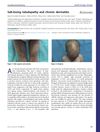 July 2018 in “Kidney international”
 Genetic testing for EGFR mutations is crucial in similar cases.
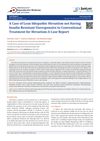 June 2018 in “Global Journal of Reproductive Medicine”
 Idiopathic hirsutism may be linked to increased skin enzyme activity, and new treatments like laser and eflornithine cream show promise.
 February 2018 in “InTech eBooks”
 Diagnosing and treating PCOS is complex due to differing criteria and requires a team approach.
 January 2017 in “Springer eBooks”
 Over 40% of postmenopausal women experience hair loss, with treatments aiming to stop further loss and possibly thicken hair.
 October 2016 in “Journal of the Dermatology Nurses’ Association”
 Polycystic Ovary Syndrome (PCOS) affects 6%-15% of women of reproductive age, causing symptoms like acne and hair loss, and increasing the risk of type 2 diabetes and heart disease; it's managed through diet, exercise, and medications like Metformin and hormonal contraceptives.
 July 2016 in “British journal of dermatology/British journal of dermatology, Supplement”
 Hirsutism treatment should focus more on patient needs and quality of life.
 April 2016 in “Journal of The American Academy of Dermatology”
 Certain skin diseases are linked to Agent Orange and similar chemicals; veterans should be screened and informed about uncertain risks, and current data doesn't link spironolactone with breast cancer.
 January 2016 in “Springer eBooks”
 Hyperandrogenism, often causing excessive hair growth and acne, can be treated with methods like weight reduction, hair removal, various medications, and in the case of acne, topical treatments.
October 2015 in “药物不良反应杂志” Stopping the drug usually helps, but tamoxifen or surgery may be needed if symptoms persist.
 July 2015 in “Cambridge University Press eBooks”
 Androgens like testosterone affect skin health and can lead to conditions such as acne and hair loss, with various treatments available.
Hormonal treatments can help with hair loss, acne, and excess hair growth, but it takes 3-6 months to see results and patients should know the possible side effects.