7 citations
,
January 1966 in “Archives of Dermatology” The method accurately measures hair growth with minimal risk and is better than other methods.
 6 citations
,
April 1985 in “Australasian journal of dermatology”
6 citations
,
April 1985 in “Australasian journal of dermatology” The cause of the syndrome with scalp scaling and hair loss is unknown.
April 2021 in “Cermin Dunia Kedokteran” Two siblings with tinea capitis improved after treatment with ketoconazole.
 June 2026 in “International Journal of Advanced Biochemistry Research”
 Non-dermatophyte moulds like Aspergillus and Penicillium can cause skin issues in pets.
 1 citations
,
July 2023 in “Cureus”
1 citations
,
July 2023 in “Cureus” A rare hair disorder with multiple hairs from one follicle was found on a patient's abdomen.
May 2019 in “Small Animal Dermatology” The dog had a good prognosis with proper treatment and cleaning.
2 citations
,
January 2023 in “Frontiers in Veterinary Science” Buffalo flies and Stephanofilaria nematodes cause severe skin lesions in beef cattle, and treatment should target both.
 January 2026 in “Al-Kunooze Scientific Journal”
 Dermatophytosis is common in young, male Shirazi Persian cats, affecting ears, face, and abdomen.
May 2020 in “The Journal of Pediatrics” Tinea capitis can be quickly diagnosed and treated using dermoscopy to prevent hair damage.
Spironolactone does not change hair growth.
 October 2022 in “Rheumatology (Bulgaria)”
 Accurate diagnosis of progressive supranuclear palsy requires thorough neurological assessments and MRI.
3 citations
,
December 2004 in “PubMed” A fungal infection caused skin lesions in farmed mink kits, but they remained healthy.
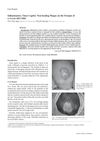 11 citations
,
May 2010 in “Annals of the Academy of Medicine Singapore”
11 citations
,
May 2010 in “Annals of the Academy of Medicine Singapore” Tinea capitis can cause scalp issues in children and should be considered in similar cases; treatment with griseofulvin and selenium sulfide is effective.
 July 2022 in “Journal of Investigative Dermatology”
 Substance P may contribute to hair loss by increasing oxidative stress and mitochondrial activity in hair follicles.
84 citations
,
June 1970 in “Journal of Investigative Dermatology” April 2024 in “Veterinary Science and Medicine Journal” Proper treatment and sanitation can cure and prevent scabiosis in domestic cats.
6 citations
,
August 1937 in “Journal of the Society of Chemical Industry” 26 citations
,
September 2001 in “Journal of Investigative Dermatology” BSSP may help skin tumors grow and could be a marker or target for skin cancer treatment.
July 2024 in “Journal of Investigative Dermatology” ATR12-351 ointment safely delivers LEKTI protein to the skin, reducing enzyme activity in Netherton syndrome.
November 2021 in “Skin appendage disorders” Self-induced hair loss should be considered in patients with androgenetic alopecia.
4 citations
,
July 2019 in “Clinical and experimental dermatology” Early diagnosis and biotin treatment are crucial for infants with biotinidase deficiency to prevent severe complications.
January 2026 in “International Journal of Biological Macromolecules” 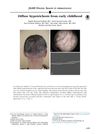 September 2016 in “Journal of The American Academy of Dermatology”
 The girl has a genetic hair condition causing thin hair since childhood.
March 2003 in “中華皮膚科醫學雜誌” Trichothiodystrophy causes unusual hair and developmental issues.
ANE syndrome is caused by a mutation in the RBM28 protein that disrupts ribosome assembly.
2 citations
,
June 2004 in “Journal of Molecular Histology”  January 1999 in “American Journal of Medical Genetics Part A”
 The report expanded knowledge of MBTPS1-related disorders by identifying new symptoms.
12 citations
,
June 2025 in “Gut Microbes” BroadAMP-GPT effectively creates antimicrobial peptides to fight drug-resistant bacteria.
Spironolactone is a promising alternative to antibiotics for treating acne in adult females.