January 2025 in “LUMEN ET VIRTUS” Orchiectomy and melatonin helped a German Spitz regrow hair lost due to alopecia X.
1 citations
,
November 2022 in “PubVet” Microneedling and orchiectomy helped treat hair loss in a German Spitz dog.
June 2020 in “Comparative medicine” NSG mice had the most mites, and genetic factors affect immune response and susceptibility.
1 citations
,
January 2012 in “生物医学研究杂志:英文版” Cyclosporine A promotes hair growth in mice.
15 citations
,
October 1936 in “Archives of Dermatology” Cystine is crucial for forming keratin in hair, wool, and nails.
November 2017 in “Arthritis Care & Research”  23 citations
,
June 2010 in “Journal of Investigative Dermatology”
23 citations
,
June 2010 in “Journal of Investigative Dermatology” A mutation in the Soat1 gene causes hair structure defects and other health issues in AKR/J mice.
17 citations
,
May 2021 in “Journal of Cell Science” N1-acetylspermidine promotes hair follicle stem cell self-renewal.
187 citations
,
May 1979 in “British Journal of Dermatology” Topical steroids can manage chronic scalp pustules in elderly women.
December 2025 in “Antibiotics” Tinea capitis in older adults is often misdiagnosed but can be effectively treated with antifungal therapy.
9 citations
,
April 2019 in “Journal of Structural Biology” Keratin fibers in hair twist left-handed.
The mutation helps mice handle heat better without affecting hair growth.
55 citations
,
May 2007 in “Australasian journal of dermatology” Two boys developed a viral skin infection during chemotherapy, which resolved with improved immune function.
March 2024 in “Clinical Case Reports” Early detection of tinea capitis is possible by spotting specific hair patterns like comma or corkscrew hairs.
9 citations
,
October 1947 in “The Lancet” 1 citations
,
November 1947 in “The Lancet” November 2025 in “Biomedicines” Targeting pyroptosis may offer new treatments for alopecia areata, but more research is needed.
7 citations
,
May 2021 in “Clinical Case Reports” Alopecic and aseptic nodules of the scalp are rare, treatable, and often resolve with doxycycline or on their own.
 March 2026 in “bioRxiv (Cold Spring Harbor Laboratory)”
 Spiny mice have a unique skin structure that helps them heal and regenerate quickly.
8 citations
,
June 2023 in “Acta Biochimica et Biophysica Sinica” rRSPO1 protein boosts hair growth by activating a key signaling pathway.
 December 2025 in “TURKDERM”
 Facial trichostasis spinulosa is a chronic condition with significant cosmetic impact, especially in young women.
January 2006 in “Zhongguo bijiao yixue zazhi” A new method efficiently isolates and cultures rat hair follicle cells.
 January 2024 in “International Journal of Advanced Biochemistry Research”
 Staphylococcus in dogs with skin infections is most sensitive to Linezolid.
 February 2026 in “Zenodo (CERN European Organization for Nuclear Research)”
 Gut bacteria overgrowth may cause some Post-Finasteride Syndrome symptoms.
January 2011 in “Companion Animal” Dermatophytosis in cats is a contagious skin disease that requires treating the infected cat, other pets, and the environment.
 1 citations
,
June 2018 in “The Journal of Dermatology”
1 citations
,
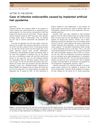
June 2018 in “The Journal of Dermatology” A man got heart infection from scalp infection caused by artificial hair implants.

Enterococcus faecalis delays wound healing by disrupting cell functions and creating an anti-inflammatory environment.
3 citations
,
August 1988 in “PubMed” 11 citations
,
December 2015 in “Indian journal of dermatology, venereology, and leprology” Dermoscopy quickly and accurately diagnosed a rare hair disorder in a 12-year-old girl.
13 citations
,
June 2011 in “PubMed” The patient improved significantly after treatment, with only one small scar remaining.