4 citations
,
November 2018 in “Postgraduate Medical Journal” Trichoscopy is a useful, quick, and non-invasive way to diagnose tinea capitis.
April 2019 in “Journal of parasitic diseases” A Persian cat and its owner fully recovered from Cheyletiellosis after treatment.
 6 citations
,
November 2015 in “Equine Veterinary Education”
6 citations
,
November 2015 in “Equine Veterinary Education” A sick foal with Rhodococcus equi pneumonia was successfully treated for multiple complications with targeted therapy and careful monitoring.
 4 citations
,
August 2023 in “Nature Communications”
4 citations
,
August 2023 in “Nature Communications” Mouse zigzag hair bends form due to a 3-day cycle of changes in hair progenitors and their environment.
 84 citations
,
March 2010 in “Infectious Disease Clinics of North America”
84 citations
,
March 2010 in “Infectious Disease Clinics of North America” The document concludes that rapid identification, isolation, and strict infection control are crucial to manage SARS outbreaks.
28 citations
,
February 2010 in “Experimental Dermatology” The frizzy mouse and hairless rat mutations are due to changes in the Prss8 gene.
 February 2026 in “Zenodo (CERN European Organization for Nuclear Research)”
 Gut bacteria overgrowth may cause some Post-Finasteride Syndrome symptoms.
 5 citations
,
May 2011 in “Movement Disorders”
5 citations
,
May 2011 in “Movement Disorders” Finasteride significantly reduced tics and obsessive-compulsive symptoms in Tourette syndrome patients.
About 19% of foxes and 18% of jackals in southwest Iran have at least one type of ectoparasite, mainly fleas.
March 1990 in “Journal of Dermatological Science”  December 2023 in “American journal of medical genetics. Part A”
 A new syndrome was linked to two new genetic changes in the MBTPS1 gene in a 14-year-old girl.
January 2024 in “AIP conference proceedings” 26 citations
,
December 1990 in “Journal of Biological Chemistry” Two specific genes are more active during hair growth in mice.
 9 citations
,
March 2018 in “European journal of dermatology/EJD. European journal of dermatology”
9 citations
,
March 2018 in “European journal of dermatology/EJD. European journal of dermatology” A new mutation in the ST14 gene causes a rare skin and hair disorder in a specific family.
 December 2024 in “Buletin Veteriner Udayana”
 Improving cage hygiene and sanitation is crucial to prevent colisepticemia in chickens.
 June 2026 in “Open Access Research Journal of Biology and Pharmacy”
 Bedaquiline, Telmisartan, Diosmin, Azelastine, and Adapalene may be effective treatments for onchocerciasis.
 18 citations
,
February 2006 in “Brain & development”
18 citations
,
February 2006 in “Brain & development” A patient with Satoyoshi syndrome improved with a treatment combining several medications, including carbamazepine and methotrexate.
8 citations
,
March 2001 in “PubMed” A man developed recurring scalp inflammation and hair loss after a head injury.
28 citations
,
July 1980 in “British Journal of Dermatology” The hair disorder was caused by abnormal protein formation, making hair easily damaged.
2 citations
,
November 2025 in “Plant Molecular Biology”  1 citations
,
January 2023 in “Mycopathologia”
1 citations
,
January 2023 in “Mycopathologia” A woman's hair loss and scalp swelling, caused by a fungal infection, was wrongly treated but eventually cured with Terbinafine, emphasizing its effectiveness.
2 citations
,
September 2021 in “JAAD case reports” A man with a weakened immune system was diagnosed with a rare skin condition called trichodysplasia spinulosa using skin examination techniques.

Unhealthy lifestyle habits may worsen hair loss by affecting scalp bacteria.
19 citations
,
May 2008 in “Applied spectroscopy” Human hair has different protein structures in its cuticle and cortex.
2 citations
,
July 2025 in “RMD Open” IL-1 blockade is effective for treating SURF, and personalized treatment is needed.
 418 citations
,
September 2012 in “Nature”
418 citations
,
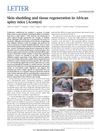
September 2012 in “Nature” African spiny mice can regenerate skin, hair, and cartilage, but not muscle, and their unique abilities could be useful for regenerative medicine.
3 citations
,
November 1998 in “PubMed” Systemic therapy is needed for deep hair follicle infections, and proper dosage is crucial for treatment success.
324 citations
,
May 2002 in “Oncogene” June 2026 in “Skin Appendage Disorders” Pili annulati may be more common than thought, so recognizing its features is important for diagnosis.
January 2012 in “Zhongguo shouyi xuebao” Sheep breeds show different keratin gene expression in the groin, linked to hair follicle density.