
Melanoma characteristics vary by age, which could help doctors with diagnosis and prevention.

 39 citations
,
December 2008 in “Clinics in Dermatology”
39 citations
,
December 2008 in “Clinics in Dermatology” Dermoscopy has improved skin cancer diagnosis and has expanding applications in dermatology, but requires staying updated with new research and techniques.
 30 citations
,
September 2009 in “Seminars in Cutaneous Medicine and Surgery”
30 citations
,
September 2009 in “Seminars in Cutaneous Medicine and Surgery” Dermoscopy has greatly improved the diagnosis of skin lesions and our understanding of their morphology and biology.
 9 citations
,
May 2013 in “JAMA Dermatology”
9 citations
,
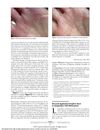
May 2013 in “JAMA Dermatology” Sunlight exposure improved a patient's skin condition, and there may be a link between a certain disease and skin growths; a leukemia treatment caused changes in hair color and growth.
 4 citations
,
October 2012 in “Expert Review of Dermatology”
4 citations
,
October 2012 in “Expert Review of Dermatology” Dermoscopy greatly improves melanoma diagnosis and reduces unneeded surgeries.
 4 citations
,
March 2009 in “British Journal of Dermatology”
4 citations
,
March 2009 in “British Journal of Dermatology” The conference highlighted new dermatological treatments and emphasized early intervention and addressing conditions lacking evidence-based treatments.
 1 citations
,
July 2012 in “British Journal of Dermatology”
1 citations
,
July 2012 in “British Journal of Dermatology” New treatments and management strategies for skin conditions like melanoma and Spitz naevi were discussed at the dermatologists' meeting.
 September 2009 in “Pediatric Dermatology”
 UVB is good for a skin condition in Asian kids, a lotion works for head lice, a drug helps with a skin blistering disorder, a foam reduces itchiness in skin inflammation, birthmarks can be more widespread, and criteria for a neurocutaneous disorder were agreed upon.
 May 2009 in “The American Journal of Dermatopathology”
 Mast cells play a significant role in hair loss conditions like male pattern hair loss and alopecia areata.
14 citations
,
May 1979 in “International Journal of Dermatology” Trichostasis spinulosa mainly affects the nose, with many tiny hairs in one follicle, possibly influenced by hormones and sunlight.

Orchiectomy and melatonin helped a German Spitz regrow hair lost due to alopecia X.
10 citations
,
January 1925 in “Archives of Dermatology” Trichostasis spinulosa is a rare skin condition with hair-filled plugs in hair follicles.
1 citations
,
November 2022 in “PubVet” Microneedling and orchiectomy helped treat hair loss in a German Spitz dog.
13 citations
,
March 2000 in “Veterinary Dermatology” Dogs have a skin condition like human pseudopelade, causing hair loss that doesn't improve with treatment.
87 citations
,
August 1974 in “Journal of Investigative Dermatology” January 2025 in “LUMEN ET VIRTUS” Orchiectomy and melatonin helped a German Spitz regrow hair lost due to alopecia X.
8 citations
,
January 2013 in “Australasian journal of dermatology” Trichodysplasia spinulosa is a rare skin condition caused by a virus, treatable with antiviral medication.
2 citations
,
June 2012 in “American Journal of Dermatopathology” A rare neck cyst in a 47-year-old man showed diverse skin cell types and was not linked to HPV.

Posaconazole successfully treated a resistant skin infection in a Spitz dog when other antifungals failed.
23 citations
,
July 1994 in “Journal of Dermatological Science” Pili torti hair twists due to uneven outer root sheath cell development.
 July 2025 in “Buletin Veteriner Udayana”
 The dog's skin condition improved with treatment, but full recovery wasn't achieved, and environmental cleaning is advised to prevent re-infection.
29 citations
,
February 1989 in “Journal of Cutaneous Pathology” A unique hair tumor with a rippled pattern was identified, showing incomplete differentiation and unusual cell arrangements.
Trichodysplasia spinulosa can occur after a heart transplant due to immunosuppressive drugs.
26 citations
,
December 1979 in “Journal of Cutaneous Pathology” Seborrheic keratoses may partly come from hair follicle cells.
 January 2026 in “Preprints.org”
 Posaconazole effectively treated a resistant fungal infection in a Spitz dog.
36 citations
,
January 1994 in “Cell and Tissue Research”  4 citations
,
August 2023 in “Nature Communications”
4 citations
,
August 2023 in “Nature Communications” Mouse zigzag hair bends form due to a 3-day cycle of changes in hair progenitors and their environment.
January 2002 in “Linchuang pifuke zazhi” A young woman had a rare scalp tumor usually found in older women.
 5 citations
,
March 2009 in “Pediatric Dermatology”
5 citations
,
March 2009 in “Pediatric Dermatology” The study found that pili bifurcati causes hair to intermittently split into two branches, each with its own outer layer.