 January 2026 in “Buletin Veteriner Udayana”
 Proper treatment and hygiene can effectively reduce ectoparasite infestations in Shih Tzu dogs.
September 2020 in “Oral surgery, oral medicine, oral pathology and oral radiology” The report shows that a rare benign tumor was successfully removed from inside the mouth to avoid scarring on the face.
December 2001 in “中華皮膚科醫學雜誌” An 18-year-old boy had a harmless skin nodule near his nose with hair and oil glands inside.
 December 2025 in “Brazilian Journal of Hair Health”
 The Spiral Model helps understand hair growth changes with age and identify hair problems early.
18 citations
,
March 2009 in “Experimental Dermatology” Pilomatricoma can develop into various hair-related structures.
1 citations
,
March 2013 in “British Journal of Dermatology” Recognizing eyebrow hair loss linked to a rare skin condition is crucial for proper treatment.
 November 2023 in “International surgery journal”
 A man's neck lump was a trichilemmal cyst, not cancer, and should be fully removed due to rare risk of becoming malignant.
3 citations
,
December 2003 in “Archives of Pathology & Laboratory Medicine” The nodule was a benign cutaneous lymphadenoma, not cancer, and was successfully removed.
 3 citations
,
January 2019 in “Indian Journal of Dermatology”
3 citations
,
January 2019 in “Indian Journal of Dermatology” Transverse scalp biopsy sections help diagnose different alopecias by showing hair follicle details and inflammation patterns.
32 citations
,
August 2016 in “Journal of the American Academy of Dermatology” Temporal triangular alopecia is a non-scarring hair loss in children, often linked to other health conditions.
 April 2025 in “Veterinary Dermatology”
 Dermoscopy is useful for identifying skin lesions in dogs, with specific features distinguishing infundibular keratinising acanthomas from follicular cysts.
July 2022 in “Indian Journal of Otology” A rare ear-area hair cyst was successfully removed from a 10-year-old boy.
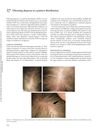 April 2012 in “Informa Healthcare eBooks”
 Fibrosing alopecia in a pattern distribution is a unique hair loss condition with inflammation and scarring, resembling but distinct from common balding.
July 2025 in “Journal of Investigative Dermatology” 27 citations
,
June 1989 in “Journal of Medical Genetics” Hairy elbows may be linked to short stature, but the exact cause is unclear.
28 citations
,
May 1998 in “Journal of the American Academy of Dermatology” Scalp inflammation can cause multiple hairs to grow from one follicle.
February 2023 in “Journal of the European Academy of Dermatology and Venereology”  July 2023 in “Clinical, cosmetic and investigational dermatology”
 Plica neuropathica can be a sign of schizophrenia and improves with antipsychotic treatment.
9 citations
,
January 2012 in “International journal of trichology” Trichostasis spinulosa can be diagnosed with a simple skin biopsy and treated with specific gels, but lesions may return after stopping treatment.
 18 citations
,
January 2011 in “International journal of trichology”
18 citations
,
January 2011 in “International journal of trichology” Hair casts, also called pseudonits, are often mistaken for other conditions.
 1 citations
,
September 2024 in “Indian Journal of Postgraduate Dermatology”
1 citations
,
September 2024 in “Indian Journal of Postgraduate Dermatology” Trichoscopy effectively diagnoses temporal triangular alopecia in children.
84 citations
,
June 1970 in “Journal of Investigative Dermatology”  1 citations
,
October 2023 in “Veterinary Dermatology”
1 citations
,
October 2023 in “Veterinary Dermatology” Transversal biopsy sections are better than longitudinal sections for diagnosing alopecia X.
 64 citations
,
July 1997 in “Journal of The American Academy of Dermatology”
64 citations
,
July 1997 in “Journal of The American Academy of Dermatology” Finding eosinophils near hair bulbs helps diagnose alopecia areata.
June 2026 in “Skin Appendage Disorders” Pili annulati may be more common than thought, so recognizing its features is important for diagnosis.
September 1973 in “Primates” 2 citations
,
January 1989 Tay syndrome is a unique genetic disorder causing skin, hair, and developmental issues.
 2 citations
,
February 2018 in “Journal of dermatology & cosmetology”
2 citations
,
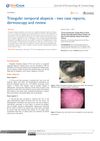
February 2018 in “Journal of dermatology & cosmetology” Triangular temporal alopecia is a benign hair loss pattern best diagnosed with dermoscopy, with limited treatment options like surgery and hair transplantation.
September 2021 in “The journal of investigative dermatology/Journal of investigative dermatology” Three genes linked to the development of trichilemmal cysts were found.
January 2000 in “The Mouseion at the JAXlibrary (Jackson Laboratory)” The lanceolate hair-J mutation in mice helps understand human hair disorders like Netherton's syndrome.