108 citations
,
April 2004 in “Medicinal Research Reviews” Steroid sulfatase inhibitors could help treat hormone-related disorders and cancers.
54 citations
,
February 2002 in “Carcinogenesis” Increasing SSAT makes skin more prone to cancer.
101 citations
,
October 2007 in “Journal of Biological Chemistry” Reduced matriptase activity causes skin and hair issues in both humans and mice.
11 citations
,
January 1989 Two patients had a unique form of trichothiodystrophy with reduced high-sulfur proteins in their hair.
 2 citations
,
December 2016 in “Experimental cell research”
2 citations
,
December 2016 in “Experimental cell research” The research found a way to identify and study skin cells with stem cell traits, revealing they behave differently in culture and questioning current stemness assessment methods.
 42 citations
,
September 2017 in “Advances in protein chemistry and structural biology”
42 citations
,
September 2017 in “Advances in protein chemistry and structural biology” Surface Plasmon Resonance is a useful tool for studying protein interactions and has potential for future technological advancements.
28 citations
,
December 1997 in “Journal of Biological Chemistry” A genetic mutation in the hHa1 gene creates a smaller, but still functional, hair protein without causing hair problems.
 October 2025 in “Cermin Dunia Kedokteran”
 Early detection, prevention, and proper management can reduce TB-IRIS complications and deaths in HIV patients.
November 2020 in “Journal of the American Academy of Dermatology” Intense pulsed light with radiofrequency showed mixed results in improving quality of life for hidradenitis suppurativa patients, with no clinical improvements.
 15 citations
,
June 2019 in “Journal of Neuroendocrinology”
15 citations
,
June 2019 in “Journal of Neuroendocrinology” Isoallopregnanolone may be a safe and effective treatment for reducing tics in a mouse model of Tourette syndrome.
 October 2024 in “The Journal of Dermatology”
 Intravenous corticosteroid therapy is effective for long-term hair regrowth in alopecia areata, and a scoring system helps predict treatment success and relapse.
September 2023 in “Journal of the American Academy of Dermatology” Including special area involvement helps identify more psoriasis patients who may need systemic treatment.
2 citations
,
April 2023 in “Diabetes Metabolic Syndrome and Obesity” 2h-ICPR can help screen for insulin antibodies in type 2 diabetes patients.
 9 citations
,
March 2018 in “European journal of dermatology/EJD. European journal of dermatology”
9 citations
,
March 2018 in “European journal of dermatology/EJD. European journal of dermatology” A new mutation in the ST14 gene causes a rare skin and hair disorder in a specific family.
1 citations
,
May 2025 in “Cell Reports Medicine” RSPO1 could help create new diabetes treatments by increasing pancreatic β cells.
 4 citations
,
December 2013 in “International Journal of Dermatology”
4 citations
,
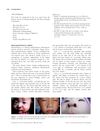
December 2013 in “International Journal of Dermatology” Three children with nasal fungal infections were successfully treated with potassium iodide and sometimes itraconazole.
 8 citations
,
September 2003 in “Journal of dermatological science”
8 citations
,
September 2003 in “Journal of dermatological science” Substance P helps hair grow longer and faster.
 March 2026 in “Science China Materials”
 SeV-Tp speeds up healing of drug-resistant infections by targeting wounds and killing bacteria with light activation.

STS01 1% effectively promotes hair regrowth with minimal side effects.
14 citations
,
August 2020 in “Journal of cosmetic dermatology” Experts recommend using PN-HPT™ for skin rejuvenation in various body areas but have less agreement on initial facial treatment cycles.
 February 2026 in “Frontiers in Medicine”
 Personalized sonidegib dosing can effectively treat Gorlin-Goltz syndrome with fewer side effects.
 5 citations
,
July 2022 in “Orphanet journal of rare diseases”
5 citations
,
July 2022 in “Orphanet journal of rare diseases” RSPO1 mutations in certain patients lead to skin cells that don't develop properly and are more likely to become invasive, increasing the risk of skin cancer.
March 2026 in “Journal for ImmunoTherapy of Cancer” Long-term data and a team approach are needed to manage chronic side effects from cancer treatments.
April 2025 in “Journal of Diabetes & Metabolic Disorders” Monitoring TGF-β and linc-PINT expression may help identify and treat high-risk heart arrhythmia patients.
 January 2024 in “Wiadomości Lekarskie”
 Low-penetration genes might help personalize colorectal cancer prevention.
71 citations
,
January 2011 in “Journal of cutaneous pathology” A rare skin condition was confirmed to be associated with a specific virus in a young girl.
 May 2012 in “CRC Press eBooks”
 Some patients on anti-TNF drugs experience a type of hair loss called TAIAPA.
8 citations
,
January 2014 in “Indian Dermatology Online Journal” Trichostasis spinulosa is a common but often unnoticed skin condition involving bundled vellus hairs, especially in people with darker skin or UV exposure.
November 2025 in “Photochemistry and Photobiology” Standardizing light therapy methods could improve spinal cord injury treatment.
3 citations
,
January 2021 in “Molecular genetics & genomic medicine” The study found two new mutations in a Chinese patient with severe biotinidase deficiency.