1 citations
,
March 2020 in “Meždunarodnyj medicinskij žurnal” PRP could be a promising treatment for hair loss but needs more research.
 1 citations
,
December 2017 in “Turkderm”
1 citations
,
December 2017 in “Turkderm” People with a family history of hair loss are more likely to experience it, and the severity of hair loss is linked to insulin resistance. The connection between early hair loss and oxidative stress needs more investigation.
1 citations
,
October 2015 in “The Pharma Innovation Journal” The best way to make a topical treatment for hair loss is to mix Saw Palmetto extract with 48% ethanol at the end of making the lotion.
 May 2026 in “Open Science Framework”
 Biochanin A from soy is a promising and safe candidate for treating hair loss.
March 2026 in “Pakistan Armed Forces Medical Journal” Trichoscopy is useful for diagnosing and assessing androgenetic alopecia severity.
January 2026 in “International Journal of Dermatology” Treatment improved scalp conditions and hair loss with no recurrence after 1 year.
January 2026 in “JDDG Journal der Deutschen Dermatologischen Gesellschaft” Deep-learning models can effectively diagnose and assess Alopecia areata using scalp images.
 May 2025 in “Anadolu Kliniği Tıp Bilimleri Dergisi”
 Gene variations may increase oxidative stress in male pattern baldness.

Microbial imbalances on the scalp can help diagnose and manage hair loss early.
January 2025 in “Russian Medical Inquiry” The treatment improved hair growth and quality with minimal side effects.
 October 2024 in “Archives of Dermatological Research”
 Higher GPER-1 levels are linked to more severe and shorter-duration androgenetic alopecia, suggesting GPER-1 as a potential treatment target.
 September 2024 in “Indian Journal of Dermatology”
 Trichoscopy effectively diagnoses and assesses the severity of androgenetic alopecia.
 August 2024 in “Archives of Dermatological Research”
 Acne severity is not related to the type or severity of androgenetic alopecia.
 August 2024 in “Frontiers in Pharmacology”
 Antibody treatments show promise for hair loss but need more research.
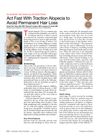 July 2024 in “Federal Practitioner”
 Act quickly to prevent permanent hair loss from tight hairstyles.
 April 2024 in “International Journal of Research Publication and Reviews”
 Alopecia areata causes hair loss with varied treatment responses and frequent relapses.
 March 2024 in “Journal of clinical medicine”
 Trichoscopy shows hair diameter variability, vellus hairs, and the peripilar sign are key indicators for diagnosing Androgenetic Alopecia.
 February 2024 in “Drug Delivery and Translational Research”
 A new liposomal formulation improves drug delivery and hair growth for treating hair loss without causing skin irritation.
 December 2023 in “Clinical, cosmetic and investigational dermatology”
 The study found that white hair in vitiligo has specific patterns and structures, which vary with the stage of the disease and may be similar to another hair condition.
 September 2023 in “Cureus”
 Topical finasteride might be a good alternative for hair loss treatment with fewer side effects, but more research is needed.
 July 2023 in “Dermatology practical & conceptual”
 The machine learning model effectively assesses the severity of hair loss and could help dermatologists with treatment decisions.
 May 2023 in “Bali Medical Journal”
 Higher sebum levels are linked to more severe male baldness.

Screening for iron levels in patients with hair loss may help find a genetic iron overload condition early.
January 2022 in “Clinical Cases in Dermatology” Early treatment of traction alopecia can reverse hair loss; prevention involves avoiding tight hairstyles.
 November 2021 in “Austin therapeutics”
 Current treatments for hair loss from chemotherapy are limited, but new methods are being researched.
 September 2021 in “CRC Press eBooks”
 Alopecia areata incognita causes sudden hair thinning, responds well to steroids, and is more common in those with genetic hair loss conditions.
January 2020 in “International journal of scientific research” Dermoscopy shows that varying hair shaft thickness and single hair follicles are main signs of male pattern baldness, especially in the fronto-temporal region.
January 2018 in “Springer eBooks” Alopecia totalis/universalis is a severe form of hair loss where all body hair is lost.
March 2004 in “Journal of the American Academy of Dermatology” Middle-aged women with cicatricial alopecia/lichen planopilaris responded well to treatments like ketoconazole shampoo and steroids.
March 2022 in “Benha Journal of Applied Sciences” AGA patients have lower serum vaspin levels, which might help detect the condition early.