 September 2024 in “International Journal of Pharmaceutical Quality Assurance”
 Nanoemulgels improve skin disorder treatment by delivering drugs more effectively and reducing application frequency.
Personalized, multidisciplinary care improves skin condition management and patient outcomes.
 August 2024 in “Bionatura journal :”
 The hydromethanolic extract of Carthamus caeruleus L. rhizome is a strong antioxidant and can kill cancer cells.
 August 2024 in “Qucosa (Saxon State and University Library Dresden)”
 White fat tissue in the skin helps control inflammation by affecting certain immune cells.
Early and accurate identification of primary scarring alopecias is crucial to prevent permanent hair loss.
Prostatitis is a common male condition with various causes and treatments, often involving antibiotics and lifestyle changes.
 July 2024 in “Science and Culture”
 Thuja orientalis L. has many health benefits and could be used in new medicines.
 July 2024 in “International Journal of Pharmaceutical Sciences and Medicine”
 Nyctanthes arbor-tristis is effective for treating many health issues.
Personalized care and evidence-based treatments are crucial for managing skin and hair conditions.
 July 2024 in “International Journal of Dermatology Venereology and Leprosy Sciences”
 The combination treatment improved acne scars.
 July 2024 in “Jurnal Pengabdian Masyarakat Putri Hijau”
 Students showed strong interest in using meniran leaves for hair growth pomade.
 May 2024 in “International Journal For Multidisciplinary Research”
 The herbal hair cream helps protect and improve hair health.
 April 2024 in “International Journal of Research in Medical Sciences”
 Demographic and lifestyle factors significantly influence scalp diseases.
 April 2024 in “Frontiers in cellular and infection microbiology”
 Blue light might help treat skin conditions by affecting the skin's bacteria.
 April 2024 in “Frontiers in pharmacology”
 Cynoglossum amabile has medicinal potential but poses safety concerns due to liver toxicity.
 March 2024 in “International Journal of Drug Delivery Technology”
 Electrospun nanofiber mats are effective drug carriers for improving wound healing.
 March 2024 in “Revista Agraria Academica”
 The Mediterranean dwarf palm has medicinal, nutritional, and craft uses, but more research is needed.
 February 2024 in “Frontiers in physiology”
 Modifying certain signals in the body can help wounds heal without scars and regrow hair.

New insights into cell communication in psoriasis suggest innovative drug treatments.
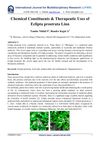 January 2024 in “International Journal For Multidisciplinary Research”
 Eclipta prostrata Linn has many health benefits and is used in traditional medicine.
 January 2024 in “Frontiers in immunology”
 Histone modification is key in treating chronic inflammatory skin diseases.
 January 2024 in “International journal of pharmaceutical sciences review and research”
 Indian jujube has many medicinal properties and can help treat ailments like diabetes, inflammation, and cancer.
 January 2024 in “Journal of Ayurveda Campus”
 Psoralea corylifolia Linn. is a medicinal plant used for skin diseases and has various health benefits.
 January 2024 in “Regenerative Biomaterials”
 Metal organic frameworks-based scaffolds show promise for tissue repair due to their unique properties.
 January 2024 in “Open Journal of Veterinary Medicine”
 The treatment effectively reduces yeast and improves skin in dogs.
 January 2024 in “Editora In Vivo eBooks”
 Early diagnosis and management are crucial for feline inflammatory bowel disease.
 January 2024 in “Editora In Vivo eBooks”
 Dogs can transmit a parasite to humans, especially affecting those with weak immune systems, so early diagnosis and treatment are crucial.
 January 2024 in “Editora In Vivo eBooks”
 Illegal cattle slaughter in Brazil poses health risks and violates laws.
 January 2024 in “Editora In Vivo eBooks”
 H5N1 avian flu poses risks to birds and humans, requiring strict biosecurity measures.
 January 2024 in “Editora In Vivo eBooks”
 Laser therapy helps relieve pain and improve life quality in small animals with osteoarthritis.