1 citations
,
September 2025 in “Wound Repair and Regeneration” Tilapia skin matrix effectively aids skin wound healing and is a promising option for clinical use.
1 citations
,
January 2020 in “Journal of Translational Genetics and Genomics” Certain genes may help Bulgarians live longer.
1 citations
,
April 2015 in “InTech eBooks” RAGE is a potential target for melanoma treatment, but its effectiveness is uncertain due to variable expression levels.
 June 2025 in “Stem Cell Research & Therapy”
 Understanding hair growth pathways can lead to better hair loss treatments.
Hulunbuir lambs adapt better to cold than Hu lambs, showing more wool growth and thicker skin.
 May 2025 in “Experimental Dermatology”
 Triphenylphosphine oxide can increase oil production and reduce inflammation in skin cells without affecting TRPM5.
Hair proteins in preschool children and their mothers could indicate developmental changes and health status.
1 citations
,
April 2025 in “Experimental Dermatology” Topical ruxolitinib may help some skin conditions but needs more research for alopecia areata.
 18 citations
,
October 2017 in “PLOS ONE”
18 citations
,
October 2017 in “PLOS ONE” The study concluded that similar pathways regulate hair growth in dogs and mice, and these pathways are disrupted in dogs with Alopecia X, affecting stem cells and hormone metabolism.
 3 citations
,
April 2016 in “The journal of investigative dermatology/Journal of investigative dermatology”
3 citations
,
April 2016 in “The journal of investigative dermatology/Journal of investigative dermatology” Curcumin applied to the skin can start hair growth in mice.
 April 2016 in “The journal of investigative dermatology/Journal of investigative dermatology”
 The back of the scalp has more nerve fibers than the front, which may explain why some people feel more sensitivity there.
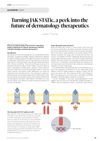 August 2024 in “New Zealand Medical Student Journal”
 JAK inhibitors show promise for treating skin diseases effectively and safely.
 1 citations
,
January 2023 in “Portuguese Journal of Dermatology and Venereology”
1 citations
,
January 2023 in “Portuguese Journal of Dermatology and Venereology” JAK inhibitors effectively treat skin conditions and topical forms are safer.
 April 2018 in “Journal of Investigative Dermatology”
 Kaempferol helps skin stem cells grow and may improve skin thickness due to its 3-OH group.
 April 2018 in “Journal of Investigative Dermatology”
 Removing STAT5 from 3D-cultured human skin cells reduces their ability to grow hair.
 April 2018 in “Journal of Investigative Dermatology”
 Ginsenoside Rd may help improve skin aging by increasing collagen in the skin.
 April 2018 in “Journal of Investigative Dermatology”
 Aging reduces skin cell renewal and defense against germs due to TGFbeta, but blocking TGFbeta could help restore these functions.
 November 2025 in “Turkish Journal of Dermatology”
 Both baricitinib and tofacitinib effectively reduce alopecia areata severity, with tofacitinib showing more improvement over longer use.
 32 citations
,
December 2018 in “Cytokine”
32 citations
,
December 2018 in “Cytokine” Type I interferons play a key role in the development of various skin diseases.
 January 2025 in “SKIN The Journal of Cutaneous Medicine”
 Calcipotriol's effectiveness for treating alopecia areata is unclear and needs more research.
 June 2021 in “Research Square (Research Square)”
 Melatonin can increase cashmere yield by altering gene expression and restarting the growth cycle early.
 128 citations
,
August 2015 in “Cell Stem Cell”
128 citations
,
August 2015 in “Cell Stem Cell” Damage to skin releases dsRNA, which activates TLR3 and helps in skin and hair follicle regeneration.
 11 citations
,
February 2021 in “Journal of Cosmetic Dermatology”
11 citations
,
February 2021 in “Journal of Cosmetic Dermatology” Oral tofacitinib helped regrow hair in over half of the patients with severe alopecia, but relapses and side effects were common.
 116 citations
,
February 2017 in “Journal of the American Academy of Dermatology”
116 citations
,
February 2017 in “Journal of the American Academy of Dermatology” JAK inhibitors help with skin conditions but need more research on dosing and safety.
 20 citations
,
January 2013 in “Cell & Bioscience”
20 citations
,
January 2013 in “Cell & Bioscience” Understanding how epigenetic regulation affects stem cells is key to cancer insights and new treatments.
 14 citations
,
March 2022 in “Journal of inflammation research”
14 citations
,
March 2022 in “Journal of inflammation research” Baricitinib shows promise as a new treatment for certain skin conditions like alopecia areata.
 9 citations
,
January 2023 in “Dermatology and therapy”
9 citations
,
January 2023 in “Dermatology and therapy” A 14-year-old girl with severe hair loss regrew her hair using upadacitinib.
 5 citations
,
June 2022 in “Frontiers in immunology”
5 citations
,
June 2022 in “Frontiers in immunology” Increasing Treg cells in the skin does not cure hair loss from alopecia areata in mice.
 4 citations
,
May 2025 in “Frontiers in Immunology”
4 citations
,
May 2025 in “Frontiers in Immunology” JAK inhibitors effectively and safely treat alopecia areata with few serious side effects.
 3 citations
,
August 2024 in “Cureus”
3 citations
,
August 2024 in “Cureus” Upadacitinib may cause hair loss.