2 citations
,
September 2024 in “Expert Opinion on Drug Metabolism & Toxicology” Ritlecitinib is an effective new treatment for Alopecia Areata.
December 2013 in “Estudo Geral (Universidade de Coimbra)” Modified steroidal inhibitors showed promise in treating hormone-dependent cancers.
 1 citations
,
September 2023 in “Journal of the American Academy of Dermatology”
1 citations
,
September 2023 in “Journal of the American Academy of Dermatology” Baricitinib helps regrow hair and improves quality of life and mental health in severe alopecia areata patients.
 2 citations
,
November 2021 in “ACG Case Reports Journal”
2 citations
,
November 2021 in “ACG Case Reports Journal” Tofacitinib successfully treated hair loss in a Crohn's disease patient who previously used adalimumab.
 September 2021 in “Revista Interdisciplinar em Saúde”
 Oral isotretinoína effectively stabilizes frontal fibrosing alopecia.
January 2025 in “Russian Medical Inquiry” The treatment improved hair growth and quality with minimal side effects.
 1 citations
,
June 2017 in “Skin”
1 citations
,
June 2017 in “Skin” Apremilast may help treat lichen planopilaris and frontal fibrosing alopecia when other treatments fail.
 3 citations
,
April 2016 in “Journal of Investigative Dermatology”
3 citations
,
April 2016 in “Journal of Investigative Dermatology” Tofacitinib, a JAK inhibitor, improved hair regrowth in most patients with severe alopecia areata and had minimal side effects.
3 citations
,
July 2025 in “Pharmaceutics” Levant Storax Cream heals wounds better than other tested creams.
 12 citations
,
May 2020 in “Dermatology and therapy”
12 citations
,
May 2020 in “Dermatology and therapy” A young woman had a rare skin reaction to a medication for her joint disease, and a combination therapy improved her condition.
Combining β-sitosterol nanoparticles with laser therapy may effectively stimulate hair growth in androgenetic alopecia.
 3 citations
,
May 2020 in “JAAD Case Reports”
3 citations
,
May 2020 in “JAAD Case Reports” Two patients with psoriasis grew extra hair after using certain psoriasis medications.
41 citations
,
October 2019 in “Biomolecules” Retinoic acid can either maintain stem cells or make them specialize, depending on the cell type.
 September 2017 in “Journal of Investigative Dermatology”
 The combination of Stemoxydine® and Resveratrol improves hair density in women with Female Pattern Hair Loss.
 3 citations
,
June 2025 in “Archives of Dermatological Research”
3 citations
,
June 2025 in “Archives of Dermatological Research” Biologics and JAK inhibitors may improve treatment for scarring alopecias.
 9 citations
,
January 2015 in “Dermatology Online Journal”
9 citations
,
January 2015 in “Dermatology Online Journal” A patient with Crohn's disease grew back their hair after stopping Adalimumab, which had caused hair loss.
 2 citations
,
April 2019 in “Dermatologic Therapy”
2 citations
,
April 2019 in “Dermatologic Therapy” A patient with alopecia had hair regrowth with tofacitinib but developed a skin reaction, choosing to continue the treatment despite the side effect.
November 2025 in “Clinical and Translational Allergy” The consensus provides guidelines for safely stopping danazol in hereditary angioedema treatment.
 September 2013 in “Experimental Dermatology”
 The document concluded that stem cells are crucial for skin repair, regeneration, and may help in developing advanced skin substitutes.
20 citations
,
May 2023 in “Cancer Nanotechnology” The new drug delivery system effectively targets lung cancer cells.
March 2023 in “Reactions Weekly”  3 citations
,
March 2017 in “Regulatory toxicology and pharmacology”
3 citations
,
March 2017 in “Regulatory toxicology and pharmacology” Aleglitazar and its major metabolite are safe enough to proceed to Phase 3 clinical trials.
 March 2025 in “Canadian dermatology today.”
 Clascoterone cream 1% is effective and well-tolerated for treating acne and other related conditions.
27 citations
,
October 2020 in “Drugs” Clascoterone cream was approved in the USA for treating acne in people aged 12 and older.
52 citations
,
December 2014 in “Journal of Dermatological Science” Apremilast may help treat hair loss in alopecia areata.
16 citations
,
June 2018 in “JAAD case reports” A JAK inhibitor improved both severe hair loss and chronic skin disease in one patient.
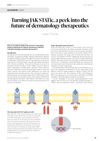 August 2024 in “New Zealand Medical Student Journal”
 JAK inhibitors show promise for treating skin diseases effectively and safely.
13 citations
,
April 2020 in “European Journal of Dermatology” Apremilast showed mixed results for treating severe alopecia areata.
64 citations
,
January 1985 in “Clinical endocrinology” A combination of desogestrel and ethinyl oestradiol effectively reduces hair growth in hirsute women.