33 citations
,
January 2018 in “Blood” Ruxolitinib helps protect skin stem cells and keeps skin healthy in mice with skin GVHD.
 June 2025 in “Electronic Journal of General Medicine”
 Melatonin may help regrow hair, but more consistent research is needed.
 132 citations
,
January 2017 in “International Journal of Molecular Sciences”
132 citations
,
January 2017 in “International Journal of Molecular Sciences” Fat-derived stem cells show promise for skin repair and reducing aging signs but need more research for consistent results.
 December 2024 in “Dermatological Reviews”
 New treatments for Alopecia Areata, like JAK inhibitors, are effective, and future research is exploring advanced therapies.
5 citations
,
March 2023 in “PubMed” Advanced therapy medicinal products show promise for vitiligo treatment with fewer side effects, but affordability is a challenge.
 1 citations
,
May 2021 in “Revista Eletrônica Acervo Científico”
1 citations
,
May 2021 in “Revista Eletrônica Acervo Científico” The document concludes that more research is needed on treatments for hair loss in both men and women, especially on medication combinations and their benefits.
![[4-t-Butylphenyl]-N-(4-imidazol-1-yl phenyl)sulfonamide (ISCK03) Inhibits SCF/c-kit Signaling in 501mel Human Melanoma Cells and Abolishes Melanin Production in Mice and Brownish Guinea Pigs](/images/assets/4eb017dc-711d-4926-bcd0-c3b8f48e3a99/small/19974.jpg) 26 citations
,
July 2007 in “Biochemical Pharmacology”
26 citations
,
July 2007 in “Biochemical Pharmacology” ISCK03 stops melanin production in human melanoma cells and lightens skin color in mice and guinea pigs.
 1 citations
,
June 2012 in “Actas Dermo-Sifiliográficas”
1 citations
,
June 2012 in “Actas Dermo-Sifiliográficas” Early and aggressive treatment of scarring alopecia is important to prevent further hair follicle damage.
 December 2025 in “International Journal of Innovative Technologies in Social Science”
 New treatments for androgenetic alopecia show promise but need more research for validation.
 January 2012 in “Elsevier eBooks”
 New treatments for skin and hair repair show promise, but further improvements are needed.
January 2026 in “Ciencia Latina Revista Científica Multidisciplinar” Exosome-based therapy successfully restored hair in a 14-year-old with difficult-to-treat alopecia areata.
 25 citations
,
July 2016 in “The journal of investigative dermatology/Journal of investigative dermatology”
25 citations
,
July 2016 in “The journal of investigative dermatology/Journal of investigative dermatology” Imiquimod cream activates hair follicle stem cells and causes early hair growth by changing immune cells and certain protein expressions.
January 2025 in “Journal of Ethnopharmacology” Dahuang-Gancao Decoction improves hair growth in androgenetic alopecia.
July 2024 in “Journal of Investigative Dermatology” PP405 may help hair growth by activating hair follicle stem cells.
 August 2025 in “Journal of Cosmetic Dermatology”
 Interest in new and personalized treatments for hair loss is growing.
New treatments show promise for hair loss, especially JAK inhibitors for alopecia areata.
January 2007 in “동의생리병리학회지 = Journal of physiology & pathology in Korean Medicine” Biotae Orientalis extracts may help treat hair loss.
46 citations
,
April 2020 in “Drugs” Emerging therapies like JAK inhibitors show promise for hair regrowth in alopecia areata.
 May 2024 in “Indian Journal of Dermatology”
 Androgenetic alopecia in men is genetic and linked to health issues like obesity and heart disease, with treatments including minoxidil, finasteride, and hair transplants.
 December 2008 in “Enzyme and Microbial Technology”
 New patents include innovations in skin and hair care, disease treatment, plant stress tolerance, and protein purification.
 7 citations
,
January 2020 in “PubMed”
7 citations
,
January 2020 in “PubMed” Stem cell therapies show promise for treating hair loss, but more research is needed to understand their safety and effectiveness.
July 2020 in “Stem Cells Translational Medicine” Regulatory T cells can help treat diseases, and a stem cell solution may improve hair growth.
2 citations
,
August 2024 in “Indian Dermatology Online Journal” Premature graying of hair is mainly caused by genetics, stress, and environment, with potential treatments being explored.
 April 2024 in “Cell death and differentiation”
 Cell death shapes skin stem cell environments, affecting inflammation, repair, and cancer.
 2 citations
,
August 2023 in “Autophagy”
2 citations
,
August 2023 in “Autophagy” Autophagy helps control skin inflammation and cancer responses and regulates hair growth by affecting stem cell activity.
 April 2021 in “Journal of Cosmetic Dermatology”
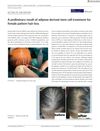
 Stem cell treatment improved hair density in female hair loss patient.
 January 2006 in “Yearbook of Dermatology and Dermatologic Surgery”
 Hair graying is caused by the loss of pigment cells due to poor maintenance of stem cells in the hair follicle.
 30 citations
,
February 2017 in “Histochemistry and Cell Biology”
30 citations
,
February 2017 in “Histochemistry and Cell Biology” TPA promotes hair growth by increasing stem cell activity and activating specific cell signals.
 22 citations
,
October 2018 in “Aesthetic Plastic Surgery”
22 citations
,
October 2018 in “Aesthetic Plastic Surgery” Understanding hair follicle biology and stem cell control could lead to new hair loss treatments.
 3 citations
,
June 2013 in “Genes & development”
3 citations
,
June 2013 in “Genes & development” CaV1.2 helps activate hair follicle stem cells without calcium flux.