 December 2020 in “bioRxiv (Cold Spring Harbor Laboratory)”
 Stress can cause a type of hair loss in mice lacking the CCHCR1 gene.
Stress levels are linked to hair loss in female medical students at Muhammadiyah University of Malang.
March 2020 in “The Egyptian Journal of Histology” Topical olive oil protects mice skin from harmful electromagnetic radiation.
January 2020 in “International Research Journal of Ayurveda & Yoga” Stress may contribute to the development of hypothyroidism, and both modern and Ayurvedic treatments can manage the condition.
November 2019 in “European journal of internal medicine” A Laotian man with unusual skin changes and multiple growths in his gut was diagnosed with Cronkhite-Canada Syndrome and improved with nutritional and immune-based treatments.

L-PGDS has specific binding sites for its functions and could help in drug delivery system design.
January 2019 in “Columbia Academic Commons (Columbia University)” TRPV3 and TRPV6 channels change structure to regulate calcium and heat responses.
 January 2019 in “Applied Organometallic Chemistry”
 The compound (NH4)2Mn0.17Cu0.83Cl4.2H₂O has a specific structure, shows weak magnetism at low temperatures, and undergoes phase changes at high temperatures.
 December 2018 in “Esperienze dermatologiche”
 A lotion with Centella asiatica extract reduced hair loss by 41% and increased hair strength without side effects.
 April 2018 in “Journal of Investigative Dermatology”
 The keratin network in mouse skin changes during cornification and affects the skin's protective barrier.
January 2018 in “Belarusian State Pedagogical University repository (Belarusian State Pedagogical University)” Stress might trigger hair loss in alopecia areata, but more research is needed.
Ceramide may help delay hair aging by restoring stressed hair cells.
 September 2017 in “Indian Journal of Plastic Surgery”
 Garg and Garg created an affordable, easy-to-use training program for hair restoration surgery using everyday items, which can teach a technician the basics in 3-4 weeks with two hours of daily practice.
 August 2017 in “Indian journal of history of science”
 The manuscript "Strīvilāsa" offers ancient Ayurvedic knowledge on women's health, beauty treatments, and reproductive care.
July 2017 in “DOAJ (DOAJ: Directory of Open Access Journals)” SVF-enhanced fat injections may effectively treat baldness by promoting hair growth.
 April 2017 in “The journal of investigative dermatology/Journal of investigative dermatology”
 Stress in hair follicle cells increases certain immune-related proteins, which might contribute to hair loss conditions.
January 2017 in “Durham e-Theses (Durham University)” Chemical stressors damage hair structure but the skin's outer layer protects living cells.
 December 2015 in “Journal of Neurology and Stroke”
 A man had a stroke after getting a scalp injection for hair loss.
 January 2014 in “Jaypee Brothers Medical Publishers (P) Ltd. eBooks”
 Grow a hair-restoration business by improving marketing, offering diverse services, and enhancing customer service.
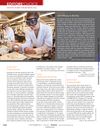 September 2013 in “Science”
 Transplanted human Olig2+ astroglia may help improve learning and memory after a stroke.
January 2013 in “IRIS UNIMORE (University of Modena and Reggio Emilia)” Hydrophobized silica nanoparticles penetrate the skin's outer layer more effectively, while hair follicle density doesn't impact their accumulation.
 December 2012 in “Journal of dermatological science”
 Hair follicles help attract immune cells to minor skin injuries.
May 2012 in “Neurotoxicology and Teratology” Hair cortisol can be a reliable way to measure long-term stress.
 April 2012 in “KSBB Journal”
 Minoxidil analogs can be improved for hair growth inhibition by modifying specific parts of their structure.
January 2012 in “Zhongguo linchuang xinlixue zazhi” Chronic stress delays hair growth in mice, but antioxidants can help reverse this.
September 2009 in “MedEdPORTAL” The structured oral exam format is effective and well-received for teaching internal medicine.
March 2008 in “Hair transplant forum international” Managing stress can improve hair restoration results.
March 2008 in “The Knowledge Bank (The Ohio State University)” SARM-induced changes in the androgen receptor are specific to each ligand and affect stability and protein interactions.