November 2022 in “Journal of Investigative Dermatology” Statins may help treat alopecia areata by reducing harmful immune interactions.
 1 citations
,
January 2023 in “Portuguese Journal of Dermatology and Venereology”
1 citations
,
January 2023 in “Portuguese Journal of Dermatology and Venereology” JAK inhibitors effectively treat skin conditions and topical forms are safer.
65 citations
,
February 2011 in “Molecular cancer therapeutics” CCT128930 is a promising new drug that effectively targets and inhibits a cancer-related protein, showing potential for cancer treatment.
June 2025 in “Revista Foco” JAK inhibitors effectively treat severe alopecia areata with manageable side effects.
1 citations
,
December 2023 in “Nanomaterials” Combining specific nanoparticles with immune therapy significantly improves cancer treatment.
7 citations
,
August 1996 in “The Journal of Clinical Endocrinology and Metabolism” June 2024 in “Poster presentations” Janus Kinase inhibitors effectively induce remission in Ulcerative Colitis with an acceptable safety profile.
 20 citations
,
February 2002 in “Expert Opinion on Therapeutic Patents”
20 citations
,
February 2002 in “Expert Opinion on Therapeutic Patents” New research is needed to create better drugs that block the enzyme responsible for conditions like male baldness and prostate enlargement.
 20 citations
,
March 2005 in “Current Medicinal Chemistry”
20 citations
,
March 2005 in “Current Medicinal Chemistry” New compounds show promise for treating hair loss, enlarged prostate, and prostate cancer, with some being more effective and having different side effects than current treatments.
December 2022 in “International Journal of Molecular Sciences” Afatinib, neratinib, and zanubrutinib could be effective against KRASG12C-mutant tumors.
 2 citations
,
June 2023 in “Indian journal of dermatology, venereology, and leprology”
2 citations
,
June 2023 in “Indian journal of dermatology, venereology, and leprology” Janus kinase inhibitors can regrow hair in alopecia areata but may cause side effects and hair loss may return if treatment stops.
 November 2025 in “Russian Journal of Oncology”
 Modifying steroidal inhibitors shows promise for developing new cancer treatments.
 22 citations
,
October 2001 in “Biochemical Pharmacology”
22 citations
,
October 2001 in “Biochemical Pharmacology” GI198745 is more potent and longer-lasting than finasteride, potentially better for treating hair loss.
7 citations
,
April 2025 in “Science Advances” Silicate-based therapy may help treat inflammatory heart disease by reducing immune inflammation.
![Effect of C-Ring Modifications in Benzo[c]quinolizin-3-ones, New Selective Inhibitors of Human 5α-Reductase 1](/images/assets/c687900f-ea40-4de1-8f0b-a5b818951b1c/small/15452.jpg) 12 citations
,
June 2001 in “Bioorganic & Medicinal Chemistry”
12 citations
,
June 2001 in “Bioorganic & Medicinal Chemistry” Changing the C-ring structure in certain compounds can make them better at blocking a specific human enzyme.
 6 citations
,
August 2017 in “Physiological Research”
6 citations
,
August 2017 in “Physiological Research” Setipiprant may reduce inflammation by blocking an enzyme called aldose reductase.
 6 citations
,
July 2026 in “Zenodo (CERN European Organization for Nuclear Research)”
6 citations
,
July 2026 in “Zenodo (CERN European Organization for Nuclear Research)” Finasteride and dutasteride have limited use in feminising therapy and are not recommended for routine use.
9 citations
,
April 1970 in “Biochemical pharmacology” Stilbamidine and hydroxystilbamidine inhibit enzyme release from lysosomes and have effects similar to cortisol and chloroquine.
61 citations
,
December 1994 in “Planta” 20 citations
,
January 1995 in “Journal of Dermatological Science” Cyclosporin A and FK506 can start new hair growth without needing immunosuppression.
May 2024 in “Reactions weekly” 
Hit15 shows promise as a COVID-19 treatment by reducing virus infection and inflammation.
5 citations
,
January 2014 in “Molecular Simulation” A new compound may treat benign prostatic hyperplasia better than finasteride.
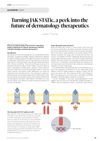 August 2024 in “New Zealand Medical Student Journal”
 JAK inhibitors show promise for treating skin diseases effectively and safely.
March 2014 in “The Journal of Urology” Finasteride increases CD8+ T cells in BPH tissues.
 17 citations
,
June 2012 in “European journal of medicinal chemistry”
17 citations
,
June 2012 in “European journal of medicinal chemistry” New steroid compounds effectively inhibit 5α-reductase and may treat hair loss.
355 citations
,
January 2017 in “Journal of the American Academy of Dermatology” JAK inhibitors show promise for treating skin conditions like eczema, hair loss, and psoriasis.
January 1975 in “NJEA Review” The drug showed promise in treating renal cell carcinoma with manageable side effects.
12 citations
,
November 2024 in “Plants” Phytosterols may help manage prostate issues but are less effective than synthetic drugs.
![Benzo[c]quinolizin-3-ones: A Novel Class of Potent and Selective Nonsteroidal Inhibitors of Human Steroid 5α-Reductase 1](/images/assets/ff6e6cbe-cb9c-4d11-87ef-671d28ffd4fa/small/15506.jpg) 28 citations
,
September 2000 in “Journal of Medicinal Chemistry”
28 citations
,
September 2000 in “Journal of Medicinal Chemistry” Benzo[c]quinolizin-3-ones are effective nonsteroidal inhibitors of human steroid 5α-reductase 1.