March 2025 in “Laboratory Investigation” MESTSV is a rare tumor that is mostly benign but needs long-term monitoring due to potential recurrence.
1 citations
,
January 2013 
Skin tumor cells in patients with tuberous sclerosis have higher levels of a protein called cathepsin B.
11 citations
,
January 1989 Two patients had a unique form of trichothiodystrophy with reduced high-sulfur proteins in their hair.
 February 2026 in “Oncology Reviews”
 Sacituzumab tirumotecan shows promise in treating breast cancer with manageable side effects.
 February 2009 in “Journal of The American Academy of Dermatology”
 Most patients with Tuberous sclerosis had neurological or skin issues, and over half had psychiatric problems.
70 citations
,
February 2009 in “Biological Trace Element Research” 5 citations
,
April 2023 in “Bioengineering & Translational Medicine” STAR particles are safe, comfortable, and effective for enhancing drug delivery through the skin.

Steatocystomas are harmless skin cysts that can vary in size and may sometimes cause itching or pain.
 December 2023 in “Medical Times”
 The MEST method increases cell yield and volume for regenerative medicine but needs more testing.
 1 citations
,
December 2023 in “Indian Dermatology Online Journal”
1 citations
,
December 2023 in “Indian Dermatology Online Journal” Steatocystoma multiplex causes recurring skin cysts and needs early recognition for better management.
 1 citations
,
December 2024 in “Dermatology and Therapy”
1 citations
,
December 2024 in “Dermatology and Therapy” The STRIAA tool helps doctors quickly and effectively assess the severity of Alopecia Areata.
 37 citations
,
March 1990 in “The Journal of Pediatrics”
37 citations
,
March 1990 in “The Journal of Pediatrics” Toxic shock syndrome is caused by a complex interaction of bacterial toxins and the immune system, and understanding this can help improve diagnosis and treatment.
42 citations
,
September 1985 in “British Journal of Dermatology” Trichothiodystrophy causes abnormal protein deposits and distortion in hair follicles.
3 citations
,
June 2021 in “Frontiers in genetics” The protein STAT3 slows down cell growth by blocking the FST gene, which affects hair development in sheep.
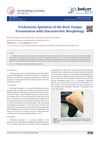 May 2020 in “JOJ Dermatology & Cosmetics”
 A rare skin condition usually on the face was found on a man's heel.
July 2024 in “Journal of Investigative Dermatology” ATR12-351 ointment safely delivers LEKTI protein to the skin, reducing enzyme activity in Netherton syndrome.
80 citations
,
June 2002 in “Molecular Biology of the Cell” Type II keratins are uniquely phosphorylated during stress and mitosis, affecting their structure and function.
 39 citations
,
March 2008 in “Journal of biological chemistry/The Journal of biological chemistry”
39 citations
,
March 2008 in “Journal of biological chemistry/The Journal of biological chemistry” GLI2 increases follistatin production in human skin cells.
2 citations
,
July 2023 in “Water” Tradescantia plants can effectively test for the toxicity of harmful algae.
175 citations
,
December 1980 in “Archives of Dermatology” Trichothiodystrophy is a condition with brittle hair and various physical and mental issues due to low sulfur in proteins.
 October 2017 in “Anesthesia and Pain Medicine”
 Repeated left stellate ganglion blocks may improve skin elasticity, water content, and hair follicle density on the treated side.
September 2024 in “Journal of the American Academy of Dermatology” Early intervention is important for limited systemic sclerosis patients due to higher pain and ulceration risks.
11 citations
,
November 1996 in “Pediatric dermatology” Trichostasis spinulosa can look like acne but usually affects adults, not children.
 37 citations
,
October 2006 in “Steroids”
37 citations
,
October 2006 in “Steroids” New sulfur-containing steroid analogs show promise for more targeted medical treatments.
 October 2025 in “Indian Journal of Dermatology”
 Dermoscopy can help diagnose tuberous sclerosis by identifying unique skin patterns.
ETS2 drives cancer progression in squamous cell carcinoma and is linked to poor patient outcomes.
 August 2018 in “Journal of The American Academy of Dermatology”
 Patients with multiple superficial venous thrombosis are at greater risk for serious complications like cancer and recurrent blood clots.
3 citations
,
January 2018 in “Frontiers in bioscience” Daily subcutaneous testosterone effectively restores testosterone levels in men.
67 citations
,
December 2009 in “International Journal of Dermatology” Hormonal changes in skin may cause stretch marks.